
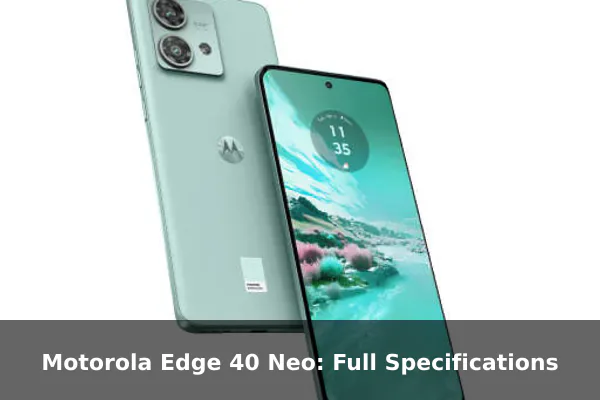
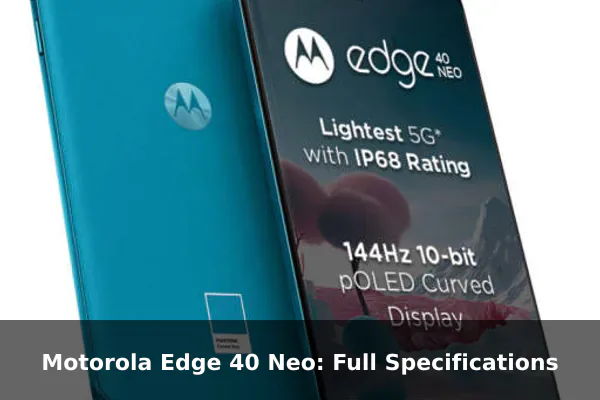
The Motorola Edge 40 Neo arrived in September 2023 as the most affordable member of the Edge 40 family, slotting in beneath the standard Edge 40 and the Edge 40 Pro while keeping several genuinely premium touches. With a curved 144Hz P-OLED screen, an IP68 rating, OIS on the main camera and 68W fast charging, it reads less like a budget compromise and more like a flagship experience trimmed to a mid-range budget.
Powered by the MediaTek Dimensity 7030 and paired with up to 12GB of RAM, the Edge 40 Neo targets buyers who want clean software, fast charging and a vivid display without paying premium money. This article looks at how those pieces fit together and where the phone fits against rivals at its price.
Full Specifications
Network
| Technology: | GSM / HSPA / LTE / 5G |
| 2G bands: | GSM 850 / 900 / 1800 / 1900 |
| 3G bands: | HSDPA 800 / 850 / 900 / 1700(AWS) / 1900 / 2100 |
| 4G bands: | 1, 2, 3, 4, 5, 7, 8, 12, 13, 17, 18, 19, 20, 25, 26, 28, 32, 38, 38, 39, 40, 41, 42, 43, 48, 66 |
| 5G bands: | 1, 2, 3, 5, 7, 8, 20, 28, 38, 40, 41, 66, 77, 78 SA/NSA |
| Speed: | HSPA, LTE, 5G |
Launch
| Announced: | 2023, September 14 |
| Status: | Available. Released 2023, September 14 |
Body
| Dimensions: | 159.6 x 72 x 7.9 mm (6.28 x 2.83 x 0.31 in) |
| Weight: | 170 g or 172 g (6.00 oz) |
| Build: | Glass front (Gorilla Glass 3), plastic frame, plastic back |
| SIM: | Nano-SIM + eSIMNano-SIM + Nano-SIM |
| IP68 dust tight and water resistant (immersible up to 1.5m for 30 min) |
Display
| Type: | P-OLED, 1B colors, 144Hz, HDR10+, 1300 nits (peak) |
| Size: | 6.55 inches, 103.6 cm2 (~90.1% screen-to-body ratio) |
| Resolution: | 1080 x 2400 pixels, 20:9 ratio (~402 ppi density) |
| Protection: | Corning Gorilla Glass 3 |
Platform
| OS: | Android 13, up to 2 major Android upgrades |
| Chipset: | MediaTek Dimensity 7030 (6 nm) |
| CPU: | Octa-core (2×2.5 GHz Cortex-A78 & 6×2.0 GHz Cortex-A55) |
| GPU: | Mali-G610 MC3 |
Memory
| Card slot: | No |
| Internal: | 128GB 8GB RAM, 256GB 8GB RAM, 256GB 12GB RAM |
| uMCP |
Main Camera
| Dual: | 50 MP, f/1.8, (wide), 1/1.55″, 1.0µm, multi-directional PDAF, OIS 13 MP, f/2.2, 120˚ (ultrawide), 1/3.0″, 1.12µm, PDAF |
| Features: | LED flash, HDR, panorama |
| Video: | 4K@30fps, 1080p@30/60/120/240fps, gyro-EIS |
Selfie camera
| Single: | 32 MP, f/2.4, (wide), 1/3.0″, 0.7µm |
| Features: | HDR |
| Video: | 4K@30fps, 1080p@30fps |
Sound
| Loudspeaker: | Yes, with stereo speakers |
| 3.5mm jack: | No |
Comms
| WLAN: | Wi-Fi 802.11 a/b/g/n/ac/6e, tri-band, Wi-Fi Direct |
| Bluetooth: | 5.4, A2DP, LE |
| Positioning: | GPS, GLONASS, GALILEO |
| NFC: | Yes |
| Radio: | No |
| USB: | USB Type-C 2.0, OTG |
Features
| Sensors: | Fingerprint (under display, optical), accelerometer, gyro, proximity, compass |
| Smart Connect (Ready For) support |
Battery
| Type: | Li-Po 5000 mAh |
| Charging: | 68W wired, 50% in 15 min |
Misc
| Colors: | Black, Soothing Sea, Caneel Bay, Peach Fuzz |
| Models: | XT2307-1 |
| Price: | € 208.02 / $ 490.00 / £ 212.95 / ₹ 23,390 |
Our Tests
| Performance: | AnTuTu: 511077 (v9), 524597 (v10) GeekBench: 2563 (v5), 2563 (v6) GFXBench: 23fps (ES 3.1 onscreen) |
| Display: | 1073 nits max brightness (measured) |
| Camera: | Photo / Video |
| Loudspeaker: | -23.8 LUFS (Very good) |
| Battery: | Active use score 10:28h |
| Battery (old): | Endurance rating 80h |
Price and Availability
The Motorola Edge 40 Neo offers a compelling combination of features and performance. While the base price is around €208, the actual cost may vary depending on your location and retailer. Below, you’ll find the approximate price of the Motorola Edge 40 Neo converted into various currencies. Please note that these are estimates based on recent exchange rates as of June 21, 2026 and may not reflect the exact price you’ll find at a retailer.
- United States: $239
- Japan: ¥38,470
- United Kingdom: £180
- Australia: A$340
- Canada: C$338
- Taiwan: NT$7,546
- Denmark: kr1.552
- Saudi Arabia: ﷼895
- South Korea: ₩365,346
- Germany: €208
- Brazil: R$1.230
- Vietnam: ₫6.272.297
- Kenya: KSh 30,921
- India: ₹22,505
- Indonesia: Rp 4.239.859
- Nigeria: ₦321,577
- Pakistan: ₨66,439
- Philippines: ₱14,483
- Bangladesh: ৳২৯,৩০৮
Why Should You Buy the Motorola Edge 40 Neo
The appeal of the Edge 40 Neo is balance. Instead of overspending on one headline feature, Motorola spread the budget across the things people actually notice every day: a smooth high-refresh OLED panel, IP68 water and dust resistance that is rare in this segment, stereo speakers, and rapid 68W charging. For shoppers cross-shopping mid-range Samsung A-series, Realme or Nothing devices, the Neo competes on the strength of its feature checklist rather than raw benchmark numbers. Official launch pricing started around €208 / $490 / £213 / ₹23,390, though street prices have since fallen, making it an even stronger value today.
Design and Durability
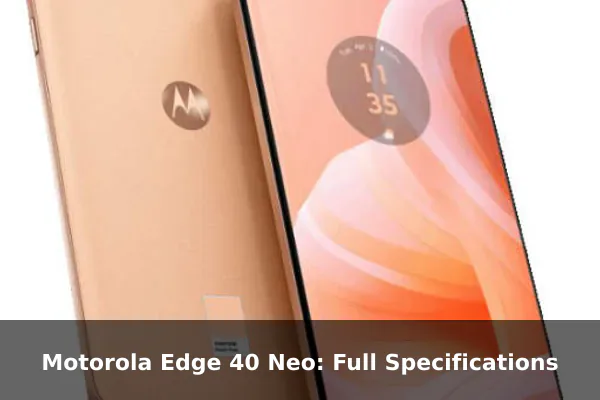
Measuring 159.6 x 72 x 7.9 mm and weighing roughly 170–172 g, the Edge 40 Neo is compact and comfortable for a 6.55-inch phone. The build pairs a Gorilla Glass 3 front with a plastic frame and plastic back, finished in a soft, matte-feeling texture on several colorways. The standout here is the IP68 rating, which certifies dust resistance and immersion up to 1.5 m for 30 minutes — protection most rivals at this price simply skip. Color options include Black, Soothing Sea, Caneel Bay and a Pantone Peach Fuzz finish that gives the phone a distinctive personality.
Display: A 144Hz P-OLED Highlight
The 6.55-inch P-OLED panel is the centerpiece. It runs at a 1080 x 2400 resolution (~402 ppi) with a 20:9 aspect ratio, supports HDR10+, and reaches a quoted 1300 nits peak brightness — independent testing measured just over 1000 nits in practice, which is bright enough for confident outdoor use. The 144Hz refresh rate keeps scrolling and animations fluid, while the high screen-to-body ratio of roughly 90% and slim curved edges give the front a clean, premium look that belies the price.
Performance: Dimensity 7030 in Daily Use
Inside sits the MediaTek Dimensity 7030, a 6 nm chip with an octa-core CPU (2x Cortex-A78 at 2.5 GHz plus 6x Cortex-A55 at 2.0 GHz) and a Mali-G610 MC3 GPU. This is a capable mid-range platform rather than a gaming powerhouse: AnTuTu scores land around 511,000–524,000, which translates to smooth navigation, responsive multitasking and comfortable everyday gaming at moderate settings. Configurations span 128GB/8GB, 256GB/8GB and 256GB/12GB, all using fast UFS-class storage, but note there is no microSD slot, so pick your capacity carefully.
Cameras: 50MP OIS Main and Ultrawide
The dual rear camera leads with a 50 MP f/1.8 wide sensor featuring multi-directional PDAF and, importantly, optical image stabilization — a feature that meaningfully helps low-light shots and steadier video. It is joined by a 13 MP f/2.2 ultrawide with a 120-degree field of view that doubles for close-up shots. Video tops out at 4K@30fps with gyro-EIS, while the front camera is a high-resolution 32 MP f/2.4 sensor suited to detailed selfies and 4K video. It is a sensible, OIS-equipped setup rather than a multi-lens spec sheet padded with low-value sensors.
Battery and 68W Charging
A 5000 mAh Li-Po battery powers the Neo, and Motorola pairs it with 68W TurboPower wired charging that reaches 50% in around 15 minutes. Real-world endurance testing returned an active-use score of around 10.5 hours, which comfortably covers a full day for most users. The combination of a large cell and genuinely fast top-ups is one of the phone’s strongest practical selling points, especially against rivals that still ship slower charging in this bracket.
Software and Smart Connect
The Edge 40 Neo ships with Android 13 under Motorola’s near-stock My UX interface, known for minimal bloat, useful Moto gestures and a clean overall feel. Motorola promised up to two major OS upgrades, which is modest compared with some competitors, so longevity-focused buyers should factor that in. Smart Connect (Ready For) support lets you extend the phone to larger screens for productivity and media, a handy bonus for an affordable device.
Connectivity: Wi-Fi 6E, 5G and NFC
Connectivity is well covered for the class. The phone supports 5G (SA/NSA) across a wide band selection, tri-band Wi-Fi 6E, Bluetooth 5.4, NFC for contactless payments, and an under-display optical fingerprint sensor. You also get USB Type-C and dual-SIM flexibility, including eSIM support. The main omissions are a 3.5mm headphone jack and FM radio, both increasingly common cuts at this tier.
Who Should Buy the Edge 40 Neo
This phone is best for buyers who want a fast, vivid screen, water resistance and quick charging without stepping up to flagship pricing. It is a strong fit for everyday users, students and anyone upgrading from an older mid-ranger. Heavy mobile gamers chasing peak frame rates, or those who want long-term software support, may want to look elsewhere, but for balanced day-to-day use the Neo is hard to fault at its price.
Conclusion
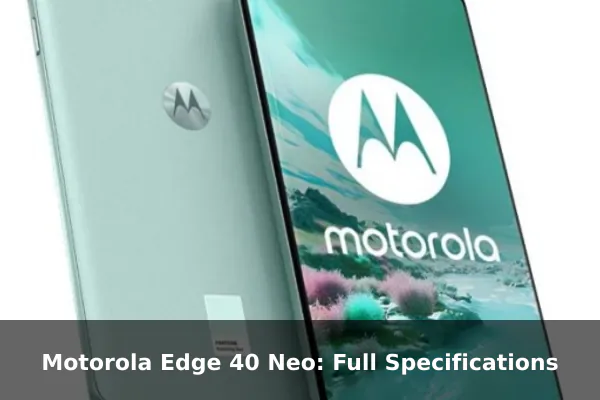
The Motorola Edge 40 Neo punches above its price by delivering features usually reserved for pricier phones: a 144Hz P-OLED display, IP68 durability, OIS-equipped cameras and 68W fast charging, all wrapped in clean software. Its limits — a mid-tier chipset, only two promised OS upgrades and no expandable storage — are reasonable trade-offs rather than dealbreakers. If you want a compact, well-rounded 5G phone that feels more premium than it costs, the Edge 40 Neo is an easy recommendation; just buy enough storage upfront and confirm current pricing before you order.
References
- Motorola Support UK – motorola edge 40 neo – Official Motorola support page for the exact Motorola Edge 40 Neo model; useful as the primary manufacturer anchor for model-specific documentation and support details.
- Motorola News Pressbox – motorola edge 40 neo – Official Motorola press asset page for the Edge 40 Neo, useful for verifying official product naming, colors, and imagery.
- MediaTek Dimensity 7030 – Official chipset manufacturer page for the Dimensity 7030 platform used in the Motorola Edge 40 Neo, helpful for processor and connectivity details.
- GSMArena – Motorola Edge 40 Neo Full Phone Specifications – Established smartphone specification database useful for cross-checking full device specs such as display, cameras, dimensions, battery, networks, and launch details.
