
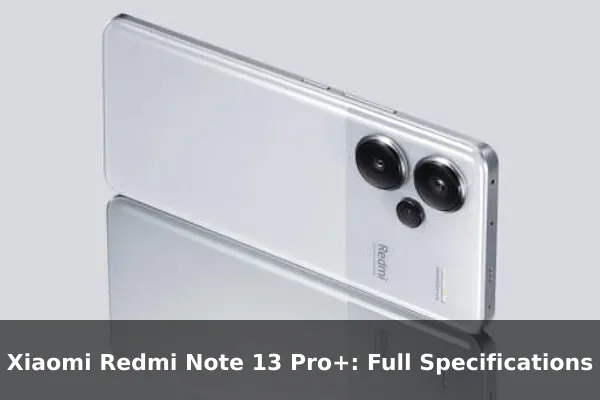
The Xiaomi Redmi Note 13 Pro+ lands in the upper mid-range with a feature set that punches well above its price tag, pairing a 200 MP main camera with 120W HyperCharge and an IP68 rating that is still rare in this segment. Built around a 6.67-inch AMOLED panel and the 4 nm Mediatek Dimensity 7200 Ultra, it targets buyers who want a flagship-style experience without crossing into premium pricing territory.
This article breaks down every meaningful aspect of the device, from its glass-and-eco-leather construction to its real-world performance scores, so shoppers can decide whether the Note 13 Pro+ deserves a place on their shortlist. All technical claims here align with Xiaomi’s official product page and supporting regulatory listings for model 23090RA98G.
Full Specifications
Network
| Technology: | GSM / CDMA / HSPA / EVDO / LTE / 5G |
| 2G bands: | GSM 850 / 900 / 1800 / 1900 |
| CDMA 800 | |
| 3G bands: | HSDPA 800 / 850 / 900 / 1700(AWS) / 1900 / 2100 – International |
| HSDPA 850 / 900 / 2100 – India | |
| CDMA2000 1xEV-DO | |
| 4G bands: | 1, 2, 3, 4, 5, 7, 8, 12, 13, 17, 18, 19, 20, 26, 28, 32, 38, 40, 41, 66 – International |
| 1, 3, 5, 8, 38, 40, 41 – India | |
| 1, 3, 5, 8, 19, 34, 38, 39, 40, 41 – China | |
| 5G bands: | 1, 3, 5, 7, 8, 20, 28, 38, 40, 41, 66, 77, 78 SA/NSA- International |
| 1, 3, 5, 8, 28, 38, 40, 41, 77, 78 SA/NSA – India | |
| 1, 3, 5, 8, 28, 38, 41, 77, 78 SA/NSA – China | |
| Speed: | HSPA, LTE (CA), 5G |
Launch
| Announced: | 2023, September 21 |
| Status: | Available. Released 2023, September 21 |
Body
| Dimensions: | 161.4 x 74.2 x 8.9 mm (6.35 x 2.92 x 0.35 in) |
| Weight: | 199 g or 204.5 g (7.02 oz) |
| Build: | Glass front (Gorilla Glass Victus), glass back or silicone polymer back (eco leather) |
| SIM: | Nano-SIM + eSIMNano-SIM + Nano-SIM |
| IP68 dust tight and water resistant (immersible up to 1.5m for 30 min) |
Display
| Type: | AMOLED, 68B colors, 120Hz, 1920Hz PWM, Dolby Vision, HDR10+, 1800 nits (peak) |
| Size: | 6.67 inches, 107.4 cm2 (~89.7% screen-to-body ratio) |
| Resolution: | 1220 x 2712 pixels, 20:9 ratio (~446 ppi density) |
| Protection: | Corning Gorilla Glass Victus |
Platform
| OS: | Android 13, up to 3 major Android upgrades, HyperOS |
| Chipset: | Mediatek Dimensity 7200 Ultra (4 nm) |
| CPU: | Octa-core (2×2.8 GHz Cortex-A715 & 6×2.0 GHz Cortex-A510) |
| GPU: | Mali-G610 MC4 |
Memory
| Card slot: | No |
| Internal: | 256GB 8GB RAM, 256GB 12GB RAM, 512GB 8GB RAM, 512GB 12GB RAM, 512GB 16GB RAM |
| UFS 3.1 |
Main Camera
| Triple: | 200 MP, f/1.7, 23mm (wide), 1/1.4″, 0.56µm, multi-directional PDAF, OIS 8 MP, f/2.2, 16mm, 120˚ (ultrawide), 1/4.0″, 1.12µm 2 MP, f/2.4, (macro) |
| Features: | Dual-LED dual-tone flash, HDR, panorama |
| Video: | 4K@24/30fps, 1080p@30/60/120fps, gyro-EIS |
Selfie camera
| Single: | 16 MP, f/2.4, (wide) |
| Features: | HDR, panorama |
| Video: | 1080p@30/60fps |
Sound
| Loudspeaker: | Yes, with stereo speakers |
| 3.5mm jack: | No |
| 24-bit/192kHz Hi-Res & Hi-Res wireless audio |
Comms
| WLAN: | Wi-Fi 802.11 a/b/g/n/ac/6, dual-band, Wi-Fi Direct |
| Bluetooth: | 5.3, A2DP, LE |
| Positioning: | GPS, GLONASS, BDS, GALILEO, QZSS |
| NFC: | Yes (market/region dependent) |
| Infrared port: | Yes |
| Radio: | No |
| USB: | USB Type-C 2.0, OTG |
Features
| Sensors: | Fingerprint (under display, optical), accelerometer, gyro, proximity, compass |
Battery
| Type: | Li-Po 5000 mAh |
| Charging: | 120W wired, PD3.0, 100% in 19 min |
Misc
| Colors: | Midnight Black (Fushion Black), Moonlight White (Fushion White), Aurora Purple, Fushion Purple, Camo Green |
| Models: | 23090RA98C, 23090RA98G, 23090RA98I |
| SAR: | 1.09 W/kg (head) 0.85 W/kg (body) |
| SAR EU: | 0.98 W/kg (head) 1.00 W/kg (body) |
| Price: | € 209.90 / $ 280.00 / £ 251.26 / ₹ 25,499 |
Our Tests
| Performance: | AnTuTu: 683899 (v9), 779812 (v10)
GeekBench: 2353 (v5), 2597 (v6) |
| Display: | 1283 nits max brightness (measured) |
| Loudspeaker: | -26.3 LUFS (Good) |
| Battery: | Active use score 10:38h |
Price and Availability
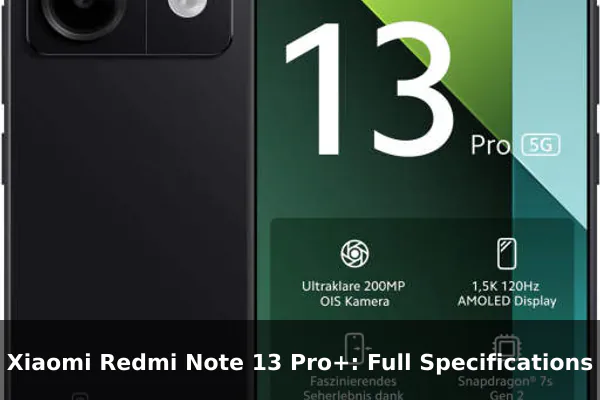
The Xiaomi Redmi Note 13 Pro+ offers a compelling combination of features and performance. While the base price is around €210, the actual cost may vary depending on your location and retailer. Below, you’ll find the approximate price of the Xiaomi Redmi Note 13 Pro+ converted into various currencies. Please note that these are estimates based on recent exchange rates as of June 1, 2026 and may not reflect the exact price you’ll find at a retailer.
- United States: $245
- Japan: ¥38,974
- United Kingdom: £182
- Australia: A$341
- Canada: C$337
- Taiwan: NT$7,678
- Denmark: kr1.566
- Saudi Arabia: ﷼917
- South Korea: ₩368,569
- Germany: €210
- Brazil: R$1.233
- Vietnam: ₫6.396.458
- Kenya: KSh 31,654
- India: ₹23,223
- Indonesia: Rp 4.365.825
- Nigeria: ₦334,214
- Pakistan: ₨68,091
- Philippines: ₱15,043
- Bangladesh: ৳৩০,০০৯
Value Positioning in the Upper Mid-Range
At an indicative launch price around €209.90 / $280 / £251.26 / ₹25,499, the Redmi Note 13 Pro+ undercuts most rivals that combine IP68 sealing, 120W wired charging, and a 200 MP main sensor in a single package. Pricing varies by market and storage tier, and current retail figures may differ from launch, but the device consistently sits in the value-flagship tier rather than entry mid-range. For buyers comparing it against the standard Redmi Note 13 Pro, the Pro+ adds faster charging, curved-edge AMOLED, and stronger water resistance in exchange for a modest premium.
Design, Build, and Durability
The phone measures 161.4 x 74.2 x 8.9 mm and weighs either 199 g or 204.5 g depending on the finish. Glass options use Corning Gorilla Glass Victus on the front, while the rear is offered in glass or a silicone-polymer eco-leather treatment in shades such as Midnight Black, Moonlight White, Aurora Purple, Fusion Purple, and Camo Green. An IP68 rating, certified for immersion up to 1.5 m for 30 minutes, is unusually generous at this price and gives the Note 13 Pro+ a meaningful durability edge over rivals that stop at IP54 splash resistance.
Display Experience
The 6.67-inch AMOLED panel pushes a 1220 x 2712 resolution at roughly 446 ppi, with a 120 Hz refresh rate, Dolby Vision, HDR10+, and a quoted peak brightness of 1800 nits. Independent measurements report around 1283 nits in manual mode, which remains comfortable for outdoor viewing. The 1920 Hz PWM dimming should help users sensitive to low-brightness flicker, and the screen-to-body ratio of about 89.7% delivers an immersive front fascia that feels modern for the segment.
Performance and Thermals
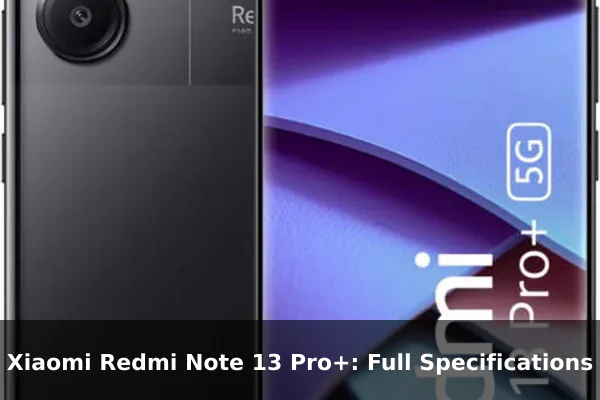
Powering the device is the 4 nm Mediatek Dimensity 7200 Ultra, with two Cortex-A715 cores at 2.8 GHz, six Cortex-A510 efficiency cores at 2.0 GHz, and a Mali-G610 MC4 GPU. Benchmark results include AnTuTu scores near 683,899 (v9) or 779,812 (v10), GeekBench v6 around 2,597, and 3DMark Wild Life Extreme at 1,193. That positions the chip comfortably for daily multitasking, social apps, and most popular games at medium-to-high settings, though sustained heavy gaming will reveal its mid-range thermal ceiling rather than flagship-tier headroom.
Camera System
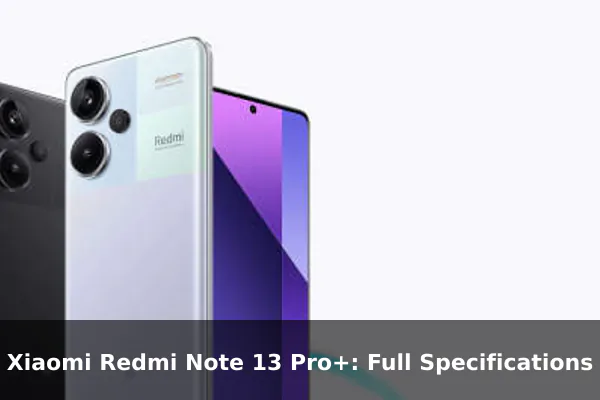
Photography is anchored by a 200 MP f/1.7 main sensor with a 1/1.4-inch optical format, multi-directional PDAF, and optical image stabilization. It is paired with an 8 MP ultrawide covering a 120-degree field of view and a 2 MP macro unit. Video tops out at 4K at 24/30 fps with gyro-EIS, while the 16 MP f/2.4 front camera handles 1080p at up to 60 fps. The high-resolution sensor allows lossless 2x crops and improved low-light gathering, although the 2 MP macro remains a supporting element rather than a true creative tool.
Battery and Charging
A 5000 mAh Li-Po cell drives the phone, paired with 120W wired HyperCharge and PD3.0 support. Xiaomi quotes a full charge in approximately 19 minutes, and active-use testing recorded a runtime of about 10 hours 38 minutes, putting the Note 13 Pro+ on par with longer-lasting mid-range rivals. There is no wireless charging, which is a reasonable omission given the speed of the wired solution and the device’s price point.
Software and Update Policy
The phone ships with Android 13 layered with HyperOS, and Xiaomi has committed to up to three major Android upgrades. For long-term value, this means the device should remain on a supported Android branch for several years, although prospective buyers should confirm the latest update schedule on Xiaomi’s official channels before purchase.
Connectivity and Extras
Connectivity covers 5G SA/NSA on a broad set of bands that vary by region, Wi-Fi 6, Bluetooth 5.3, and an IR blaster that remains a useful Xiaomi trademark. NFC availability is market-dependent, so verifying regional SKUs is worthwhile if contactless payments matter. Other extras include stereo speakers, 24-bit/192 kHz Hi-Res audio support, an under-display optical fingerprint sensor, and USB Type-C 2.0 with OTG. Notably absent are a 3.5 mm headphone jack and a microSD slot, with onboard storage ranging from 256 GB to 512 GB and up to 16 GB of RAM.
Who Should Buy It
The Redmi Note 13 Pro+ is best suited to buyers who want fast charging, an HDR-grade AMOLED, and a high-resolution main camera without paying flagship prices. It is also a strong pick for users in regions where IP68-rated phones are scarce under mid-range price tags. Power users chasing sustained gaming performance or telephoto reach should look further up the range, but for most mainstream needs the Note 13 Pro+ is a balanced, durable, and feature-rich option.
Conclusion
The Xiaomi Redmi Note 13 Pro+ is one of the most well-rounded value-flagship choices of its generation, combining IP68 durability, 120W charging, an AMOLED Dolby Vision display, and a 200 MP main camera at a price most rivals cannot match. If durability, charging speed, and photographic resolution matter more than a top-tier gaming chipset, it is an easy recommendation; for the latest pricing and regional availability, verify the official Xiaomi Global product page before purchase.
Official references
- Xiaomi Global Redmi Note 13 Pro+ 5G Specifications – Official manufacturer specifications for display, chipset, cameras, battery, charging, dimensions, connectivity, and package contents.
- Xiaomi Global Redmi Note 13 Pro+ 5G Product Page – Official product overview useful for verifying headline features, marketing claims, design details, and feature positioning.
- Xiaomi Global Compliance Certification – Official Xiaomi compliance portal for product certification, declarations of conformity, safety, and regulatory information.
- Global Certification Forum Redmi Note 13 Pro+ 5G – Primary certification listing for model 23090RA98G, including certified cellular technologies and supported network bands.
- FCC Equipment Authorization Search – Official FCC database for verifying US radio authorization and SAR/radio filings; search FCC ID 2AFZZRA98G for this model.
