
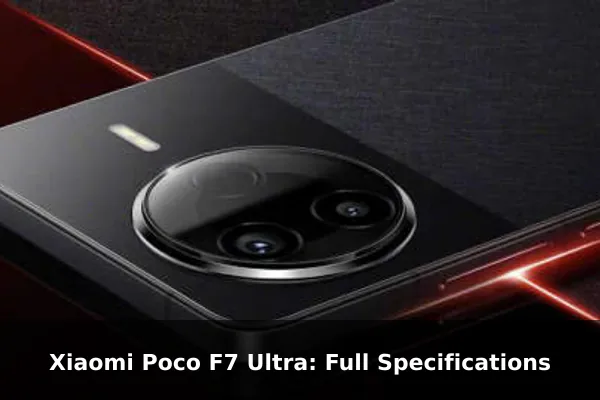
The Xiaomi Poco F7 Ultra arrives as the most ambitious entry the Poco line has ever fielded, pairing a Snapdragon 8 Elite flagship platform with a triple camera array that finally takes the brand beyond the price-to-performance niche. Announced on March 27, 2025, the device is positioned as a true halo product for a sub-brand that previously avoided ultra-tier hardware.
With a 6.67-inch 1440p AMOLED panel, a 5,300 mAh battery, 120W wired plus 50W wireless charging, IP68 protection, and Poco Shield Glass, the F7 Ultra reads like a checklist of features traditionally reserved for Xiaomi’s premium Mi-series. This article breaks down what each spec means in daily use, where Poco draws the line on compromises, and who benefits most from buying it.
Full Specifications
Network
| Technology: | GSM / HSPA / LTE / 5G |
| 2G bands: | GSM 850 / 900 / 1800 / 1900 |
| 3G bands: | HSDPA 800 / 850 / 900 / 1700(AWS) / 2100 |
| 4G bands: | 1, 2, 3, 4, 5, 7, 8, 18, 19, 20, 26, 28, 38, 40, 41, 42, 48, 66 |
| 5G bands: | 1, 2, 3, 5, 7, 8, 20, 26, 28, 38, 40, 41, 48, 66, 77, 78 SA/NSA |
| Speed: | HSPA, LTE, 5G |
Launch
| Announced: | 2025, March 27 |
| Status: | Available. Released 2025, March 27 |
Body
| Dimensions: | 160.3 x 75 x 8.4 mm (6.31 x 2.95 x 0.33 in) |
| Weight: | 212 g (7.48 oz) |
| Build: | Glass front (Shield Glass), glass back, aluminum frame |
| SIM: | Nano-SIM + Nano-SIM |
| IP68 dust tight and water resistant (immersible up to 2.5m for 30 min) |
Display
| Type: | AMOLED, 68B colors, 120Hz, 3840Hz PWM, Dolby Vision, HDR10+, 1800 nits (HBM), 3200 nits (peak) |
| Size: | 6.67 inches, 107.4 cm2 (~89.3% screen-to-body ratio) |
| Resolution: | 1440 x 3200 pixels, 20:9 ratio (~526 ppi density) |
| Protection: | Poco Shield Glass, Mohs level 5 |
Platform
| OS: | Android 15, HyperOS 2 |
| Chipset: | Qualcomm SM8750-AB Snapdragon 8 Elite (3 nm) |
| CPU: | Octa-core (2×4.32 GHz Oryon V2 Phoenix L + 6×3.53 GHz Oryon V2 Phoenix M) |
| GPU: | Adreno 830 |
Memory
| Card slot: | No |
| Internal: | 256GB 12GB RAM, 512GB 16GB RAM |
| UFS 4.1 |
Main Camera
| Triple: | 50 MP, f/1.6, 24mm (wide), 1/1.55″, 1.0µm, multi-directional PDAF, OIS 50 MP, f/2.0, 60mm (telephoto), 1/2.76″, 0.64µm, multi-directional PDAF (10cm – ∞), OIS, 2.5x optical zoom 32 MP, f/2.2, 15mm, 120˚ (ultrawide), 1/3.42″, 0.64µm |
| Features: | Color spectrum sensor, LED flash, HDR, panorama |
| Video: | 8K@24fps, 4K@24/30/60fps, 1080p@30/60/120/240/960fps, 720p@1920fps, gyro-EIS |
Selfie camera
| Single: | 32 MP, f/2.0, 24mm, (wide), 1/3.42″, 0.64µm |
| Features: | HDR |
| Video: | 1080p@30/60fps, gyro-EIS |
Sound
| Loudspeaker: | Yes, with stereo speakers |
| 3.5mm jack: | No |
| 24-bit/192kHz Hi-Res & Hi-Res Wireless audio Snapdragon Sound |
Comms
| WLAN: | Wi-Fi 802.11 a/b/g/n/ac/6e/7, dual-band, Wi-Fi Direct |
| Bluetooth: | 6.0, A2DP, LE, aptX HD, aptX Adaptive, aptX Lossless, LHDC 5 |
| Positioning: | GPS (L1+L5), GLONASS (G1), BDS (B1I+B1c+B2a), GALILEO (E1+E5a), QZSS (L1+L5), NavIC (L5) |
| NFC: | Yes |
| Infrared port: | Yes |
| Radio: | No |
| USB: | USB Type-C, OTG |
Features
| Sensors: | Fingerprint (under display, ultrasonic), accelerometer, proximity, gyro, compass |
Battery
| Type: | 5300 mAh |
| Charging: | 120W wired, PD3.0, QC3+, 100% in 34 min 50W wireless |
Misc
| Colors: | Black, Yellow |
| Models: | 24122RKC7G |
| Price: | € 549.90 / $ 792.50 / £ 518.00 |
Our Tests
| Performance: | AnTuTu: 2580520 (v10) GeekBench: 8887 (v6) 3DMark: 6204 (Wild Life Extreme) |
| Display: | 1506 nits max brightness (measured) |
| Loudspeaker: | -24.7 LUFS (Very good) |
| Battery: | Active use score 13:32h |
EU LABEL
| Energy: | Class A |
| Battery: | 62:53h endurance, 1000 cycles |
| Free fall: | Class D (45 falls) |
| Repairability: | Class C |
Price and Availability
The Xiaomi Poco F7 Ultra offers a compelling combination of features and performance. While the base price is around €550, the actual cost may vary depending on your location and retailer. Below, you’ll find the approximate price of the Xiaomi Poco F7 Ultra converted into various currencies. Please note that these are estimates based on recent exchange rates as of May 31, 2026 and may not reflect the exact price you’ll find at a retailer.
- United States: $641
- Japan: ¥102,091
- United Kingdom: £477
- Australia: A$894
- Canada: C$885
- Taiwan: NT$20,104
- Denmark: kr4.103
- Saudi Arabia: ﷼2,404
- South Korea: ₩965,445
- Germany: €550
- Brazil: R$3.233
- Vietnam: ₫16.751.181
- Kenya: KSh 82,877
- India: ₹60,956
- Indonesia: Rp 11.446.065
- Nigeria: ₦866,903
- Pakistan: ₨178,725
- Philippines: ₱39,400
- Bangladesh: ৳৭৮,৬৬৪
Value Proposition Against Pricier Flagships
Poco’s Ultra designation usually signals a price jump, and the F7 Ultra is no exception within the Poco catalog. Even so, the indicative pricing of around €549.90 in source data positions it well beneath comparably equipped Snapdragon 8 Elite devices from Samsung, Apple, or vivo. For shoppers who care about raw silicon, charging speed, and a quad-HD AMOLED but not about ecosystem lock-in, the F7 Ultra undercuts most 2025 flagships by a meaningful margin.
Final retail pricing varies by region and promotion, so verify on the official POCO Global product page before purchase.
Design, Build Quality, and Durability
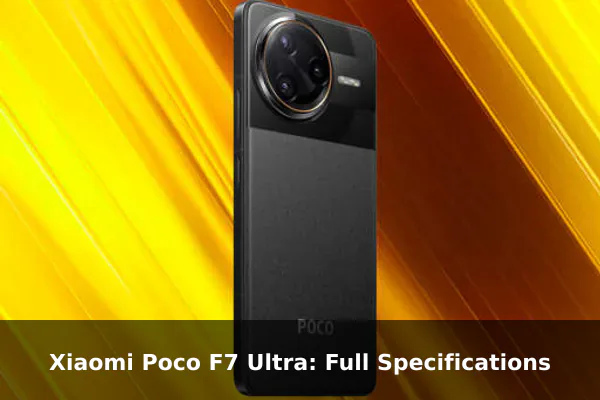
At 160.3 x 75 x 8.4 mm and 212 g, the Poco F7 Ultra sits in the heavier half of the modern flagship class, but it justifies the mass with a glass-and-aluminum sandwich and a genuine IP68 rating that allows immersion up to 2.5 meters for 30 minutes. The front uses Poco Shield Glass, rated at Mohs hardness level 5, which should resist most pocket-borne scratches from keys and coins.
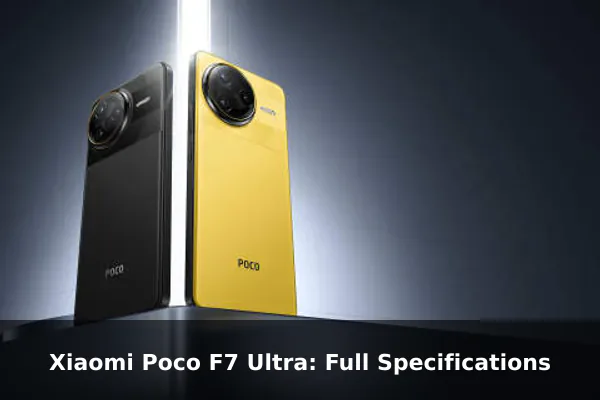
Colorways are limited to Black and Yellow, the latter being a long-running Poco signature that gives the device clear visual identity on a shelf full of monochrome rivals. EU Energy Label entries list a free-fall classification of Class D (45 falls) and a repairability rating of Class C, both reasonable for a glass-backed flagship.
[IMAGE_1: Xiaomi Poco F7 Ultra front and rear design in Yellow colorway]
Display Experience and Outdoor Visibility
The 6.67-inch AMOLED is one of the standout pieces of hardware. With a 1440 x 3200 resolution it delivers roughly 526 ppi, while the 120 Hz refresh rate and 3840 Hz PWM dimming address two of the most common complaints about premium OLEDs: motion smoothness and eye strain at low brightness. Peak brightness is rated at 3,200 nits, with an independently measured 1,506 nits in sustained conditions.
Dolby Vision and HDR10+ support means streaming services such as Netflix and Disney+ can play back in their highest dynamic range tiers, and the 89.3 percent screen-to-body ratio leaves only slim bezels around the active area.
Performance with Snapdragon 8 Elite
The Qualcomm Snapdragon 8 Elite (SM8750-AB) is the heart of the device, built on a 3 nm process with a custom Oryon V2 CPU layout: two Phoenix L performance cores at 4.32 GHz and six Phoenix M cores at 3.53 GHz, paired with the Adreno 830 GPU. Synthetic benchmarks from the source listing show AnTuTu v10 at 2,580,520, GeekBench 6 at 8,887, and 3DMark Wild Life Extreme at 6,204 — figures that put the F7 Ultra at the top of the 2025 Android pack.
Memory configurations top out at 16 GB LPDDR5X paired with 512 GB of UFS 4.1 storage. There is no microSD slot, so buyers planning long-term media archives should pick the larger tier upfront.
Camera System and Imaging Flexibility
Poco’s previous F-series cameras felt like an afterthought, but the F7 Ultra changes that with a serious triple array. The 50 MP f/1.6 main sensor uses a 1/1.55-inch sensor with OIS, the 50 MP f/2.0 telephoto offers 2.5x optical zoom on a 1/2.76-inch sensor with OIS, and the 32 MP f/2.2 ultrawide covers a 120-degree field of view. A color-spectrum sensor assists with white balance.
Video tops out at 8K at 24 fps, with 4K available at up to 60 fps and slow-motion modes reaching 1080p at 960 fps and 720p at 1920 fps. The 32 MP f/2.0 selfie camera is a notable bump from typical Poco front cameras and captures 1080p at 60 fps with gyro-EIS.
[IMAGE_2: Xiaomi Poco F7 Ultra triple rear camera module close-up]
Battery Life and Charging
The 5,300 mAh battery is larger than the cells found in most Galaxy S and iPhone Pro models, and the F7 Ultra pairs it with 120W HyperCharge wired charging that the source data indicates can complete a full top-up in roughly 34 minutes. The addition of 50W wireless charging is notable because Poco devices have historically skipped wireless entirely. The EU Energy Label endurance rating is 62 hours 53 minutes with a 1,000-cycle battery longevity rating.
Software, Updates, and HyperOS 2
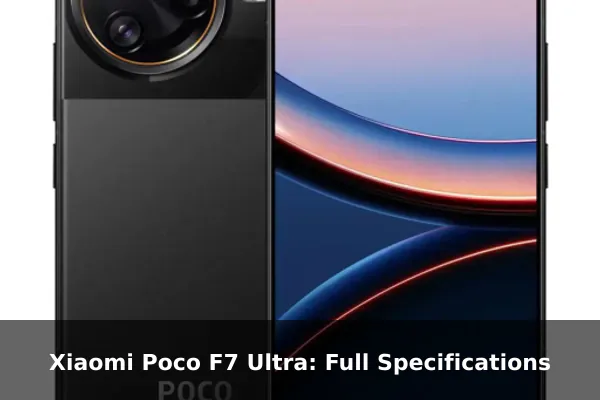
The device ships with Android 15 layered with HyperOS 2, Xiaomi’s unified software stack across phones, tablets, and wearables. HyperOS 2 emphasizes cross-device continuity and on-device AI features. Verify the current update policy on the official POCO Global or Xiaomi Global support pages, as Xiaomi has been steadily extending its software commitment but the exact promise can vary by region and SKU.
Connectivity and Audio
Connectivity is comprehensive: Wi-Fi 7, Bluetooth 6.0 with aptX Lossless and LHDC 5, NFC, an infrared blaster, and dual-frequency GNSS across all major constellations including NavIC. The USB-C port supports OTG. There is no 3.5 mm headphone jack, but stereo speakers tuned for Snapdragon Sound and 24-bit/192 kHz Hi-Res audio support cover most listening needs.
Who Should Buy the Poco F7 Ultra
This phone targets buyers who want maximum performance and a serious camera system without paying conventional flagship prices. Mobile gamers, power users who multitask heavily, and creators who shoot in mixed focal lengths will gain the most from the F7 Ultra’s hardware. Conservative buyers who prioritize a lighter chassis, a 3.5 mm jack, or expandable storage may prefer a different model.
Conclusion
The Xiaomi Poco F7 Ultra is the clearest evidence yet that Poco’s Ultra tier is a credible alternative to traditional flagships rather than a marketing label. Between the Snapdragon 8 Elite, the 1440p AMOLED, the IP68 build, and a camera trio that finally takes telephoto seriously, it earns a recommendation for performance-focused buyers in 2025 — provided they confirm regional pricing and update commitments on the official POCO and Xiaomi pages before purchase.
Official references
- POCO Global – POCO F7 Ultra Specs – Official POCO specifications page for dimensions, display, chipset, cameras, battery, charging, connectivity, OS, sensors, and package contents.
- Xiaomi Global – POCO F7 Ultra Specs – Official Xiaomi global product specifications page for cross-checking the POCO F7 Ultra's current hardware and connectivity details.
- Xiaomi Global Support – POCO F7 Ultra FAQ – Official support FAQ useful for confirming feature details, package contents, display/audio behavior, and other product-specific clarifications.
- Xiaomi/POCO Safety Information – POCO F7 Ultra – Official Xiaomi-hosted safety and regulatory document for model 24122RKC7G, useful for validating model identity, radio bands, SAR/safety, and compliance notes.
- Qualcomm – Snapdragon 8 Elite Mobile Platform – Official chipset manufacturer reference for the Snapdragon 8 Elite platform used in the POCO F7 Ultra.
