
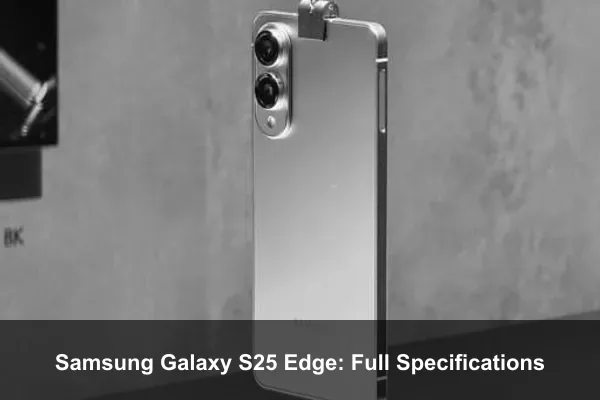
The Samsung Galaxy S25 Edge is the brand’s boldest statement yet on slim engineering, packing flagship hardware into a body just 5.8 mm thick and weighing only 163 g. Announced on May 13, 2025 and released later that month, it slots between the standard S25 line and the Ultra, but its real identity is defined by that razor-thin titanium frame paired with a 200 MP main camera.
This is a phone built for buyers who refuse to compromise on prestige feel, screen size, or imaging, yet want a device that almost disappears in a pocket. Below we break down what the Edge gets right, where its thin chassis forces trade-offs, and who should consider it over the rest of the 2025 Galaxy S family.
Full Specifications
Network
| Technology: | GSM / HSPA / LTE / 5G |
| 2G bands: | GSM 850 / 900 / 1800 / 1900 |
| 3G bands: | HSDPA 850 / 900 / 1700(AWS) / 1900 / 2100 |
| 4G bands: | 1, 2, 3, 4, 5, 7, 8, 12, 13, 17, 18, 19, 20, 25, 26, 28, 32, 38, 39, 40, 41, 66 – International |
| 1, 2, 3, 4, 5, 7, 8, 12, 13, 14, 18, 19, 20, 25, 26, 28, 29, 30, 38, 39, 40, 41, 48, 66, 71 – USA | |
| 5G bands: | 1, 2, 3, 5, 7, 8, 12, 20, 25, 26, 28, 38, 40, 41, 66, 75, 77, 78 SA/NSA/Sub6 – International |
| 1, 2, 5, 7, 25, 28, 41, 66, 71, 77, 78, 257, 258, 260, 261 SA/NSA/Sub6/mmWave – USA | |
| Speed: | HSPA, LTE (CA), 5G |
Launch
| Announced: | 2025, May 13 |
| Status: | Available. Released 2025, May 29 |
Body
| Dimensions: | 158.2 x 75.6 x 5.8 mm (6.23 x 2.98 x 0.23 in) |
| Weight: | 163 g (5.75 oz) |
| Build: | Glass front (Gorilla Glass Ceramic 2), titanium frame, glass back (Gorilla Glass Victus 2) |
| SIM: | Nano-SIM + Nano-SIM + eSIM + eSIM (max 2 at a time)Nano-SIM + eSIM + eSIM (max 2 at a time) |
| IP68 dust tight and water resistant (immersible up to 1.5m for 30 min) |
Display
| Type: | LTPO AMOLED 2X, 120Hz, 480Hz PWM, HDR10+ |
| Size: | 6.7 inches, 110.2 cm2 (~92.1% screen-to-body ratio) |
| Resolution: | 1440 x 3120 pixels, 19.5:9 ratio (~513 ppi density) |
| Protection: | Corning Gorilla Glass Ceramic 2, Mohs level 5 |
Platform
| OS: | Android 15, up to 7 major Android upgrades, One UI 7 |
| Chipset: | Qualcomm SM8750-AC Snapdragon 8 Elite (3 nm) |
| CPU: | Octa-core (2×4.47 GHz Oryon V2 Phoenix L + 6×3.53 GHz Oryon V2 Phoenix M) |
| GPU: | Adreno 830 (1200 MHz) |
Memory
| Card slot: | No |
| Internal: | 256GB 12GB RAM, 512GB 12GB RAM |
Main Camera
| Dual: | 200 MP, f/1.7, 24mm (wide), 1/1.3″, 0.6µm, multi-directional PDAF, OIS 12 MP, f/2.2, 13mm (ultrawide), 1/2.55″, 1.4µm, PDAF |
| Features: | Best Face, LED flash, HDR, panorama |
| Video: | 8K@30fps, 4K@30/60/120fps, 1080p@30/60/120/240fps |
Selfie camera
| Single: | 12 MP, f/2.2, 26mm (wide), 1/3.2″, 1.12µm, dual pixel PDAF |
| Video: | 4K@30/60fps, 1080p@30/60fps |
Sound
| Loudspeaker: | Yes, with stereo speakers |
| 3.5mm jack: | No |
Comms
| WLAN: | Wi-Fi 802.11 a/b/g/n/ac/6/7, tri-band, Wi-Fi Direct |
| Bluetooth: | 5.4, A2DP, LE |
| Positioning: | GPS, GLONASS, GALILEO, BDS |
| NFC: | Yes |
| Radio: | Unspecified |
| USB: | USB Type-C 3.2 |
Features
| Sensors: | Fingerprint (under display, ultrasonic), accelerometer, proximity, gyro, compass, barometer |
| Samsung DeX Ultra Wideband (UWB) support |
Battery
| Type: | Li-Ion 3900 mAh |
| Charging: | 25W wired, PD, QC2.0, 55% in 30 min 15W wireless (Qi2 Ready) |
Misc
| Colors: | Titanium Icyblue, Titanium Silver, Titanium Jetblack |
| Models: | SM-S937U, SM-S937U1, SM-S937B, SM-S937B/DS, SM-S9370 |
| SAR: | 1.21 W/kg (head) 1.23 W/kg (body) |
| SAR EU: | 1.24 W/kg (head) 1.25 W/kg (body) |
| Price: | € 796.99 / $ 849.99 / £ 769.79 / ₹ 104,999 |
Our Tests
| Performance: | AnTuTu: 2147084 (v10) GeekBench: 9391 (v6) 3DMark: 6473 (Wild Life Extreme) |
| Display: | 1416 nits max brightness (measured) |
| Loudspeaker: | -26.4 LUFS (Good) |
| Battery: | Active use score 12:06h |
EU LABEL
| Energy: | Class A |
| Battery: | 40:05h endurance, 2000 cycles |
| Free fall: | Class A (270 falls) |
| Repairability: | Class C |
Price and Availability
The Samsung Galaxy S25 Edge offers a compelling combination of features and performance. While the base price is around €797, the actual cost may vary depending on your location and retailer. Below, you’ll find the approximate price of the Samsung Galaxy S25 Edge converted into various currencies. Please note that these are estimates based on recent exchange rates as of June 12, 2026 and may not reflect the exact price you’ll find at a retailer.
- United States: $921
- Japan: ¥147,584
- United Kingdom: £688
- Australia: A$1,312
- Canada: C$1,287
- Taiwan: NT$29,113
- Denmark: kr5.948
- Saudi Arabia: ﷼3,452
- South Korea: ₩1,405,701
- Germany: €797
- Brazil: R$4.742
- Vietnam: ₫24.165.959
- Kenya: KSh 119,145
- India: ₹88,002
- Indonesia: Rp 16.533.478
- Nigeria: ₦1,243,114
- Pakistan: ₨256,427
- Philippines: ₱56,399
- Bangladesh: ৳১,১৩,২৫৫
Design and Build: A New Benchmark for Thin
At 158.2 x 75.6 x 5.8 mm and 163 g, the Galaxy S25 Edge is one of the thinnest and lightest large-screen flagships you can buy. Samsung wraps it in a titanium frame with a Gorilla Glass Ceramic 2 front and Gorilla Glass Victus 2 back, so the slimness does not come at the cost of structural confidence. IP68 dust and water resistance survives the diet, with immersion rated to 1.5 m for 30 minutes. The three Titanium finishes-Icyblue, Silver, and Jetblack-lean into the premium positioning. The EU label rates free-fall durability at Class A across 270 drops, which is reassuring for a device this svelte.
Display: Big, Bright, and Smooth
The 6.7-inch LTPO AMOLED 2X panel runs at a fully adaptive 120Hz with a sharp 1440 x 3120 resolution (~513 ppi) and HDR10+ support. Samsung’s 480Hz PWM dimming and measured peak brightness of 1416 nits make it comfortable indoors and legible under harsh sun. With a ~92.1% screen-to-body ratio and Gorilla Glass Ceramic 2 protection rated to Mohs level 5, this is a screen that competes directly with the S25+ while living in a thinner shell.
Performance: Snapdragon 8 Elite in a Slim Frame
Powering the Edge is the Qualcomm Snapdragon 8 Elite (3 nm) with its Oryon V2 cores clocked up to 4.47 GHz and the Adreno 830 GPU. Benchmarks back up the flagship billing: AnTuTu 2,147,084, GeekBench 6 score of 9391, and 6473 in 3DMark Wild Life Extreme. Both configurations ship with 12GB of RAM, paired with either 256GB or 512GB of storage. The main caveat is thermal headroom-a 5.8 mm chassis has less room to dissipate heat than thicker rivals during extended gaming.
Camera: 200 MP in a Featherweight Body
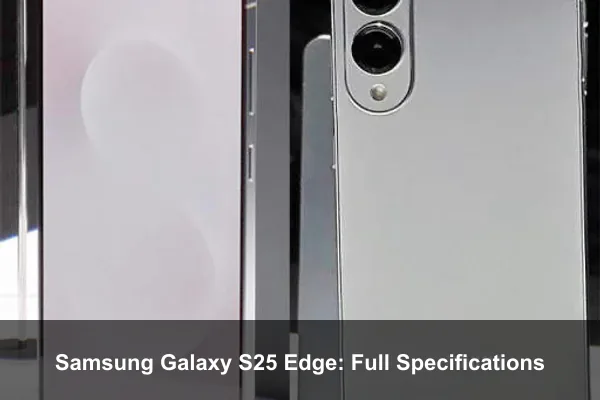
Fitting a 200 MP, f/1.7 wide sensor (1/1.3″, OIS) into this frame is the Edge’s headline trick, joined by a 12 MP ultrawide. There is no dedicated telephoto, so zoom relies on cropping the high-resolution main sensor. Video tops out at 8K@30fps and 4K up to 120fps, while the 12 MP selfie camera captures 4K@60fps. For most users the main sensor delivers excellent detail and dynamic range; reach-hungry photographers will still prefer the S25 Ultra’s dedicated zoom lenses.
Battery and Charging: The Thinness Trade-off
The clearest concession to slimness is the 3900 mAh Li-Ion battery-smaller than most 2025 flagships. Even so, the EU label reports a strong 40:05h endurance rating with 2000 charge cycles, and our active-use test returned a respectable 12:06h. Charging is the weaker spot at 25W wired (55% in 30 minutes) plus 15W Qi2-ready wireless, slower than many competitors. Efficient silicon helps stretch the smaller cell, but heavy users should expect to top up.
Software and Longevity
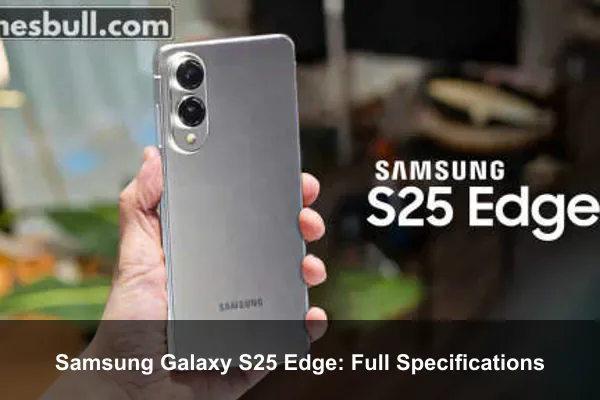
The Edge ships with Android 15 and One UI 7, backed by Samsung’s promise of up to seven major OS upgrades. That commitment makes the slim flagship a genuine long-term hold, keeping it secure and current for years. One UI 7 adds refined Galaxy AI tools and Samsung DeX for a desktop-style workflow.
Connectivity
Connectivity is comprehensive: Wi-Fi 7 (tri-band), Bluetooth 5.4, NFC, Ultra Wideband (UWB), and USB Type-C 3.2 for fast data transfer. The 5G band support is broad across international and US variants, including mmWave on US models. Dual eSIM plus Nano-SIM flexibility and an ultrasonic under-display fingerprint sensor round out a thoroughly modern feature set.
Repairability and Sustainability
The EU energy label gives the Edge an A rating for energy efficiency and a Class C for repairability-the latter a reminder that thin, glass-and-titanium designs are harder to service. Buyers prioritizing easy repairs should weigh this against the device’s standout portability.
Who Should Buy the Galaxy S25 Edge?
This phone is for buyers who place design, portability, and a large bright screen above maximum battery life and zoom versatility. If you want the lightest possible flagship without dropping to a smaller display, the Edge is uniquely positioned. If you prioritize endurance, fast charging, and telephoto reach, the S25+ or S25 Ultra remain the safer picks.
Conclusion
The Samsung Galaxy S25 Edge is a triumph of engineering that delivers flagship power, a gorgeous 120Hz display, and a 200 MP camera in an astonishingly thin titanium body. Its compromises are predictable-a smaller 3900 mAh battery, modest 25W charging, and no telephoto-but for the right buyer they are worth it. Recommended for design-led users who want the lightest premium Galaxy with long software support; endurance-first shoppers should look to the S25+ or S25 Ultra instead.
