
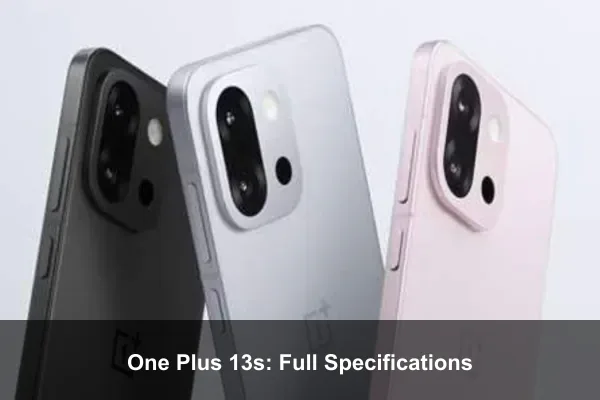
The One Plus 13s arrives as a compact flagship that condenses the brand’s top-tier hardware into a 6.32-inch frame, offering enthusiasts a rare alternative to oversized premium devices. Launched in June 2025 at ₹54,998, it positions itself as a pocket-friendly powerhouse aimed at users who want flagship muscle without the bulk.
Powered by the Snapdragon 8 Elite, paired with an LTPO AMOLED panel and a dual 50MP camera setup, the 13s targets buyers chasing performance density. Below, we break down what this small-screen flagship gets right, where it compromises, and how it stacks up against bigger siblings in the One Plus lineup.
Full Specifications
Network
| Technology: | GSM / HSPA / LTE / 5G |
| 2G bands: | GSM 850 / 900 / 1800 / 1900 |
| 3G bands: | HSDPA 850 / 900 / 1900 / 2100 |
| 4G bands: | 1, 3, 4, 5, 8, 18, 19, 26, 28, 34, 38, 39, 40, 41, 42, 48, 66 |
| 5G bands: | 1, 3, 5, 8, 26, 28, 38, 40, 41, 48, 66, 77, 78 SA/NSA |
| Speed: | HSPA, LTE (CA), 5G |
Launch
| Announced: | 2025, June 05 |
| Status: | Available. Released 2025, June 12 |
Body
| Dimensions: | 150.8 x 71.7 x 8.2 mm (5.94 x 2.82 x 0.32 in) |
| Weight: | 185 g (6.53 oz) |
| Build: | Glass front, aluminum alloy frame |
| SIM: | Nano-SIM + Nano-SIM + eSIM (max 2 at a time) |
| IP65 dust tight and water resistant (low pressure water jets) |
Display
| Type: | LTPO AMOLED, 1B colors, 120Hz, 2160Hz PWM, Dolby Vision, HDR10+, HDR Vivid, 1600 nits (HBM) |
| Size: | 6.32 inches, 97.9 cm2 (~90.6% screen-to-body ratio) |
| Resolution: | 1216 x 2640 pixels, 19.5:9 ratio (~460 ppi density) |
| Protection: | Crystal Shield Glass |
Platform
| OS: | Android 15, OxygenOS 15 |
| Chipset: | Qualcomm SM8750-AB Snapdragon 8 Elite (3 nm) |
| CPU: | Octa-core (2×4.32 GHz Oryon V2 Phoenix L + 6×3.53 GHz Oryon V2 Phoenix M) |
| GPU: | Adreno 830 |
Memory
| Card slot: | No |
| Internal: | 256GB 12GB RAM, 512GB 12GB RAM |
| UFS 4.0 |
Main Camera
| Dual: | 50 MP, f/1.8, 24mm (wide), 1/1.56″, 1.0µm, multi-directional PDAF, OIS 50 MP, f/2.0, (telephoto), 1/2.75″, 0.64µm, 2x optical zoom, PDAF |
| Features: | Color spectrum sensor, LED flash, HDR, panorama |
| Video: | 4K@30/60fps, 1080p@30/60/240fps, gyro-EIS, OIS, Dolby Vision HDR |
Selfie camera
| Single: | 32 MP, f/2.0, 21mm (wide), 1/3.1″, 0.7µm, AF |
| Features: | HDR, panorama |
| Video: | 4K@30fps, 1080p@30fps, gyro-EIS |
Sound
| Loudspeaker: | Yes, with stereo speakers |
| 3.5mm jack: | No |
Comms
| WLAN: | Wi-Fi 802.11 a/b/g/n/ac/6/7, dual-band, Wi-Fi Direct |
| Bluetooth: | 6.0, A2DP, LE, aptX HD, LHDC 5 |
| Positioning: | GPS (L1+L5), BDS (B1I+B1C+B2a), GALILEO (E1+E5a), QZSS (L1+L5), NavIC (L5), GLONASS |
| NFC: | Yes |
| Infrared port: | Yes |
| Radio: | No |
| USB: | USB Type-C 2.0, OTG |
Features
| Sensors: | Fingerprint (under display, optical), accelerometer, gyro, proximity, compass |
| Circle to Search |
Battery
| Type: | 5850 mAh |
| Charging: | 80W wired, 33W PPS, 18W PD, 18W QC 5W reverse wired |
Misc
| Colors: | Green Silk, Black Velvet, Pink Satin |
| Models: | CPH2723 |
| Price: | ₹ 54,998 |
Our Tests
| Performance: | AnTuTu: 2499190 (v10) GeekBench: 9093 (v6) 3DMark: 6473 (Wild Life Extreme) |
Price and Availability
The One Plus 13s offers a compelling combination of features and performance. While the base price is around ₹54,998, the actual cost may vary depending on your location and retailer. Below, you’ll find the approximate price of the One Plus 13s converted into various currencies. Please note that these are estimates based on recent exchange rates as of May 26, 2026 and may not reflect the exact price you’ll find at a retailer.
- United States: $577
- Japan: ¥91,774
- United Kingdom: £428
- Australia: A$805
- Canada: C$797
- Taiwan: NT$18,119
- Denmark: kr3.701
- Saudi Arabia: ﷼2,163
- South Korea: ₩872,092
- Germany: €496
- Brazil: R$2.892
- Vietnam: ₫15.192.096
- Kenya: KSh 74,802
- India: ₹54,998
- Indonesia: Rp 10.225.560
- Nigeria: ₦790,638
- Pakistan: ₨160,873
- Philippines: ₱35,366
- Bangladesh: ৳৭০,৮৪৮
Value Proposition in the Compact Flagship Segment
At ₹54,998, the One Plus 13s undercuts most large-screen flagships while delivering identical silicon. Compact phones with Snapdragon 8 Elite are scarce in 2025, making this a value standout for users who specifically want a smaller premium device rather than a mid-range compromise.
Design and In-Hand Feel
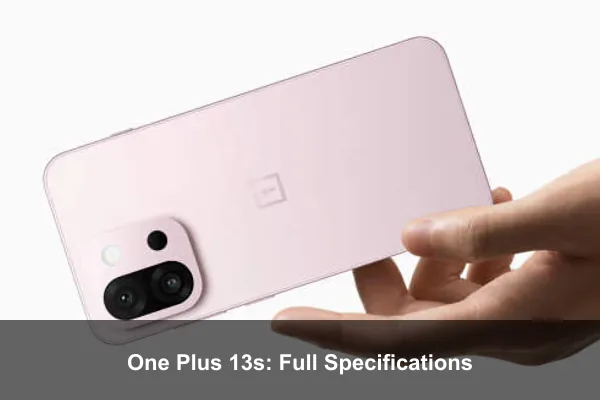
Measuring 150.8 x 71.7 x 8.2 mm and weighing just 185 g, the 13s is genuinely one-hand friendly. The aluminum alloy frame paired with glass front and IP65 dust and splash resistance gives it premium credentials, though it stops short of the IP68/IP69 ratings seen on larger One Plus flagships. Three understated colorways, Green Silk, Black Velvet, and Pink Satin, lean elegant rather than flashy.
Display Quality and Daily Viewing
The 6.32-inch LTPO AMOLED runs at 1216 x 2640 pixels for a sharp 460 ppi, refreshes at 120Hz, and uses 2160Hz PWM dimming to reduce eye strain. Support for Dolby Vision, HDR10+, and HDR Vivid alongside 1600 nits HBM brightness means HDR streaming and outdoor visibility are both well covered. Crystal Shield Glass adds scratch resistance.
Raw Performance and Thermals
Qualcomm’s Snapdragon 8 Elite on a 3 nm process drives the 13s, paired with the Adreno 830 GPU and UFS 4.0 storage. AnTuTu v10 scores of 2,499,190, GeekBench 6 results of 9,093, and a 3DMark Wild Life Extreme reading of 6,473 confirm true flagship throughput. With 12 GB RAM standard across both 256 GB and 512 GB tiers, multitasking headroom is generous.
Camera System Strengths and Limits
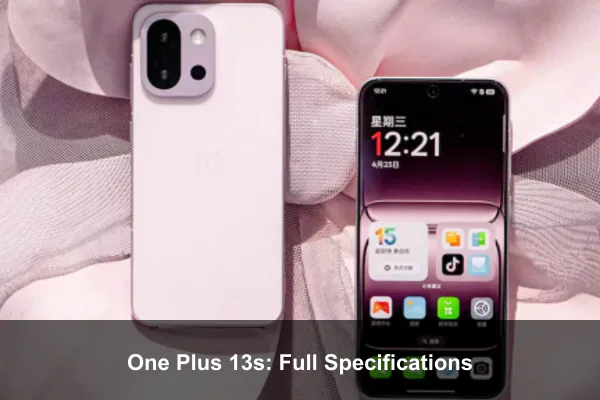
The dual rear setup pairs a 50 MP f/1.8 main sensor with OIS and a 50 MP f/2.0 telephoto offering 2x optical zoom. While there is no dedicated ultrawide, the inclusion of a color spectrum sensor, Dolby Vision HDR video recording, and 4K60 capture keeps the system competitive for portraits and reach. The 32 MP autofocus selfie camera with 4K30 video is a strong front-facing offering for a compact device.
Battery Life and Charging Speeds

A 5850 mAh cell is exceptional for a sub-6.5-inch phone and outsizes many larger rivals. Wired charging tops out at 80W, with 33W PPS and 18W USB-PD for cross-device compatibility, plus 5W reverse wired output. Wireless charging is omitted, which is the most notable trade-off in the compact format.
Software Experience
OxygenOS 15 on top of Android 15 brings One Plus’s refined gesture system, AI photo tools, and the Circle to Search shortcut. The software stays clean compared with many regional skins, and One Plus typically commits to multi-year Android updates on its flagship line.
Connectivity Loadout
The 13s ships with Wi-Fi 7, Bluetooth 6.0 with aptX HD and LHDC 5, NFC, an infrared blaster, and dual-frequency GNSS with NavIC. The single drawback is USB Type-C 2.0 rather than 3.x, limiting wired data transfer speeds for power users handling large media files.
Who Should Buy the One Plus 13s
This phone is built for buyers who actively want a compact flagship and refuse to settle for mid-range silicon. It is also a strong pick for users prioritizing battery endurance in a small body, or anyone upgrading from older compact phones like the iPhone mini line who want to stay on Android.
Conclusion
The One Plus 13s is one of the most complete compact flagships of 2025, blending Snapdragon 8 Elite performance, a punchy LTPO AMOLED, and a class-leading 5850 mAh battery into a 185 g chassis. Skipping wireless charging and an ultrawide camera are real trade-offs, but for buyers chasing small-screen flagship power at ₹54,998, the 13s is an easy recommendation.
