
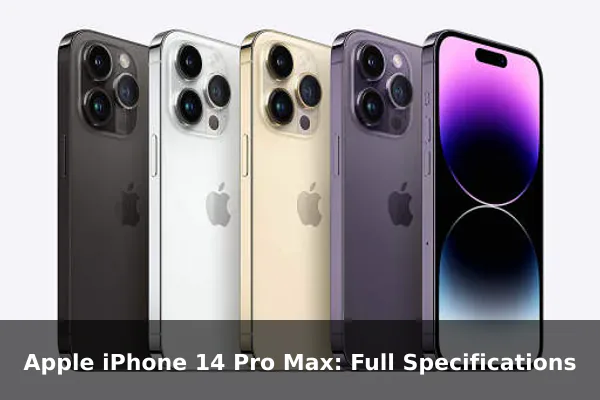
The Apple iPhone 14 Pro Max stands as one of the most influential flagship smartphones of its generation, introducing the Dynamic Island, an Always-On display, and a 48MP main camera that pushed iPhone imaging into new territory. Announced on September 7, 2022 and released on September 16, 2022, it remains a benchmark device for buyers comparing premium iOS hardware against newer releases and the Android competition.
This specifications-focused breakdown looks at what the iPhone 14 Pro Max delivers across design, display, performance, imaging, battery, and connectivity, drawing on Apple’s own technical documentation as the primary reference. The goal is to help shoppers, upgraders, and second-hand buyers judge how this device fits their needs at today’s prices.
Full Specifications
Network
| Technology: | GSM / CDMA / HSPA / EVDO / LTE / 5G |
| 2G bands: | GSM 850 / 900 / 1800 / 1900 |
| CDMA 800 / 1900 | |
| 3G bands: | HSDPA 850 / 900 / 1700(AWS) / 1900 / 2100 |
| CDMA2000 1xEV-DO | |
| 4G bands: | 1, 2, 3, 4, 5, 7, 8, 12, 13, 17, 18, 19, 20, 25, 26, 28, 30, 32, 34, 38, 39, 40, 41, 42, 46, 48, 66 – A2894, A2896 |
| 1, 2, 3, 4, 5, 7, 8, 11, 12, 13, 14, 17, 18, 19, 20, 21, 25, 26, 28, 29, 30, 32, 34, 38, 39, 40, 41, 42, 46, 48, 53, 66, 71 – A2651, A2893 | |
| 1, 2, 3, 4, 5, 7, 8, 12, 13, 17, 18, 19, 20, 25, 26, 28, 30, 32, 34, 38, 39, 40, 41, 42, 46, 48, 66 – A2895 | |
| 5G bands: | 1, 2, 3, 5, 7, 8, 12, 20, 25, 26, 28, 30, 38, 40, 41, 48, 66, 70, 77, 78, 79 SA/NSA/Sub6 – A2894, A2896 |
| 1, 2, 3, 5, 7, 8, 12, 14, 20, 25, 26, 28, 29, 30, 38, 40, 41, 48, 53, 66, 70, 71, 77, 78, 79, 258, 260, 261 SA/NSA/Sub6/mmWave – A2651 | |
| 1, 2, 3, 5, 7, 8, 12, 14, 20, 25, 26, 28, 29, 30, 38, 40, 41, 48, 53, 66, 70, 71, 77, 78, 79 SA/NSA/Sub6 – A2893 | |
| 1, 2, 3, 5, 7, 8, 12, 20, 25, 26, 28, 30, 38, 40, 41, 48, 66, 70, 77, 78, 79 SA/NSA/Sub6 – A2895 | |
| Speed: | HSPA, LTE, 5G, EV-DO Rev.A 3.1 Mbps |
Launch
| Announced: | 2022, September 07 |
| Status: | Available. Released 2022, September 16 |
Body
| Dimensions: | 160.7 x 77.6 x 7.9 mm (6.33 x 3.06 x 0.31 in) |
| Weight: | 240 g (8.47 oz) |
| Build: | Glass front, glass back, stainless steel frame |
| SIM: | Nano-SIM + eSIM + eSIM (max 2 at a time; International)eSIM + eSIM (8 or more, max 2 at a time; USA)Nano-SIM + Nano-SIM (China) |
| IP68 dust tight and water resistant (immersible up to 6m for 30 min) Apple Pay (Visa, MasterCard, AMEX certified) |
Display
| Type: | LTPO Super Retina XDR OLED, 120Hz, HDR10, Dolby Vision, 1000 nits (typ), 2000 nits (HBM) |
| Size: | 6.7 inches, 110.2 cm2 (~88.3% screen-to-body ratio) |
| Resolution: | 1290 x 2796 pixels, 19.5:9 ratio (~460 ppi density) |
| Protection: | Ceramic Shield glass |
Platform
| OS: | iOS 16, upgradable to iOS 18.6 |
| Chipset: | Apple A16 Bionic (4 nm) |
| CPU: | Hexa-core (2×3.46 GHz Everest + 4×2.02 GHz Sawtooth) |
| GPU: | Apple GPU (5-core graphics) |
Memory
| Card slot: | No |
| Internal: | 128GB 6GB RAM, 256GB 6GB RAM, 512GB 6GB RAM, 1TB 6GB RAM |
| NVMe |
Main Camera
| Triple: | 48 MP, f/1.8, 24mm (wide), 1/1.28″, 1.22µm, dual pixel PDAF, sensor-shift OIS 12 MP, f/2.8, 77mm (telephoto), 1/3.5″, 1.0µm, PDAF, OIS, 3x optical zoom 12 MP, f/2.2, 13mm, 120˚ (ultrawide), 1/2.55″, 1.4µm, dual pixel PDAF TOF 3D LiDAR scanner (depth) |
| Features: | Dual-LED dual-tone flash, HDR (photo/panorama) |
| Video: | 4K@24/25/30/60fps, 1080p@25/30/60/120/240fps, 10-bit HDR, Dolby Vision HDR (up to 60fps), ProRes, stereo sound rec. |
Selfie camera
| Single: | 12 MP, f/1.9, 23mm (wide), 1/3.6″, 1.0µm, PDAF, OIS SL 3D, (depth/biometrics sensor) |
| Features: | HDR |
| Video: | 4K@24/25/30/60fps, 1080p@25/30/60/120fps, gyro-EIS |
Sound
| Loudspeaker: | Yes, with stereo speakers |
| 3.5mm jack: | No |
Comms
| WLAN: | Wi-Fi 802.11 a/b/g/n/ac/6, dual-band, hotspot |
| Bluetooth: | 5.3, A2DP, LE |
| Positioning: | GPS (L1+L5), GLONASS, GALILEO, BDS, QZSS |
| NFC: | Yes |
| Radio: | No |
| USB: | Lightning, USB 2.0 |
Features
| Sensors: | Face ID, accelerometer, gyro, proximity, compass, barometer |
| Ultra Wideband (UWB) support Emergency SOS via satellite (SMS sending/receiving) |
Battery
| Type: | Li-Ion 4323 mAh (16.68 Wh) |
| Charging: | Wired, PD2.0, 50% in 30 min 15W wireless (MagSafe) 15W wireless (Qi2) – requires iOS 17.2 update |
Misc
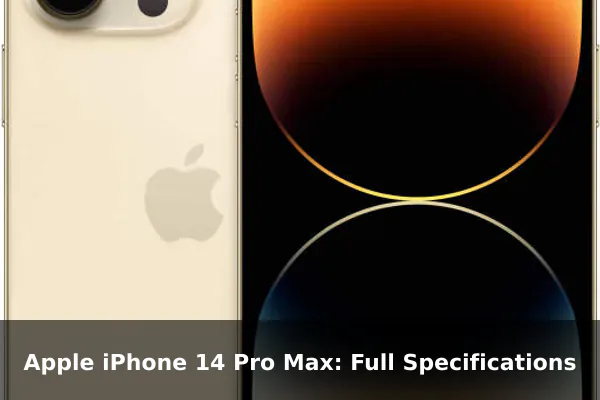
| Colors: | Space Black, Silver, Gold, Deep Purple |
| Models: | A2894, A2651, A2893, A2895, iphone15,3 |
| SAR: | 1.15 W/kg (head) 1.07 W/kg (body) |
| SAR EU: | 0.99 W/kg (head) 0.98 W/kg (body) |
| Price: | € 654.00 / $ 580.00 / £ 489.95 |
Our Tests
| Performance: | AnTuTu: 955884 (v9) GeekBench: 5423 (v5.1) GFXBench: 54fps (ES 3.1 onscreen) |
| Display: | 1760 nits max brightness (measured) |
| Camera: | Photo / Video |
| Loudspeaker: | -24.3 LUFS (Very good) |
| Battery (old): | Endurance rating 121h |
Price and Availability
The Apple iPhone 14 Pro Max offers a compelling combination of features and performance. While the base price is around €654, the actual cost may vary depending on your location and retailer. Below, you’ll find the approximate price of the Apple iPhone 14 Pro Max converted into various currencies. Please note that these are estimates based on recent exchange rates as of June 1, 2026 and may not reflect the exact price you’ll find at a retailer.
- United States: $762
- Japan: ¥121,435
- United Kingdom: £567
- Australia: A$1,062
- Canada: C$1,051
- Taiwan: NT$23,923
- Denmark: kr4.879
- Saudi Arabia: ﷼2,858
- South Korea: ₩1,148,375
- Germany: €654
- Brazil: R$3.840
- Vietnam: ₫19.929.889
- Kenya: KSh 98,625
- India: ₹72,358
- Indonesia: Rp 13.602.904
- Nigeria: ₦1,041,333
- Pakistan: ₨212,157
- Philippines: ₱46,871
- Bangladesh: ৳৯৩,৫০০
Value Proposition in 2026
Several years after launch, the iPhone 14 Pro Max occupies an interesting middle ground. With listed reference pricing around €654 / $580 / £490 in the secondary market, it offers flagship-grade silicon, an LTPO 120Hz OLED, and a triple 48MP-led camera system at a price well below current Pro Max generations. For buyers who want a premium iPhone experience without paying brand-new flagship money, it remains competitive against many mid-to-upper Android phones in raw capability, especially given Apple’s long iOS support window.
Design and Build Quality
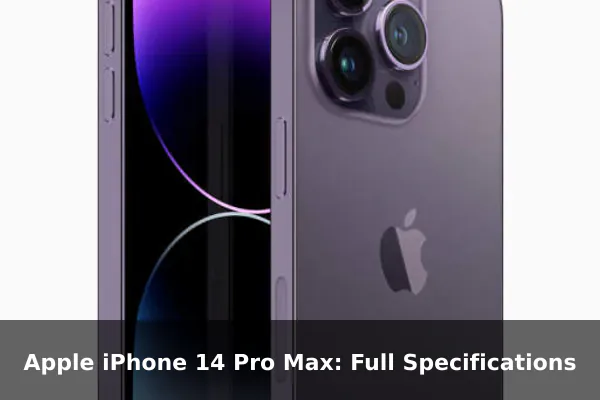
The iPhone 14 Pro Max measures 160.7 x 77.6 x 7.9 mm and weighs a substantial 240 g. The build pairs a glass front and back with a stainless steel frame, finished in Space Black, Silver, Gold, or Deep Purple. IP68 certification allows immersion up to 6 meters for 30 minutes, and Ceramic Shield protects the front glass. It is not a light phone, but the materials and tolerances still feel distinctly premium, and the flat-edge industrial design has aged well.
Display Experience
The 6.7-inch LTPO Super Retina XDR OLED is one of the standout elements of this device. It runs at 1290 x 2796 pixels (~460 ppi) with a 19.5:9 ratio, supports a variable 120Hz ProMotion refresh rate, HDR10, and Dolby Vision. Apple rates typical brightness at 1000 nits with up to 2000 nits in high brightness mode, and independent measurements have recorded around 1760 nits in real-world tests. The Dynamic Island, introduced on this generation, replaces the notch with an interactive software-hardware area for alerts, calls, and Live Activities.
Performance and Software
Powering the phone is the Apple A16 Bionic on a 4 nm process, with a hexa-core CPU (2×3.46 GHz Everest + 4×2.02 GHz Sawtooth) and a 5-core Apple GPU. Reported benchmark figures include around 955,884 on AnTuTu v9, 5,423 on GeekBench v5.1, and 54 fps in GFXBench (ES 3.1 onscreen). RAM is 6GB across every storage tier (128GB, 256GB, 512GB, and 1TB), with no microSD support. The device shipped on iOS 16 and, per Apple’s update track, supports iOS 18.6, helping preserve long-term value through years of feature and security updates.
Camera System
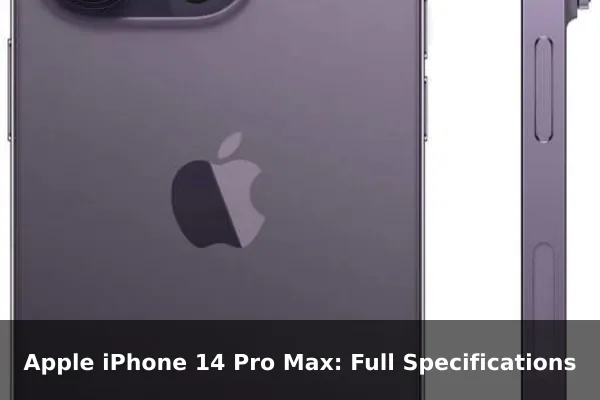
The rear camera array consists of a 48MP f/1.8 wide with sensor-shift OIS and dual pixel PDAF, a 12MP f/2.8 telephoto with 3x optical zoom and OIS, and a 12MP f/2.2 ultrawide with a 120-degree field of view. A LiDAR scanner aids depth and low-light autofocus. Video capability covers 4K at up to 60 fps in Dolby Vision HDR, plus ProRes capture and stereo recording. The 12MP f/1.9 front camera adds autofocus and records 4K video, an upgrade that lifted iPhone selfie and vlog quality significantly.
Battery and Charging
A 4,323 mAh (16.68 Wh) battery powers the device, with wired charging supporting roughly 50% in 30 minutes via a USB-PD adapter (sold separately). MagSafe wireless charging reaches 15W, and Qi2 wireless charging at 15W is supported after the iOS 17.2 update. GSMArena-style endurance figures put the device at around 121 hours, which translates into comfortable all-day use for most users, even with heavy screen-on time.
Connectivity and Cellular
Connectivity is broad, covering 5G (Sub6 globally, with mmWave on U.S. models such as A2651), Wi-Fi 6 (dual-band), Bluetooth 5.3 LE, and dual-frequency GNSS (GPS L1+L5, GLONASS, Galileo, BDS, QZSS). NFC and Ultra Wideband are present. SIM configuration varies by region: Nano-SIM plus dual eSIM internationally, eSIM-only in the U.S., and dual Nano-SIM in China. Charging and data still rely on a Lightning port at USB 2.0 speeds, which is the main connectivity caveat compared with newer USB-C iPhones.
Who Should Buy It
The iPhone 14 Pro Max suits buyers who want a long-lived iOS flagship with a top-tier OLED, capable cameras, and Apple’s premium build, but who prefer to skip the premium of the latest model. It is also a strong pick for content creators on a budget who value ProRes video and Dolby Vision capture. Shoppers who prioritize USB-C, the newest Apple Intelligence features, or the lightest possible phone may prefer a more recent model instead.
Conclusion
The Apple iPhone 14 Pro Max remains a compelling flagship choice in 2026, combining a high-quality LTPO 120Hz OLED, the A16 Bionic, a versatile 48MP camera system, and durable IP68 construction backed by Apple’s long software support. If you can accept its Lightning port and 240 g weight, it offers strong value for buyers seeking a premium iPhone experience without paying current-generation Pro Max prices.
Official references
- Apple Support – iPhone 14 Pro Max Technical Specifications – Primary Apple specifications page for dimensions, display, chip, cameras, cellular bands, battery, sensors, storage, colors, and model-specific details.
- Apple Support – Identify Your iPhone Model – Official Apple reference for confirming iPhone 14 Pro Max release year, capacities, colors, regional model numbers, and SIM tray differences.
- Apple – iPhone Supported 5G and LTE Networks – Official Apple cellular compatibility reference for checking 5G and LTE support by iPhone model, carrier, and region.
- Apple Newsroom – Apple Debuts iPhone 14 Pro and iPhone 14 Pro Max – Official launch announcement for feature context, release timing, A16 Bionic, Dynamic Island, Always-On display, 48MP camera, and safety features.
- Apple – iPhone 14 Pro Max Product Environmental Report – Official Apple PDF for environmental, materials, packaging, energy, and product lifecycle claims related to the iPhone 14 Pro Max.
