
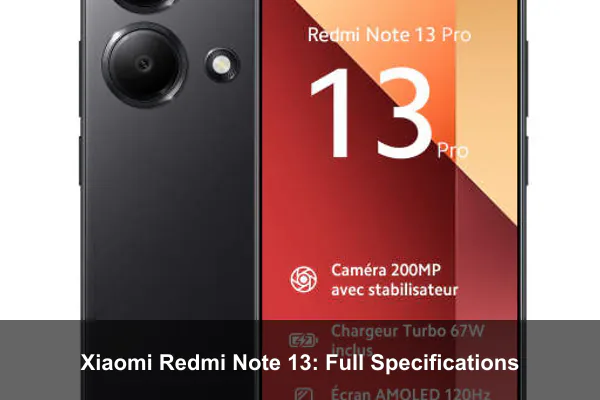
The Xiaomi Redmi Note 13 is a value-focused 5G smartphone built around a 6.67-inch AMOLED display, a Dimensity 6080 chipset, and a 108MP main camera.
Its strongest appeal is the mix of a slim 174.5g body, 120Hz screen, 5000mAh battery, expandable storage, and everyday-friendly extras such as a headphone jack, infrared port, and IP54 splash resistance.
Full Specifications
Network
| Technology: | GSM / HSPA / LTE / 5G |
| 2G bands: | GSM 850 / 900 / 1800 / 1900 |
| 3G bands: | HSDPA 800 / 850 / 900 / 1700(AWS) / 1900 / 2100 – International |
| HSDPA 850 / 900 / 2100 – India | |
| 4G bands: | 1, 2, 3, 4, 5, 7, 8, 12, 13, 17, 18, 19, 20, 26, 28, 32, 38, 40, 41, 66 – International |
| 1, 3, 5, 8, 28 – India | |
| 5G bands: | 1, 3, 5, 7, 8, 20, 28, 38, 40, 41, 66, 77, 78 SA/NSA – International |
| 1, 3, 5, 8, 28, 40, 78 SA/NSA – India | |
| Speed: | HSPA, LTE, 5G |
Launch
| Announced: | 2024, January 04 |
| Status: | Available. Released 2024, January 10 |
Body
| Dimensions: | 161.1 x 75 x 7.6 mm (6.34 x 2.95 x 0.30 in) |
| Weight: | 174.5 g (6.14 oz) |
| Build: | Glass front (Gorilla Glass 5), plastic frame, plastic back |
| SIM: | Nano-SIM + Nano-SIM |
| IP54 dust protected and water resistant (water splashes) |
Display
| Type: | AMOLED, 1B colors*, 120Hz, 1920Hz PWM, 1000 nits (peak) |
| Size: | 6.67 inches, 107.4 cm2 (~88.9% screen-to-body ratio) |
| Resolution: | 1080 x 2400 pixels, 20:9 ratio (~395 ppi density) |
| Protection: | Corning Gorilla Glass 5 |
| *1B colors (market/region dependent) |
Platform
| OS: | Android 13, upgradable to Android 14, up to 2 major Android upgrades, HyperOS |
| Chipset: | Mediatek Dimensity 6080 (6 nm) |
| CPU: | Octa-core (2×2.4 GHz Cortex-A76 & 6×2.0 GHz Cortex-A55) |
| GPU: | Mali-G57 MC2 |
Memory
| Card slot: | microSDXC (uses shared SIM slot) |
| Internal: | 128GB 6GB RAM, 128GB 8GB RAM, 256GB 8GB RAM, 256GB 12GB RAM, 512GB 12GB RAM |
| UFS 2.2 |
Main Camera
| Triple: | 108 MP, f/1.7, (wide), 1/1.67″, 0.64µm, PDAF 8 MP, f/2.2, (ultrawide) 2 MP, f/2.4, (depth) |
| Features: | LED flash, HDR, panorama |
| Video: | 1080p@30fps |
Selfie camera
| Single: | 16 MP, f/2.4, (wide) |
| Features: | HDR, panorama |
| Video: | 1080p@30fps |
Sound
| Loudspeaker: | Yes |
| 3.5mm jack: | Yes |
| 24-bit/192kHz Hi-Res & Hi-Res wireless audio |
Comms
| WLAN: | Wi-Fi 802.11 a/b/g/n/ac, dual-band |
| Bluetooth: | 5.3, A2DP, LE |
| Positioning: | GPS, GLONASS |
| NFC: | Yes (market/region dependent) |
| Infrared port: | Yes |
| Radio: | No |
| USB: | USB Type-C 2.0, OTG |
Features
| Sensors: | Fingerprint (side-mounted), accelerometer, gyro, proximity, compass |
Battery
| Type: | Li-Po 5000 mAh |
| Charging: | 33W wired |
Misc
| Colors: | Graphite black (Stealth Black), Arctic White, Ocean Teal, Prism Gold |
| Models: | 2312DRAABG, 2312DRAABI |
| SAR: | 1.07 W/kg (head) 0.99 W/kg (body) |
| SAR EU: | 0.94 W/kg (head) 1.00 W/kg (body) |
| Price: | € 155.20 / $ 199.99 / £ 188.32 / ₹ 16,998 |
Our Tests
| Performance: | AnTuTu: 405118 (v9), 455421 (v10)
GeekBench: 1968 (v5), 1978 (v6) |
| Display: | 991 nits max brightness (measured) |
| Loudspeaker: | -24.0 LUFS (Very good) |
| Battery: | Active use score 9:49h |
Price and Availability
The Xiaomi Redmi Note 13 offers a compelling combination of features and performance. While the base price is around €155, the actual cost may vary depending on your location and retailer. Below, you’ll find the approximate price of the Xiaomi Redmi Note 13 converted into various currencies. Please note that these are estimates based on recent exchange rates as of May 10, 2026 and may not reflect the exact price you’ll find at a retailer.
- United States: $183
- Japan: ¥28,626
- United Kingdom: £134
- Australia: A$252
- Canada: C$250
- Taiwan: NT$5,728
- Denmark: kr1.158
- Saudi Arabia: ﷼685
- South Korea: ₩267,139
- Germany: €155
- Brazil: R$897
- Vietnam: ₫4.791.633
- Kenya: KSh 23,600
- India: ₹17,250
- Indonesia: Rp 3.169.878
- Nigeria: ₦245,047
- Pakistan: ₨50,980
- Philippines: ₱11,064
- Bangladesh: ৳২২,৪৩০
Value Positioning
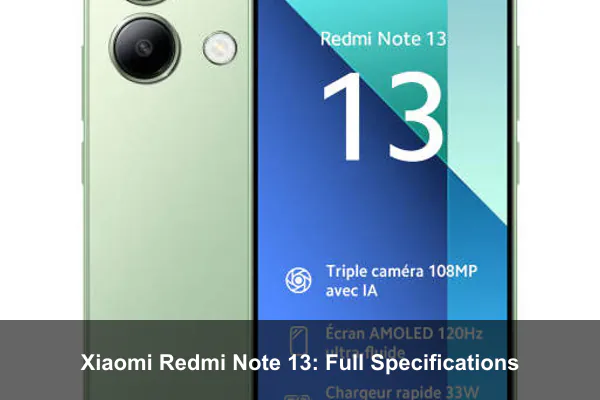
The Redmi Note 13 targets buyers who want modern essentials without moving into flagship pricing. The combination of 5G support, AMOLED display quality, UFS 2.2 storage, and multiple RAM and storage options makes it more flexible than many basic budget phones.
Design and Build
At 7.6mm thick and 174.5g, this is a relatively slim and light phone for its screen and battery size. Gorilla Glass 5 on the front and IP54 dust and splash resistance add useful durability, though the plastic frame and back keep it firmly in the mid-range class.
Display Experience
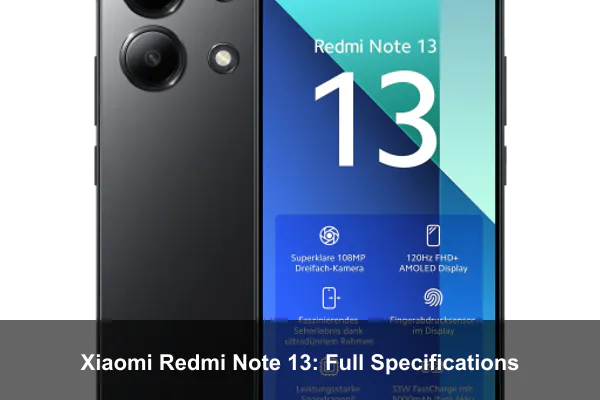
The 6.67-inch AMOLED panel is one of the phone’s main strengths. It offers a 120Hz refresh rate, 1080 x 2400 resolution, 1920Hz PWM dimming, and a measured brightness of 991 nits, making it well suited for scrolling, streaming, and outdoor use.
Performance and Storage
The MediaTek Dimensity 6080 is designed for reliable daily performance rather than gaming dominance. Benchmark results show solid mid-range capability, while UFS 2.2 storage and configurations up to 512GB with 12GB RAM give buyers room to choose the version that fits their workload.
Camera Setup
The 108MP main camera is the headline sensor, supported by an 8MP ultrawide and a 2MP depth camera. It should suit casual daylight photography and wide scenes, but video is limited to 1080p at 30fps, so creators wanting sharper 4K recording should look higher up the range.
Battery and Charging
The 5000mAh battery is paired with 33W wired charging. In testing, the active use score reached 9:49h, which points to dependable all-day use for mixed browsing, messaging, streaming, and camera use.
Software Support
The phone ships with Android 13 and is upgradeable to Android 14 with HyperOS, with up to two major Android upgrades listed. That is acceptable for the segment, though buyers who prioritize longer software support may want to compare current rivals carefully.
Connectivity and Extras
Connectivity is broad for a mid-range device, with 5G SA/NSA support, dual-band Wi-Fi ac, Bluetooth 5.3, USB-C with OTG, GPS and GLONASS positioning, NFC depending on market, and an infrared port. The shared microSD slot is useful, but it means storage expansion can conflict with dual-SIM use.
Who Should Buy It
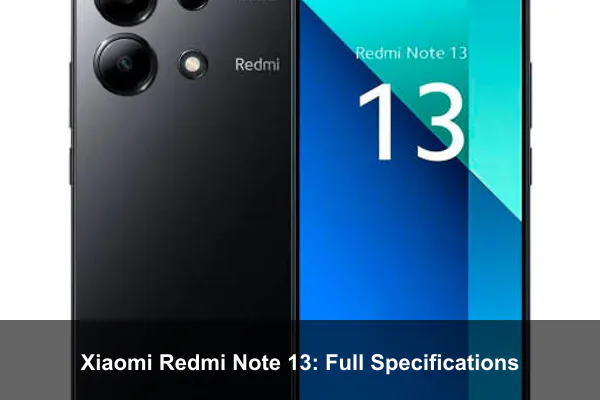
The Redmi Note 13 is best for users who prioritize display quality, battery life, 5G, expandable storage, and everyday convenience features over flagship performance or advanced video recording. It is a practical choice for students, commuters, and budget-conscious Android users.
Conclusion
The Xiaomi Redmi Note 13 stands out as a balanced budget 5G phone with a strong AMOLED display, slim body, capable main camera, and dependable battery life. Buy it if you want a feature-rich daily phone at a sensible price, but skip it if 4K video or premium materials are priorities.
