
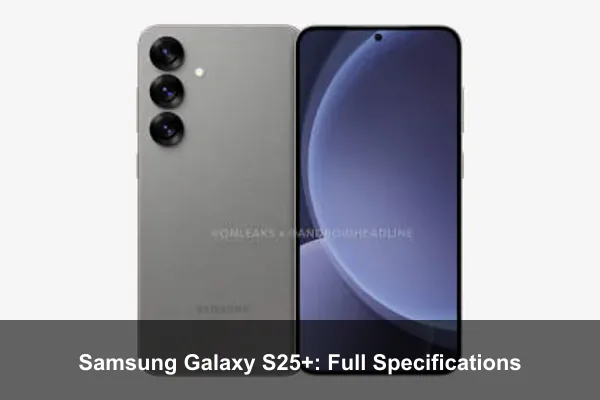
Samsung Galaxy S25+ sits in the center of Samsung’s 2025 flagship lineup, offering a large QHD+ display and top-tier silicon without crossing into Ultra territory.
This overview uses a long-term ownership angle so you can compare not just headline hardware, but also durability, support lifespan, and regional model differences before buying.
Full Specifications
Network
| Technology: | GSM / CDMA / HSPA / EVDO / LTE / 5G |
| 2G bands: | GSM 850 / 900 / 1800 / 1900 |
| CDMA 800 / 1900 & TD-SCDMA | |
| 3G bands: | HSDPA 850 / 900 / 1700(AWS) / 1900 / 2100 |
| CDMA2000 1xEV-DO | |
| 4G bands: | 1, 2, 3, 4, 5, 7, 8, 12, 13, 17, 18, 19, 20, 25, 26, 28, 32, 38, 39, 40, 41, 66 – International |
| 1, 2, 3, 4, 5, 7, 8, 12, 13, 14, 18, 19, 20, 25, 26, 28, 29, 30, 38, 39, 40, 41, 48, 66, 71 – USA unlocked | |
| 5G bands: | 1, 2, 3, 5, 7, 8, 12, 20, 25, 26, 28, 38, 40, 41, 66, 75, 77, 78 SA/NSA/Sub6 – International |
| 1, 2, 5, 7, 25, 28, 41, 66, 71, 77, 78, 257, 258, 260, 261 SA/NSA/Sub6/mmWave – USA unlocked | |
| Speed: | HSPA, LTE (up to 7CA), 5G |
Launch
| Announced: | 2025, January 22 |
| Status: | Available. Released 2025, February 03 |
Body
| Dimensions: | 158.4 x 75.8 x 7.3 mm (6.24 x 2.98 x 0.29 in) |
| Weight: | 190 g (6.70 oz) |
| Build: | Glass front (Gorilla Glass Victus 2), glass back (Gorilla Glass Victus 2), aluminum frame |
| SIM: | Nano-SIM + Nano-SIM + eSIM + eSIM (max 2 at a time) – INT Nano-SIM + eSIM + eSIM (max 2 at a time) – USA Nano-SIM + Nano-SIM – CN |
| IP68 dust tight and water resistant (immersible up to 1.5m for 30 min) Armor aluminum 2 frame |
Display
| Type: | Dynamic LTPO AMOLED 2X, 120Hz, 480Hz PWM, HDR10+, 2600 nits (peak) |
| Size: | 6.7 inches, 110.2 cm2 (~91.8% screen-to-body ratio) |
| Resolution: | 1440 x 3120 pixels, 19.5:9 ratio (~513 ppi density) |
| Protection: | Corning Gorilla Glass Victus 2, Mohs level 5 |
Platform
| OS: | Android 15, up to 7 major Android upgrades, One UI 7 |
| Chipset: | Qualcomm SM8750-AC Snapdragon 8 Elite (3 nm) |
| CPU: | Octa-core (2×4.47 GHz Oryon V2 Phoenix L + 6×3.53 GHz Oryon V2 Phoenix M) |
| GPU: | Adreno 830 (1200 MHz) |
Memory
| Card slot: | No |
| Internal: | 256GB 12GB RAM, 512GB 12GB RAM |
| UFS 4.0 |
Main Camera
| Triple: | 50 MP, f/1.8, 24mm (wide), 1/1.56″, 1.0µm, dual pixel PDAF, OIS 10 MP, f/2.4, 67mm (telephoto), 1/3.94″, 1.0µm, PDAF, OIS, 3x optical zoom 12 MP, f/2.2, 13mm, 120˚ (ultrawide), 1/2.55″ 1.4µm, Super Steady video |
| Features: | Best Face, LED flash, auto-HDR, panorama |
| Video: | 8K@24/30fps, 4K@30/60fps, 1080p@30/60/120/240fps, 10-bit HDR, HDR10+, stereo sound rec., gyro-EIS |
Selfie camera
| Single: | 12 MP, f/2.2, 26mm (wide), 1/3.2″, 1.12µm, dual pixel PDAF |
| Features: | HDR, HDR10+ |
| Video: | 4K@30/60fps, 1080p@30fps |
Sound
| Loudspeaker: | Yes, with stereo speakers |
| 3.5mm jack: | No |
| 32-bit/384kHz audio Tuned by AKG |
Comms
| WLAN: | Wi-Fi 802.11 a/b/g/n/ac/6e/7, tri-band, Wi-Fi Direct |
| Bluetooth: | 5.4, A2DP, LE |
| Positioning: | GPS, GLONASS, BDS, GALILEO, QZSS |
| NFC: | Yes |
| Radio: | No |
| USB: | USB Type-C 3.2, DisplayPort 1.2, OTG |
Features
| Sensors: | Fingerprint (under display, ultrasonic), accelerometer, gyro, proximity, compass, barometer |
| Samsung DeX, Samsung Wireless DeX (desktop experience support) Ultra Wideband (UWB) support Circle to Search |
Battery
| Type: | Li-Ion 4900 mAh |
| Charging: | 45W wired, PD3.0, 65% in 30 min 15W wireless (Qi2 Ready) 4.5W reverse wireless |
Misc
| Colors: | Icy Blue, Mint, Navy, Silver Shadow, Pink Gold, Coral Red, Blue Black |
| Models: | SM-S936B, SM-S936B/DS, SM-S936U, SM-S936U1, SM-S936W, SM-S936N, SM-S9360, SM-S936E, SM-S936E/DS |
| SAR: | 1.16 W/kg (head) 0.81 W/kg (body) |
| SAR EU: | 1.26 W/kg (head) 1.26 W/kg (body) |
| Price: | € 750.00 / $ 600.00 / £ 790.00 / ₹ 104,999 |
Our Tests
| Performance: | AnTuTu: 2133477 (v10) GeekBench: 9669 (v6) 3DMark: 6601 (Wild Life Extreme) |
| Display: | 1449 nits max brightness (measured) |
| Loudspeaker: | -25.1 LUFS (Very good) |
| Battery: | Active use score 14:26h |
EU LABEL
| Energy: | Class B |
| Battery: | 43:38h endurance, 2000 cycles |
| Free fall: | Class A (270 falls) |
| Repairability: | Class C |
Price and Availability
The Samsung Galaxy S25+ offers a compelling combination of features and performance. While the base price is around €750, the actual cost may vary depending on your location and retailer. Below, you’ll find the approximate price of the Samsung Galaxy S25+ converted into various currencies. Please note that these are estimates based on recent exchange rates as of April 11, 2026 and may not reflect the exact price you’ll find at a retailer.
- United States: $879
- Japan: ¥139,963
- United Kingdom: £654
- Australia: A$1,243
- Canada: C$1,216
- Taiwan: NT$27,902
- Denmark: kr5.597
- Saudi Arabia: ﷼3,296
- South Korea: ₩1,301,515
- Germany: €750
- Brazil: R$4.433
- Vietnam: ₫22.920.532
- Kenya: KSh 113,415
- India: ₹81,383
- Indonesia: Rp 15.014.315
- Nigeria: ₦1,199,702
- Pakistan: ₨245,361
- Philippines: ₱52,634
- Bangladesh: ৳১,০৮,০০২
Why the Galaxy S25+ Is Good Value
At its listed pricing, the S25+ stays in the premium tier but avoids Ultra-level cost. Its long software policy, DeX support, and EU label indicators (Energy Class B, battery rated for 2000 cycles, Free Fall Class A) make it compelling for buyers planning multi-year use.
Design and Build Quality
The phone is slim for its class at 7.3 mm and keeps weight controlled at 190 g, so it feels premium without becoming bulky. Gorilla Glass Victus 2 on both sides, an Armor Aluminum 2 frame, and IP68 protection underline a durability-first design.
Display Experience
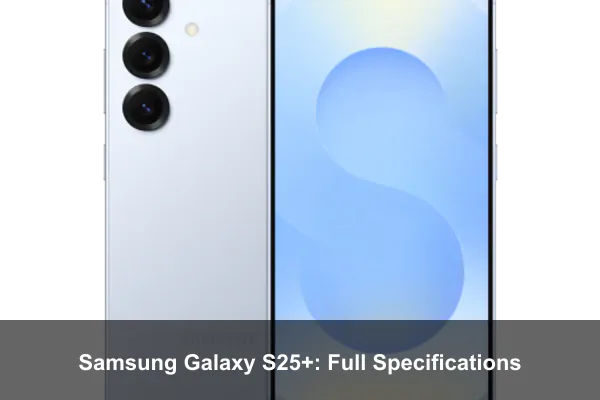
The 6.7-inch Dynamic LTPO AMOLED 2X panel combines QHD+ resolution and 120Hz refresh, giving crisp text and smooth motion that compare well against many FHD+ rivals. Samsung quotes up to 2600 nits peak brightness, and the measured 1449 nits still points to strong outdoor readability.
Performance and Storage
Snapdragon 8 Elite with 12GB RAM and UFS 4.0 storage puts this device firmly in flagship territory for demanding apps and gaming. Benchmark results (AnTuTu 2,133,477; Geekbench 9,669; 3DMark Wild Life Extreme 6,601) support that real-world expectation.
Camera System Balance
The triple setup focuses on practical coverage: a high-resolution main camera, a 3x optical telephoto for portraits and mid-range zoom, and an ultrawide for wider framing. Video tools are a major strength, with 8K capture, 10-bit HDR, and multiple stabilized recording options.
Battery Life and Charging
A 4900 mAh battery with a 14:26h active-use score suggests dependable all-day endurance for mixed heavy use. Charging is balanced rather than extreme: 45W wired (65% in 30 minutes), plus 15W wireless and reverse wireless support.
Software and Long-Term Support
Android 15 with One UI 7 and up to seven major Android upgrades is one of the strongest longevity packages in the segment. Features like Circle to Search and desktop-style DeX modes add productivity value beyond core smartphone tasks.
Connectivity and Extras
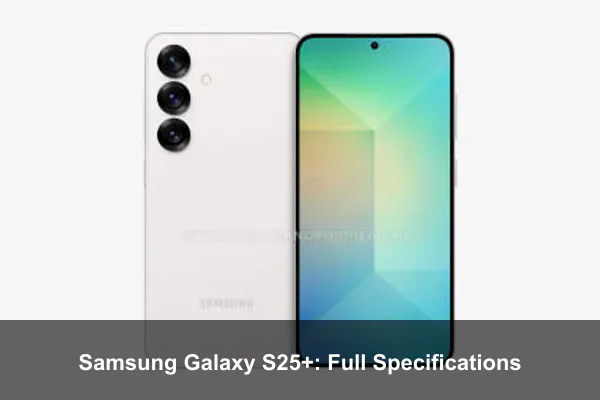
Connectivity is flagship-grade with Wi-Fi 7, Bluetooth 5.4, USB-C 3.2 with DisplayPort, UWB, and broad 5G support including mmWave on USA unlocked variants. Regional SIM differences are important, so buyers should confirm model number and SIM format before importing.
Who Should Buy Samsung Galaxy S25+
This phone is a strong fit for users who want a large premium display, top-tier speed, and long software life without moving to the highest-priced Ultra class. If your top priority is maximum zoom reach or ultra-fast charging above this tier, compare alternatives first.
Conclusion
Samsung Galaxy S25+ is a well-balanced flagship built for long ownership, combining premium display quality, high-end performance, practical cameras, and excellent software longevity. Recommended for buyers who want one premium Android phone to keep for years.
