
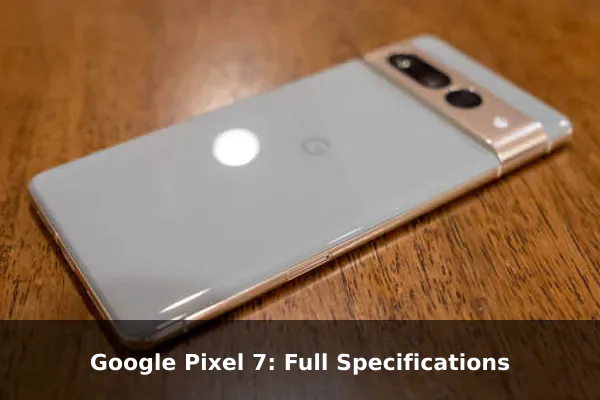
The Google Pixel 7 arrived as the company’s mainstream flagship for late 2022, pairing the second-generation Tensor G2 chip with Google’s signature computational photography in a compact, IP68-rated body. Announced on October 6, 2022 and released a week later, it sits below the larger Pixel 7 Pro while keeping most of the experience that makes a Pixel feel distinct: clean Android, fast feature updates, and a camera tuned more by software than by raw megapixels.
This guide looks at the Pixel 7 from a value and everyday-use angle rather than rehashing the spec sheet line by line. We focus on how the Tensor G2 platform, the 6.3-inch 90Hz AMOLED display, the dual rear camera, and the 4,355 mAh battery come together, and where this model still fits for buyers comparing it against newer Pixels and rivals. Figures here follow Google’s official documentation and established spec databases, and details such as pricing and update timelines can change over time.
Full Specifications
Network
| Technology: | GSM / CDMA / HSPA / EVDO / LTE / 5G |
| 2G bands: | GSM 850 / 900 / 1800 / 1900 |
| CDMA 800 / 1700 / 1900 | |
| 3G bands: | HSDPA 800 / 850 / 900 / 1700(AWS) / 1900 / 2100 |
| CDMA2000 1xEV-DO | |
| 4G bands: | 1, 2, 3, 4, 5, 7, 8, 12, 13, 14, 17, 18, 19, 20, 25, 26, 28, 29, 30, 38, 40, 41, 42, 46, 48, 66, 71 – GQML3 |
| 1, 2, 3, 4, 5, 7, 8, 12, 13, 14, 17, 18, 19, 20, 25, 26, 28, 29, 30, 32, 38, 39, 40, 41, 42, 46, 48, 66, 71 – GVU6C | |
| 5G bands: | 1, 2, 3, 4, 5, 7, 8, 12, 13, 14, 17, 18, 19, 20, 25, 26, 28, 29, 30, 38, 40, 41, 46, 48, 66, 71, 260, 261 SA/NSA/Sub6/mmWave – GQML3 |
| 1, 2, 3, 5, 7, 8, 12, 14, 20, 25, 28, 30, 38, 40, 41, 48, 66, 71, 75, 76, 77, 78 SA/NSA/Sub6 – GVU6C | |
| Speed: | HSPA, LTE (CA), 5G |
Launch
| Announced: | 2022, October 06 |
| Status: | Available. Released 2022, October 13 |
Body
| Dimensions: | 155.6 x 73.2 x 8.7 mm (6.13 x 2.88 x 0.34 in) |
| Weight: | 197 g (6.95 oz) |
| Build: | Glass front (Gorilla Glass Victus), glass back (Gorilla Glass Victus), aluminum frame |
| SIM: | Nano-SIM + eSIM |
| IP68 dust tight and water resistant (immersible up to 1.5m for 30 min) |
Display
| Type: | AMOLED, 90Hz, HDR10+, 1000 nits (HBM), 1400 nits (peak) |
| Size: | 6.3 inches, 96.7 cm2 (~84.9% screen-to-body ratio) |
| Resolution: | 1080 x 2400 pixels, 20:9 ratio (~416 ppi density) |
| Protection: | Corning Gorilla Glass Victus |
Platform
| OS: | Android 13, upgradable to Android 15, up to 5 major Android upgrades |
| Chipset: | Google Tensor G2 (5 nm) |
| CPU: | Octa-core (2×2.85 GHz Cortex-X1 & 2×2.35 GHz Cortex-A78 & 4×1.80 GHz Cortex-A55) |
| GPU: | Mali-G710 MP7 |
Memory
| Card slot: | No |
| Internal: | 128GB 8GB RAM, 256GB 8GB RAM |
| UFS 3.1 |
Main Camera
| Dual: | 50 MP, f/1.9, 25mm (wide), 1/1.31″, 1.2µm, dual pixel PDAF, OIS 12 MP, f/2.2, 114˚ (ultrawide), 1/2.9″, 1.25µm |
| Features: | Laser AF, Dual-LED flash, Pixel Shift, Auto-HDR, panorama |
| Video: | 4K@30/60fps, 1080p@30/60/120/240fps; gyro-EIS, OIS, 10-bit HDR |
Selfie camera
| Single: | 10.8 MP, f/2.2, 21mm (ultrawide), 1/3.1″, 1.22µm |
| Features: | HDR, panorama |
| Video: | 4K@30/60fps, 1080p@30/60fps |
Sound
| Loudspeaker: | Yes, with stereo speakers |
| 3.5mm jack: | No |
Comms
| WLAN: | Wi-Fi 802.11 a/b/g/n/ac/6e, tri-band, Wi-Fi Direct |
| Bluetooth: | 5.2, A2DP, LE, aptX HD |
| Positioning: | GPS (L1+L5), GLONASS (G1), BDS (B1I+B1c+B2a), GALILEO (E1+E5a), QZSS (L1+L5) |
| NFC: | Yes |
| Radio: | No |
| USB: | USB Type-C 3.2 |
Features
| Sensors: | Fingerprint (under display, optical), accelerometer, gyro, proximity, compass, barometer |
| Circle to Search |
Battery
| Type: | Li-Ion 4355 mAh |
| Charging: | 20W wired, PD3.0, 50% in 30 min 20W wireless Reverse wireless |
Misc
| Colors: | Obsidian, Lemongrass, Snow |
| Models: | GVU6C, GQML3, GO3Z5 |
| Price: | € 198.59 / $ 199.95 / £ 170.00 / ₹ 29,999 |
Our Tests
| Performance: | AnTuTu: 813114 (v9) GeekBench: 3288 (v5.1) GFXBench: 59fps (ES 3.1 onscreen) |
| Display: | 974 nits max brightness (measured) |
| Camera: | Photo / Video |
| Loudspeaker: | -26.2 LUFS (Good) |
| Battery (old): | Endurance rating 96h |
Price and Availability
The Google Pixel 7 offers a compelling combination of features and performance. While the base price is around €199, the actual cost may vary depending on your location and retailer. Below, you’ll find the approximate price of the Google Pixel 7 converted into various currencies. Please note that these are estimates based on recent exchange rates as of June 25, 2026 and may not reflect the exact price you’ll find at a retailer.
- United States: $225
- Japan: ¥36,467
- United Kingdom: £171
- Australia: A$327
- Canada: C$321
- Taiwan: NT$7,154
- Denmark: kr1.482
- Saudi Arabia: ﷼845
- South Korea: ₩347,937
- Germany: €199
- Brazil: R$1.171
- Vietnam: ₫5.919.726
- Kenya: KSh 29,198
- India: ₹21,332
- Indonesia: Rp 4.049.179
- Nigeria: ₦306,614
- Pakistan: ₨62,710
- Philippines: ₱13,810
- Bangladesh: ৳২৭,৭২৭
Why the Pixel 7 Still Makes Sense
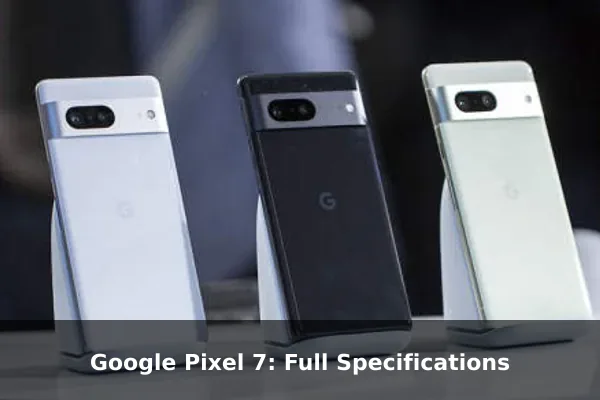
The Pixel 7’s appeal has always been about balance rather than spec-sheet bragging rights. You get a genuinely flagship camera pipeline, a polished software experience, and an IP68 rating in a phone that is smaller and lighter than most modern flagships. For buyers who do not need the Pro model’s telephoto lens or its bigger, sharper panel, the standard Pixel 7 covers the essentials without obvious compromises. It is a strong reference point for anyone weighing a clean-Android device against more feature-loaded but heavier alternatives.
Design and Build
At 155.6 x 73.2 x 8.7 mm and 197 g, the Pixel 7 stays comfortably one-hand friendly by today’s standards. The build is premium: Gorilla Glass Victus on both the front and back, an aluminum frame, and the recessed camera bar that has become Google’s design signature. It carries an IP68 rating for dust and water resistance, rated for immersion up to 1.5 m for 30 minutes, and ships in Obsidian, Lemongrass, and Snow. SIM support combines a Nano-SIM with eSIM, which suits dual-line users without a hybrid tray.
Display Quality
The 6.3-inch AMOLED panel runs at a 90Hz refresh rate with a 1080 x 2400 resolution (around 416 ppi). Google quotes 1000 nits in high-brightness mode and up to 1400 nits peak, with HDR10+ support, and independent testing has measured strong real-world brightness in the high-900-nits range. It is not the 120Hz LTPO panel found on the Pro, but for scrolling, video, and outdoor visibility it remains a clean, sharp, and color-accurate screen that holds up well next to pricier rivals.
Performance and the Tensor G2
Power comes from Google’s Tensor G2 (5 nm), an octa-core chip with two Cortex-X1 cores, paired with 8GB of RAM and UFS 3.1 storage in 128GB or 256GB capacities. Tensor has never aimed to top raw benchmark charts the way some Snapdragon flagships do, and the Pixel 7 reflects that: it is responsive in daily use and strong at on-device machine-learning tasks like voice typing, call screening, and photo processing. Heavy gamers chasing peak frame rates may prefer rival silicon, but for most users the experience is smooth and consistent.
Camera Capabilities
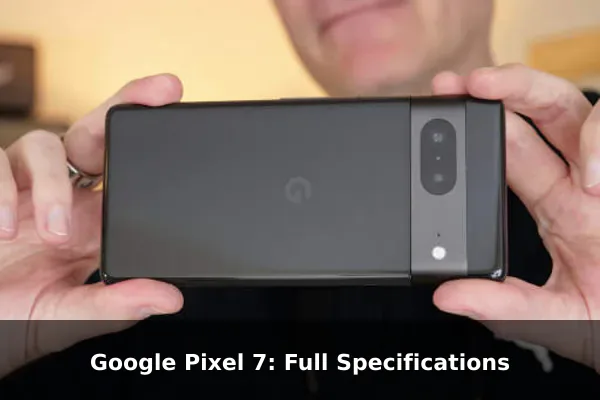
The rear setup is a dual system: a 50 MP f/1.9 wide with dual-pixel PDAF and OIS, plus a 12 MP f/2.2 ultrawide with a 114-degree field of view. As with every Pixel, the real story is the processing — Google’s HDR pipeline, Pixel Shift, and laser autofocus help deliver consistent, natural-looking shots in mixed lighting. Video tops out at 4K up to 60fps with 10-bit HDR and combined OIS plus gyro-EIS stabilization. The 10.8 MP ultrawide selfie camera also records 4K, which is generous for a non-Pro model.
Battery and Charging
A 4,355 mAh Li-Ion battery keeps the Pixel 7 going through a typical day, and reviewers have generally found endurance solid for the screen size. Charging is more modest than some competitors: 20W wired with PD3.0 (rated around 50% in 30 minutes), plus 20W wireless and reverse wireless charging for topping up accessories. Buyers coming from phones with 65W-plus charging should set expectations accordingly, though wireless support adds everyday convenience.
Software and Update Support
The Pixel 7 shipped with Android 13 and is upgradable to Android 15, with Google positioning it for several major OS upgrades and an extended security-update window. Because Pixels receive Google’s feature drops first, the software experience tends to stay current and clean long after launch. Exact remaining support timelines should be confirmed against Google’s official update policy page, as these periods are defined by the manufacturer and can be updated.
Connectivity
Connectivity is comprehensive and future-minded: 5G with Sub-6 (and mmWave on specific model variants), Wi-Fi 6e tri-band, Bluetooth 5.2 with aptX HD, NFC, and USB Type-C 3.2. Positioning covers dual-band GPS (L1+L5) alongside GLONASS, BeiDou, Galileo, and QZSS. Note that 4G and 5G band support differs between the GVU6C and GQML3 models, so band coverage and mmWave availability are worth checking against your region and carrier before buying.
Who Should Buy the Pixel 7
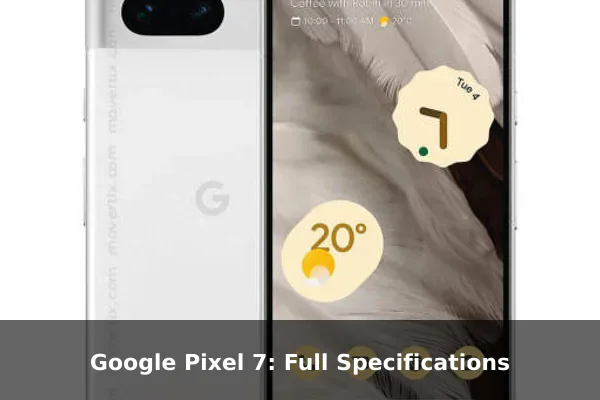
The Pixel 7 is best for buyers who want a compact, durable phone with a reliable point-and-shoot camera and the cleanest version of Android, without paying for Pro-tier extras. It is a sensible pick for photography-minded users, anyone upgrading from an older mid-range device, and shoppers who value long software support over headline charging speeds. Gamers and spec-chasers, or those who specifically want a telephoto lens and a 120Hz LTPO panel, are better served by a Pro-class model.
Conclusion
The Google Pixel 7 remains a well-rounded choice that leans on smart software, a dependable dual camera, and a compact IP68 build rather than raw specifications. Its 90Hz AMOLED display, Tensor G2 performance, and lengthy update commitment make it easy to recommend for everyday users and photography fans who want a clean Android experience. If you do not need Pro-level cameras or the fastest charging on the market, the Pixel 7 is a smart, value-oriented flagship — just confirm current pricing, band support, and remaining update coverage for your region before purchasing.
References
- Google Pixel Phone Help – Hardware Tech Specs – Official Google hardware specifications for Pixel 7, including display, dimensions, battery, memory, cameras, sensors, connectivity, materials, and model variants.
- Google Pixel Phone Help – 5G Compatibility and Model IDs – Official source for Pixel 7 model IDs and whether each variant supports Sub-6 or mmWave 5G.
- Google Pixel Phone Help – Software Update Policy – Official Google reference for Pixel 7 OS and security update support period.
- Google Store – Pixel 7 Product Page Archived – Archived copy of Google’s original Pixel 7 product page, useful for launch-era official positioning, colors, features, and product details.
- GSMArena – Google Pixel 7 Specifications – Long-established smartphone specification database useful for cross-checking official specs and filling common spec-table fields.
