
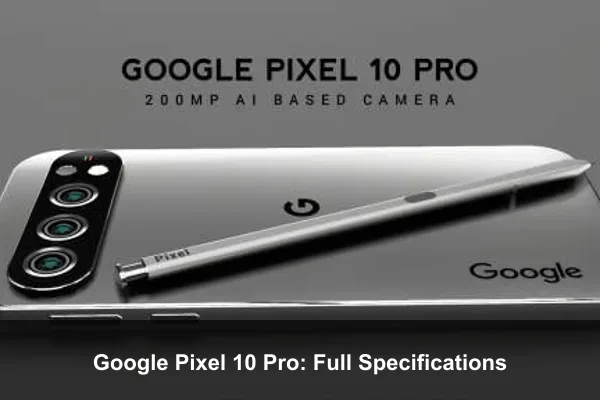
The Google Pixel 10 Pro is still rumored, but the early hardware profile already positions it as a compact flagship with serious camera and software ambition.
Instead of repeating the full specs table, this article looks at practical buying value: where this phone appears strong, where it looks conservative, and who should wait for the official launch.
Full Specifications
Network
| Technology: | GSM / HSPA / LTE / 5G |
| 2G bands: | GSM 850 / 900 / 1800 / 1900 |
| 3G bands: | HSDPA 800 / 850 / 900 / 1700(AWS) / 1900 / 2100 |
| 4G bands: | LTE |
| 5G bands: | SA/NSA/Sub6/mmWave – USA |
| SA/NSA/Sub6 – ROW | |
| Speed: | HSPA, LTE (CA), 5G |
Launch
| Announced: | Not announced yet |
| Status: | Rumored |
Body
| Dimensions: | 152.8 x 72 x 8.5 mm (6.02 x 2.83 x 0.33 in) |
| Weight: | 199 g (7.02 oz) |
| Build: | Glass front (Gorilla Glass Victus 2), glass back (Gorilla Glass Victus 2), aluminum frame |
| SIM: | Nano-SIM + eSIM |
| IP68 dust tight and water resistant (immersible up to 1.5m for 30 min) |
Display
| Type: | LTPO OLED, 120Hz, HDR10+, 2000 nits (HBM), 3000 nits (peak) |
| Size: | 6.3 inches, 95.6 cm2 (~86.9% screen-to-body ratio) |
| Resolution: | 1280 x 2856 pixels, 20:9 ratio (~497 ppi density) |
| Protection: | Corning Gorilla Glass Victus 2 |
Platform
| OS: | Android 15, up to 7 major Android upgrades |
| Chipset: | Google Tensor G5 (4 nm) |
| CPU: | Octa-core (1×3.1 GHz Cortex-X4 & 3×2.6 GHz Cortex-A720 & 4×1.92 GHz Cortex-A520) |
| GPU: | Mali-G715 MC7 |
Memory
| Card slot: | No |
| Internal: | 128GB 16GB RAM, 256GB 16GB RAM, 512GB 16GB RAM, 1TB 16GB RAM |
| UFS 4.0 |
Main Camera
| Triple: | 50 MP, f/1.7, 25mm (wide), 1/1.31″, 1.2µm, dual pixel PDAF, OIS 48 MP, f/2.8, 113mm (periscope telephoto), 1/2.55″, dual pixel PDAF, OIS, 5x optical zoom 48 MP, f/1.7, 123˚ (ultrawide), 1/2.55″, dual pixel PDAF |
| Features: | Multi-zone Laser AF, LED flash, Pixel Shift, Ultra-HDR, panorama, Best Take, Zoom Enhance |
| Video: | 8K@30fps (via cloud-based upscaling), 4K@24/30/60fps, 1080p@24/30/60/120/240fps; gyro-EIS, OIS, 10-bit HDR |
Selfie camera
| Single: | 42 MP, f/2.2, 17mm (ultrawide), PDAF |
| Features: | HDR, panorama |
| Video: | 4K@30/60fps, 1080p@30/60fps |
Sound
| Loudspeaker: | Yes, with stereo speakers |
| 3.5mm jack: | No |
Comms
| WLAN: | Wi-Fi 802.11 a/b/g/n/ac/6e/7, tri-band |
| Bluetooth: | 5.3, A2DP, LE, aptX HD |
| Positioning: | GPS (L1+L5), GLONASS, GALILEO, BDS, QZSS, NavIC |
| NFC: | Yes |
| Radio: | No |
| USB: | USB Type-C 3.2 |
Features
| Sensors: | Fingerprint (under display, ultrasonic), accelerometer, gyro, proximity, compass, barometer, thermometer (skin temperature) |
| Ultra Wideband (UWB) support Satellite SOS service Circle to Search |
Battery
| Type: | Li-Ion 4870 mAh |
| Charging: | 29W wired, PD3.0, PPS, 55% in 30 min 21W wireless (w/ Pixel Stand) 15W wireless (w/ Qi compatible charger) Reverse wireless Bypass charging |
Misc
| Colors: | Gray; other colors |
Value: Premium Potential, Pending Official Price
With no confirmed price yet, the Pixel 10 Pro’s value case depends on where Google places it against other compact flagships. The rumored hardware suggests a high-end positioning rather than a budget play, so launch pricing will decide whether it is a smart buy or a niche pick.
Design: Compact Pro Direction
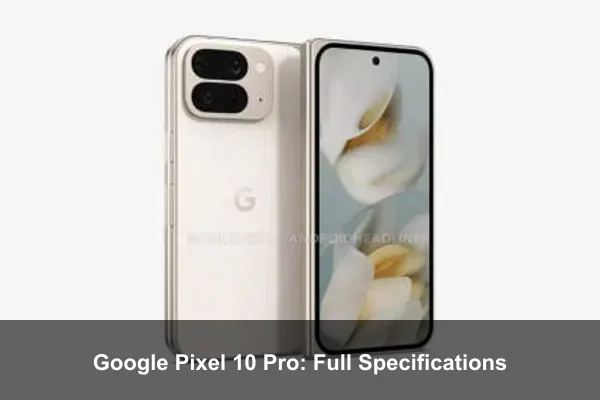
The rumored form factor points to a true one-hand-friendly flagship approach instead of the usual oversized Pro formula. Premium materials and IP68 protection suggest Google is keeping durability and in-hand quality central to the experience.
Display: Bright, Fast, and Flagship-Class
A high-brightness LTPO OLED panel with 120Hz support indicates strong readability outdoors and smooth daily interaction. This setup should suit both media-heavy users and those who care about responsive scrolling and gaming fluidity.
Performance: Tensor G5 with Headroom for AI Tasks
The Tensor G5 platform paired with 16GB RAM across storage tiers points to a phone tuned for on-device intelligence, multitasking, and long-term usability. It may prioritize smart features and consistency over peak benchmark chasing.
Camera: Computational Photography Remains the Core Story
The rumored triple-camera stack combines a high-resolution main sensor, a dedicated periscope zoom, and a strong ultrawide, backed by Google’s feature-rich imaging pipeline. For buyers who care about reliable point-and-shoot results and zoom flexibility, this profile looks very competitive.
Battery and Charging: Balanced Endurance, Practical Charging Mix
The battery capacity and charging setup suggest an all-day target with a balanced wired and wireless strategy rather than class-leading charging speeds. Reverse wireless and bypass charging add practical utility for accessory users.
Software: Long-Term Support Is a Major Advantage
Android 15 with a stated multi-year upgrade commitment is a major trust signal for long ownership cycles. For users who keep phones for years, software longevity can matter more than raw spec peaks.
Connectivity: Broad Global Readiness with Modern Extras
The connectivity package is notably complete, including advanced 5G configurations, current-gen Wi-Fi, UWB, and satellite emergency support. Regional 5G differences between US and ROW variants are worth checking before purchase.
Who Should Buy the Google Pixel 10 Pro?
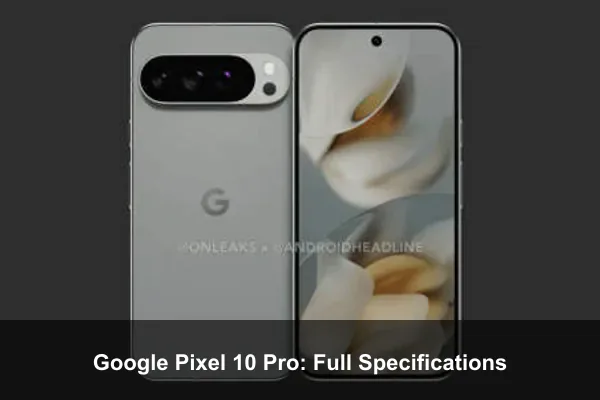
This phone is shaping up for users who want a compact flagship, strong computational camera tools, and long software support. If you prioritize ultra-fast charging or gaming-first silicon tuning, waiting for full reviews and official pricing is the better move.
Conclusion
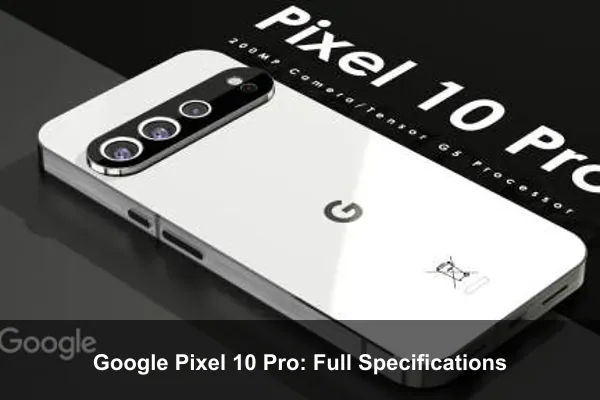
The Google Pixel 10 Pro looks like a compelling compact flagship on paper, especially for camera-focused users and long-term Android owners, but final pricing and real-world performance should guide the final decision.
