
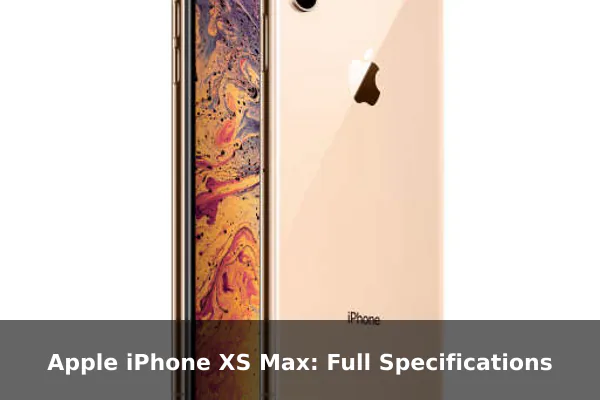
The Apple iPhone XS Max arrived in September 2018 as Apple’s first super-sized flagship, pairing a 6.5-inch Super Retina OLED panel with the then-new A12 Bionic chip. Officially discontinued and now circulating on the second-hand market for around 210 EUR, it has shifted from premium status symbol to one of the more interesting value buys for anyone who wants a big-screen iPhone without paying flagship money.
This article looks at the XS Max from a practical, comparison-friendly angle: what its 2018 hardware still does well in everyday use, where it shows its age, and who should consider it today. The full technical table is provided separately, so the focus here is on context, trade-offs, and a clear buying recommendation.
Full Specifications
Network
| Technology: | GSM / CDMA / HSPA / EVDO / LTE |
| 2G bands: | GSM 850 / 900 / 1800 / 1900 |
| CDMA 800 / 1900 | |
| 3G bands: | HSDPA 850 / 900 / 1700(AWS) / 1900 / 2100 |
| CDMA2000 1xEV-DO | |
| 4G bands: | 1, 2, 3, 4, 5, 7, 8, 12, 13, 14, 17, 18, 19, 20, 25, 26, 28, 29, 30, 32, 34, 38, 39, 40, 41, 46, 66 – A2101 |
| 1, 2, 3, 4, 5, 7, 8, 12, 13, 14, 17, 18, 19, 20, 25, 26, 29, 30, 32, 34, 38, 39, 40, 41, 46, 66, 71 – A1921, A2104 | |
| Speed: | HSPA 42.2/5.76 Mbps, LTE (4CA) Cat16 1024/150 Mbps, EV-DO Rev.A 3.1 Mbps |
Launch
| Announced: | 2018, September 12. Released 2018, September 21 |
| Status: | Discontinued |
Body
| Dimensions: | 157.5 x 77.4 x 7.7 mm (6.20 x 3.05 x 0.30 in) |
| Weight: | 208 g (7.34 oz) |
| Build: | Glass front (Corning-made glass), glass back (Corning-made glass), stainless steel frame |
| SIM: | Nano-SIM + eSIMNano-SIM + Nano-SIM (China) |
| IP68 dust tight and water resistant (immersible up to 2m for 30 min) Apple Pay (Visa, MasterCard, AMEX certified) |
Display
| Type: | Super Retina OLED, HDR10, Dolby Vision, 625 nits (HBM) |
| Size: | 6.5 inches, 102.9 cm2 (~84.4% screen-to-body ratio) |
| Resolution: | 1242 x 2688 pixels, 19.5:9 ratio (~458 ppi density) |
| Protection: | Scratch-resistant glass |
| 3D Touch |
Platform
| OS: | iOS 12, upgradable to iOS 18.6 |
| Chipset: | Apple A12 Bionic (7 nm) |
| CPU: | Hexa-core (2×2.5 GHz Vortex + 4×1.6 GHz Tempest) |
| GPU: | Apple GPU (4-core graphics) |
Memory
| Card slot: | No |
| Internal: | 64GB 4GB RAM, 256GB 4GB RAM, 512GB 4GB RAM |
| NVMe |
Main Camera
| Dual: | 12 MP, f/1.8, 26mm (wide), 1/2.55″, 1.4µm, dual pixel PDAF, OIS 12 MP, f/2.4, 52mm (telephoto), 1/3.4″, 1.0µm, PDAF, OIS, 2x optical zoom |
| Features: | Quad-LED dual-tone flash, HDR (photo/panorama) |
| Video: | 4K@24/30/60fps, 1080p@30/60/120/240fps, HDR, stereo sound rec. |
Selfie camera
| Single: | 7 MP, f/2.2, 32mm (standard) SL 3D, (depth/biometrics sensor) |
| Features: | HDR |
| Video: | 1080p@30/60fps, gyro-EIS |
Sound
| Loudspeaker: | Yes, with stereo speakers |
| 3.5mm jack: | No |
Comms
| WLAN: | Wi-Fi 802.11 a/b/g/n/ac, dual-band, hotspot |
| Bluetooth: | 5.0, A2DP, LE |
| Positioning: | GPS, GLONASS, GALILEO, QZSS |
| NFC: | Yes |
| Radio: | No |
| USB: | Lightning, USB 2.0 |
Features
| Sensors: | Face ID, accelerometer, gyro, proximity, compass, barometer |
Battery
| Type: | Li-Ion 3174 mAh, non-removable (12.08 Wh) |
| Charging: | 15W wired, PD2.0, 50% in 30 min Wireless (Qi) |
Misc
| Colors: | Space Gray, Silver, Gold |
| Models: | A1921, A2101, A2102, A2104, iPhone11,6 |
| SAR: | 1.16 W/kg (head) 1.17 W/kg (body) |
| SAR EU: | 0.99 W/kg (head) 0.99 W/kg (body) |
| Price: | About 210 EUR |
Our Tests
| Performance: | AnTuTu: 353210 (v7) GeekBench: 11432 (v4.4) GFXBench: 47fps (ES 3.1 onscreen) |
| Display: | Contrast ratio: Infinite (nominal), 4.516 (sunlight) |
| Camera: | Photo / Video |
| Loudspeaker: | Voice 70dB / Noise 74dB / Ring 84dB |
| Audio quality: | Noise -93.7dB / Crosstalk -82.8dB |
| Battery (old): | Endurance rating 79h |
Price and Availability
The Apple iPhone XS Max offers a compelling combination of features and performance. While the base price is around €210, the actual cost may vary depending on your location and retailer. Below, you’ll find the approximate price of the Apple iPhone XS Max converted into various currencies. Please note that these are estimates based on recent exchange rates as of June 14, 2026 and may not reflect the exact price you’ll find at a retailer.
- United States: $243
- Japan: ¥38,925
- United Kingdom: £181
- Australia: A$345
- Canada: C$340
- Taiwan: NT$7,678
- Denmark: kr1.567
- Saudi Arabia: ﷼911
- South Korea: ₩369,376
- Germany: €210
- Brazil: R$1.238
- Vietnam: ₫6.340.670
- Kenya: KSh 31,452
- India: ₹23,129
- Indonesia: Rp 4.341.867
- Nigeria: ₦327,321
- Pakistan: ₨67,630
- Philippines: ₱14,770
- Bangladesh: ৳২৯,৮৭১
Why the iPhone XS Max Still Makes Sense as a Value Pick
At roughly 210 EUR in used and refurbished channels, the iPhone XS Max sits in budget territory while offering a genuinely premium 2018 build. The appeal is simple: a large OLED display, IP68 water resistance, wireless charging, and a chip that still runs modern apps smoothly. For buyers who prefer iOS and want the biggest screen they can get for the money, it remains a sensible entry point, provided they accept aging battery health and the Lightning port. Apple’s official specifications page is the best place to confirm exact details before buying (see references).
Design and Build Quality
The XS Max measures 157.5 x 77.4 x 7.7 mm and weighs a substantial 208 g, with a stainless steel frame sandwiched between Corning-made glass on both sides. That construction feels dense and reassuringly solid, closer to a luxury object than most plastic mid-rangers in the same current price band. IP68 rating means it survives immersion up to 2 m for 30 minutes, and Apple Pay support with the original Face ID system is fully intact. The glass back does mean care is needed, since cracked panels are costly to repair on a phone this old.
Display: A Large OLED That Still Holds Up
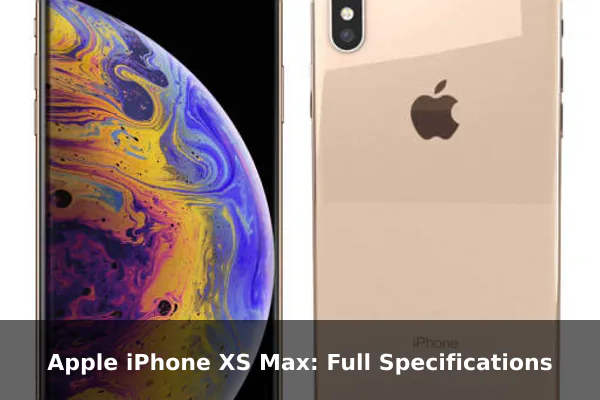
The 6.5-inch Super Retina OLED runs at 1242 x 2688 pixels (~458 ppi) with HDR10 and Dolby Vision support and a peak of 625 nits in high-brightness mode. By 2026 standards the brightness is modest and the refresh rate is locked at 60 Hz, but the contrast, color accuracy, and sharpness remain excellent for video and reading. The 19.5:9 ratio and slim bezels still look contemporary, and the screen’s infinite nominal contrast ratio is something many cheaper current LCD phones cannot match.
Performance and the A12 Bionic
The 7 nm A12 Bionic, with its hexa-core CPU and 4-core GPU, was a leader in 2018 and still feels responsive. Benchmark figures such as an AnTuTu score around 353,000 (v7) reflect a chip that handles browsing, social apps, and most games without complaint. Paired with 4GB of RAM and fast NVMe storage in 64GB, 256GB, or 512GB options, day-to-day fluidity is the XS Max’s strongest argument. Heavy multitasking and the latest demanding 3D titles are where newer silicon pulls ahead.
Cameras: Dependable Dual 12 MP System
The rear setup pairs a 12 MP f/1.8 wide with a 12 MP f/2.4 telephoto offering 2x optical zoom, both stabilized with OIS. It captures pleasing, natural-looking stills with reliable HDR and shoots up to 4K at 60 fps with stereo audio, which is impressive for its age and price. The 7 MP TrueDepth front camera handles selfies and powers Face ID. There is no ultrawide or night mode in the modern sense, so low-light results trail current phones, but for casual photography the results remain solid.
Battery and Charging
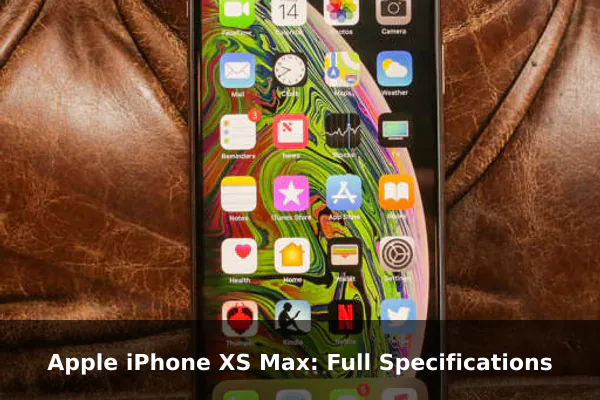
A 3174 mAh battery delivered an endurance rating of around 79 hours when the phone was new, and it supports 15W wired charging (roughly 50% in 30 minutes) plus Qi wireless charging. The important caveat for any used unit is battery health: a phone from 2018 may have a degraded cell, so checking the battery health percentage or budgeting for a replacement is essential. A fresh battery transforms the everyday experience.
Software and Long-Term Support
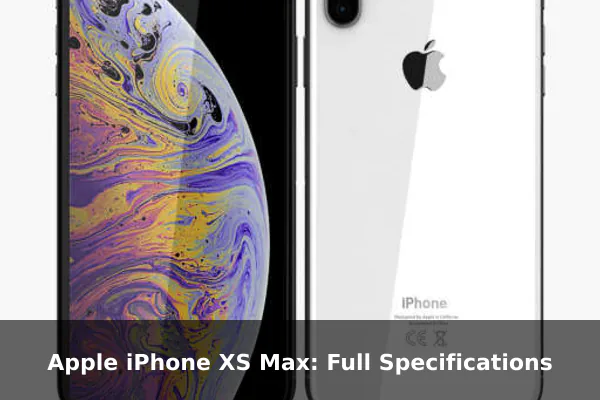
The XS Max shipped with iOS 12 and is upgradable to iOS 18.6, an extraordinary support window that few Android rivals from 2018 can claim. That longevity is central to its value: it still receives a usable, secure version of iOS with current app compatibility. Buyers should note that future major iOS versions may eventually drop it, so treat continued updates as likely but not guaranteed.
Connectivity
Connectivity covers Wi-Fi 802.11ac dual-band, Bluetooth 5.0, NFC, and broad 4G LTE band support, but there is no 5G, no microSD slot, and no 3.5mm headphone jack. The Lightning port and USB 2.0 speeds also feel dated next to USB-C. For most users on LTE networks these limits are minor, but anyone prioritizing 5G should look elsewhere.
Who Should Buy the iPhone XS Max
This phone suits buyers who want an affordable large-screen iOS device, value a premium build, and do not need 5G or cutting-edge cameras. It is also a strong choice as a reliable secondary phone or a first iPhone for someone entering the Apple ecosystem on a budget. Power users and mobile gamers chasing the latest performance will be better served by a newer model.
Conclusion
The Apple iPhone XS Max has aged into a compelling value proposition: a premium 2018 flagship with a gorgeous large OLED, a still-capable A12 Bionic, IP68 durability, and an exceptionally long iOS support run, all for around 210 EUR used. Its weaknesses are predictable for its age, namely no 5G, aging battery health, Lightning charging, and a camera system that has been surpassed. If you want the biggest, best-built budget iPhone for everyday use and can verify the battery condition, the XS Max is an easy recommendation; if 5G and modern low-light photography matter most, spend more on a newer model instead.
References
- Apple Support – iPhone XS Max Technical Specifications – Primary source for official iPhone XS Max specifications including dimensions, weight, display, chip, cameras, cellular bands, battery claims, SIM support, and included software.
- Apple Support – Identify your iPhone model – Official Apple reference for confirming iPhone XS Max model numbers, year introduced, capacities, colors, and distinguishing hardware details.
- Apple Newsroom – iPhone XS and iPhone XS Max announcement – Official launch announcement for release timing, product positioning, headline features, pricing at launch, and availability.
- iFixit – iPhone XS and XS Max Teardown – Reputable teardown source useful for verifying internal components that Apple does not fully list, such as RAM, battery details, board components, and repairability observations.
- GSMArena – Apple iPhone XS Max Full Phone Specifications – Established mobile specifications database useful as an independent cross-check for phone specs, network bands, launch status, and commonly referenced hardware details.
