
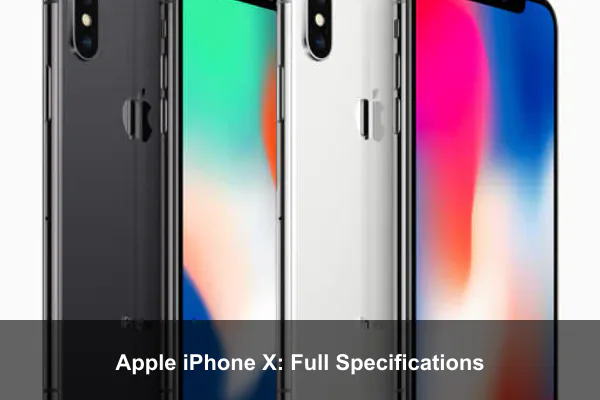
Apple iPhone X marked Apple’s shift to the notch-era design, combining Face ID, an OLED panel, and dual rear cameras in a compact flagship body.
At about 100 EUR in the resale market, it now competes as a low-cost iPhone option for users prioritizing premium build and stable day-to-day performance over modern extras like 5G.
Full Specifications
Network
| Technology: | GSM / HSPA / LTE |
| 2G bands: | GSM 850 / 900 / 1800 / 1900 |
| 3G bands: | HSDPA 850 / 900 / 1700(AWS) / 1900 / 2100 |
| 4G bands: | 1, 2, 3, 4, 5, 7, 8, 12, 13, 17, 18, 19, 20, 25, 26, 28, 29, 30, 34, 38, 39, 40, 41, 66 |
| Speed: | HSPA 42.2/5.76 Mbps, LTE (3CA) Cat12 600/150 Mbps, EV-DO Rev.A 3.1 Mbps |
Launch
| Announced: | 2017, September 12. Released 2017, November 03 |
| Status: | Discontinued |
Body
| Dimensions: | 143.6 x 70.9 x 7.7 mm (5.65 x 2.79 x 0.30 in) |
| Weight: | 174 g (6.14 oz) |
| Build: | Glass front (Corning-made glass), glass back (Corning-made glass), stainless steel frame |
| SIM: | Nano-SIM |
| IP67 dust/water resistant (up to 1m for 30 min) Apple Pay (Visa, MasterCard, AMEX certified) |
Display
| Type: | Super Retina OLED, HDR10, Dolby Vision, 625 nits (HBM) |
| Size: | 5.8 inches, 84.4 cm2 (~82.9% screen-to-body ratio) |
| Resolution: | 1125 x 2436 pixels, 19.5:9 ratio (~458 ppi density) |
| Protection: | Scratch-resistant glass |
| 3D Touch |
Platform
| OS: | iOS 11.1.1, up to iOS 16.7.7 |
| Chipset: | Apple A11 Bionic (10 nm) |
| CPU: | Hexa-core 2.39 GHz (2x Monsoon + 4x Mistral) |
| GPU: | Apple GPU (three-core graphics) |
Memory
| Card slot: | No |
| Internal: | 64GB 3GB RAM, 256GB 3GB RAM |
| NVMe |
Main Camera
| Dual: | 12 MP, f/1.8, 28mm (wide), 1/3.0″, 1.22µm, dual pixel PDAF, OIS 12 MP, f/2.4, 52mm (telephoto), 1/3.4″, 1.0µm, PDAF, OIS, 2x optical zoom |
| Features: | Quad-LED dual-tone flash, HDR (photo/panorama), panorama, HDR |
| Video: | 4K@24/30/60fps, 1080p@30/60/120/240fps |
Selfie camera
| Single: | 7 MP, f/2.2, 32mm (standard) SL 3D, (depth/biometrics sensor) |
| Features: | HDR |
| Video: | 1080p@30fps |
Sound
| Loudspeaker: | Yes, with stereo speakers |
| 3.5mm jack: | No |
Comms
| WLAN: | Wi-Fi 802.11 a/b/g/n/ac, dual-band, hotspot |
| Bluetooth: | 5.0, A2DP, LE |
| Positioning: | GPS, GLONASS, GALILEO, QZSS |
| NFC: | Yes |
| Radio: | No |
| USB: | Lightning, USB 2.0 |
Features
| Sensors: | Face ID, accelerometer, gyro, proximity, compass, barometer |
Battery
| Type: | Li-Ion 2716 mAh, non-removable (10.35 Wh) |
| Charging: | 15W wired, PD2.0, 50% in 30 min Wireless (Qi) |
| Talk time: | Up to 21 h (3G) |
Misc
| Colors: | Space Gray, Silver |
| Models: | A1865, A1901, A1902, A1903, iPhone10,3, iPhone10,6 |
| SAR: | 1.09 W/kg (head) 1.17 W/kg (body) |
| Price: | About 100 EUR |
Our Tests
| Performance: | AnTuTu: 233100 (v7) GeekBench: 10215 (v4.4) GFXBench: 28fps (ES 3.1 onscreen) |
| Display: | Contrast ratio: Infinity (nominal), 5.013 (sunlight) |
| Camera: | Photo / Video |
| Loudspeaker: | Voice 68dB / Noise 74dB / Ring 76dB |
| Audio quality: | Noise -93.7dB / Crosstalk -82.8dB |
| Battery (old): | Endurance rating 74h |
Price and Availability
The Apple iPhone X offers a compelling combination of features and performance. While the base price is around €100, the actual cost may vary depending on your location and retailer. Below, you’ll find the approximate price of the Apple iPhone X converted into various currencies. Please note that these are estimates based on recent exchange rates as of April 8, 2026 and may not reflect the exact price you’ll find at a retailer.
- United States: $116
- Japan: ¥18,510
- United Kingdom: £87
- Australia: A$166
- Canada: C$161
- Taiwan: NT$3,690
- Denmark: kr746
- Saudi Arabia: ﷼436
- South Korea: ₩173,430
- Germany: €100
- Brazil: R$596
- Vietnam: ₫3.052.242
- Kenya: KSh 15,031
- India: ₹10,747
- Indonesia: Rp 1.971.352
- Nigeria: ₦159,453
- Pakistan: ₨32,494
- Philippines: ₱6,969
- Bangladesh: ৳১৪,২৩০
Value in 2026
At roughly 100 EUR, iPhone X is priced like an entry-level phone but still feels like a former flagship. The core trade-off is clear: better materials and display quality than many cheap new phones, but older battery health, no 5G, and limited software runway.
Design and Build Quality
The glass-and-stainless-steel construction still stands out in hand, and the 5.8-inch form factor is easier to use one-handed than many modern large devices. IP67 resistance adds basic durability, but used units need careful checking for frame dents and back-glass damage.
Display Experience
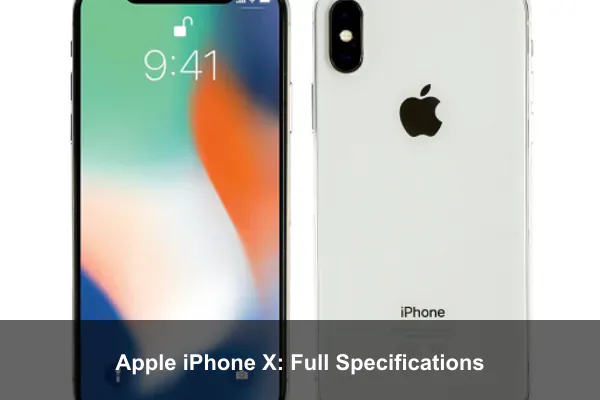
The Super Retina OLED panel remains a key reason to consider this model, with sharp pixel density, HDR10 and Dolby Vision support, and strong contrast. For video and social apps, it still looks premium, while 3D Touch remains a distinctive interaction feature absent on newer iPhones.
Performance and Daily Speed
Apple’s A11 Bionic and NVMe storage keep navigation, messaging, streaming, and light editing responsive. Compared with newer mid-range phones, sustained gaming and long multitasking sessions are where its age becomes more visible.
Camera Capabilities Today
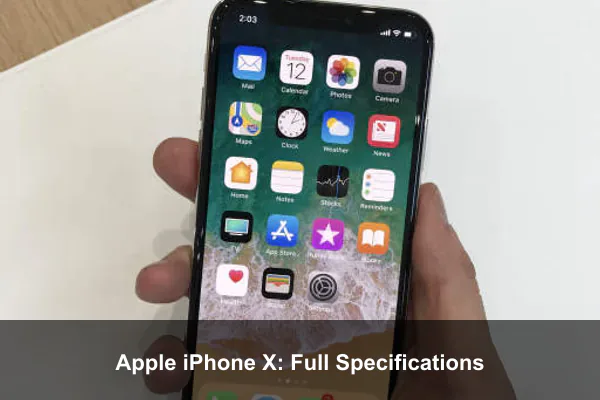
The dual 12MP setup with optical stabilization on both lenses still offers versatile framing thanks to 2x optical zoom. 4K up to 60fps is a strong spec for the price, though image processing and low-light consistency trail newer generations.
Battery and Charging Reality
The 2716 mAh battery was modest even at launch, so real-world endurance now depends heavily on battery condition in the unit you buy. Fast wired charging, PD support, and Qi wireless charging help usability, but a battery replacement can be a practical first upgrade.
Software and Support Window
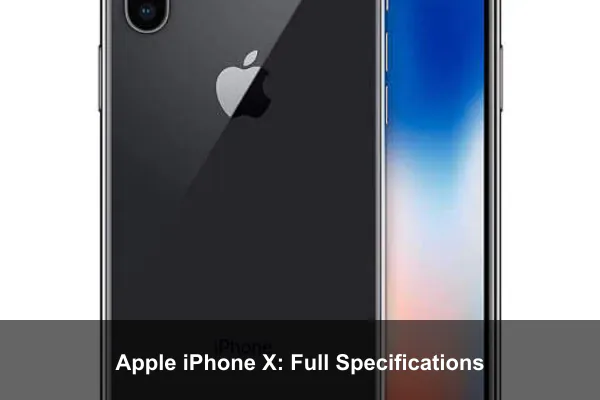
It launched with iOS 11 and can be updated to iOS 16.7.7, which keeps it usable for mainstream apps and Apple ecosystem services. Buyers looking for long future iOS feature updates should treat it as a short-horizon device.
Connectivity and Practical Use
LTE Cat12 with wide band coverage, dual-band Wi-Fi ac, Bluetooth 5.0, and NFC still cover everyday connectivity needs in many regions. The missing pieces by 2026 standards are 5G, a headphone jack, and faster modern USB data speeds due to Lightning USB 2.0.
Who Should Buy Apple iPhone X
iPhone X is best for budget buyers who want an affordable iPhone for calls, chat, media, and basic photography in a compact premium chassis. Power users, mobile gamers, and long-term upgraders will generally get better value from newer iPhone models.
Conclusion
For around 100 EUR, iPhone X remains a sensible entry point into iOS if condition and battery health are verified before purchase.
