
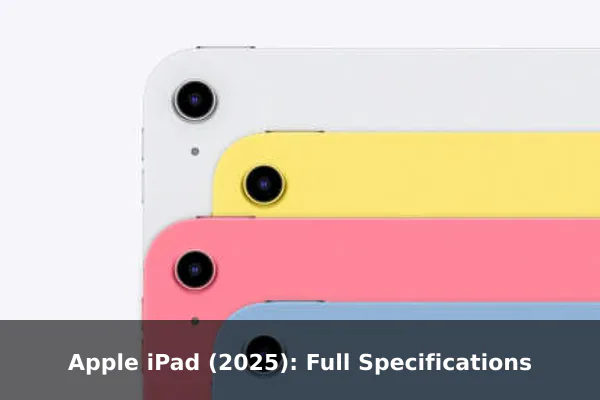
The Apple iPad (2025) is the eleventh-generation entry-level iPad, announced on March 4, 2025 and released on March 12. It keeps the familiar 11-inch Liquid Retina form factor but moves to the more efficient A16 Bionic chip, while pushing the base configuration to 128GB of storage and 6GB of RAM. With a launch price of around 400 EUR, it is positioned as Apple’s most affordable tablet for students, families, and casual creators.
This article looks at where the iPad (2025) fits in the lineup, what the A16 upgrade actually changes day to day, and where it sits against pricier options like the iPad Air and the iPad mini (2024). All technical claims here are drawn from the source data and Apple’s official specifications; the full specs table and a price-and-availability block are provided separately below.
Full Specifications
Network
| Technology: | GSM / HSPA / LTE / 5G |
| 2G bands: | GSM 850 / 900 / 1800 / 1900 |
| 3G bands: | HSDPA 850 / 900 / 1700(AWS) / 1900 / 2100 |
| 4G bands: | 1, 2, 3, 4, 5, 7, 8, 11, 12, 13, 14, 17, 18, 19, 20, 21, 25, 26, 28, 29, 30, 32, 34, 38, 39, 40, 41, 42, 48, 66, 71 – A3355 |
| 1, 2, 3, 4, 5, 7, 8, 12, 13, 14, 17, 18, 19, 20, 25, 26, 28, 29, 30, 32, 34, 38, 39, 40, 41, 42, 48, 66, 71 – A3356 | |
| 5G bands: | 1, 2, 3, 5, 7, 8, 12, 14, 20, 25, 26, 28, 29, 30, 38, 40, 41, 48, 66, 70, 71, 75, 76, 77, 78, 79 SA/NSA/Sub6 – A3355, A3356 |
| Speed: | HSPA, LTE, 5G – cellular model only |
Launch
| Announced: | 2025, March 04 |
| Status: | Available. Released 2025, March 12 |
Body
| Dimensions: | 248.6 x 179.5 x 7 mm (9.79 x 7.07 x 0.28 in) |
| Weight: | 477 g (Wi-Fi) / 481 g (LTE) (1.05 lb) |
| Build: | Glass front, aluminum back, aluminum frame |
| SIM: | eSIM (cellular model only) |
| Stylus support |
Display
| Type: | Liquid Retina IPS LCD, 500 nits (typ) |
| Size: | 11.0 inches, 357.6 cm2 (~80.1% screen-to-body ratio) |
| Resolution: | 1640 x 2360 pixels (~264 ppi density) |
| Protection: | Scratch-resistant glass, oleophobic coating, Mohs level 4 |
Platform
| OS: | iPadOS 18.3.2, upgradable to iPadOS 18.6 |
| Chipset: | Apple A16 Bionic (4 nm) |
| CPU: | 5-core |
| GPU: | Apple GPU (4-core graphics) |
Memory
| Card slot: | No |
| Internal: | 128GB 6GB RAM, 256GB 6GB RAM, 512GB 6GB RAM |
Main Camera
| Single: | 12 MP, f/1.8, (wide), PDAF |
| Features: | HDR, panorama |
| Video: | 4K@24/25/30/60fps, 1080p@25/30/60/120/240fps, gyro-EIS |
Selfie camera
| Single: | 12 MP, f/2.4, 122˚ (ultrawide) |
| Features: | HDR |
| Video: | 1080p@25/30/60fps, gyro-EIS |
Sound
| Loudspeaker: | Yes, with stereo speakers |
| 3.5mm jack: | No |
Comms
| WLAN: | Wi-Fi 802.11 a/b/g/n/ac/6, dual-band, hotspot |
| Bluetooth: | 5.3, A2DP, EDR, LE |
| Positioning: | GPS, GLONASS (Wi‑Fi + Cellular model only) |
| NFC: | No |
| Radio: | No |
| USB: | USB Type-C 2.0, DisplayPort; magnetic connector |
Features
| Sensors: | Fingerprint (top-mounted), accelerometer, gyro, compass, barometer |
Battery
| Type: | Li-Po (28.93 Wh) |
| Charging: | 45W wired, PD |
Misc
| Colors: | Silver, Blue, Pink, Yellow |
| Models: | A3355, A3356, A3354 |
| SAR: | 1.19 W/kg (body) |
| SAR EU: | 1.47 W/kg (body) |
| Price: | About 400 EUR |
Our Tests
| Performance: | AnTuTu: 1414489 (v10) GeekBench: 6157 (v6) 3DMark: 2604 (Wild Life Extreme) |
| Display: | 466 nits max brightness (measured) |
| Loudspeaker: | -28.8 LUFS (Average) |
| Battery: | Active use score 9:26h |
EU LABEL
| Energy: | Class G |
| Battery: | 67:00h endurance, 1000 cycles |
| Free fall: | Class E (0 falls) |
| Repairability: | Class C |
Price and Availability
The Apple iPad (2025) offers a compelling combination of features and performance. While the base price is around €400, the actual cost may vary depending on your location and retailer. Below, you’ll find the approximate price of the Apple iPad (2025) converted into various currencies. Please note that these are estimates based on recent exchange rates as of June 11, 2026 and may not reflect the exact price you’ll find at a retailer.
- United States: $462
- Japan: ¥74,097
- United Kingdom: £345
- Australia: A$659
- Canada: C$644
- Taiwan: NT$14,617
- Denmark: kr2.985
- Saudi Arabia: ﷼1,731
- South Korea: ₩703,404
- Germany: €400
- Brazil: R$2.391
- Vietnam: ₫12.108.702
- Kenya: KSh 59,874
- India: ₹43,998
- Indonesia: Rp 8.271.884
- Nigeria: ₦624,918
- Pakistan: ₨128,515
- Philippines: ₱28,336
- Bangladesh: ৳৫৬,৭০৮
Where the iPad (2025) Fits and Who Should Buy It
The entry-level iPad has always been about value, and the 2025 model leans into that. At roughly 400 EUR it undercuts the iPad Air and the iPad mini (2024) while still delivering the core iPadOS experience: a large, color-accurate screen, Apple Pencil and keyboard support, and years of software updates. It is the obvious pick for first-time tablet buyers, schoolwork, streaming, light note-taking, and households that want a shared device. Power users who edit video, run pro creative apps, or want ProMotion and a laminated display will still be better served by the Air or Pro tiers.
Design and Build
Physically the iPad (2025) is a classic slab: 248.6 x 179.5 x 7 mm and 477 g for the Wi-Fi version (481 g for the cellular model). The construction pairs a glass front with an aluminum back and frame, giving it a solid, premium-feeling chassis at this price. Apple offers it in Silver, Blue, Pink, and Yellow, with the colors kept light and pastel as on previous generations. There is no headphone jack, and the single USB Type-C port doubles as the charging and accessory connector, alongside a magnetic connector for keyboards.
Display
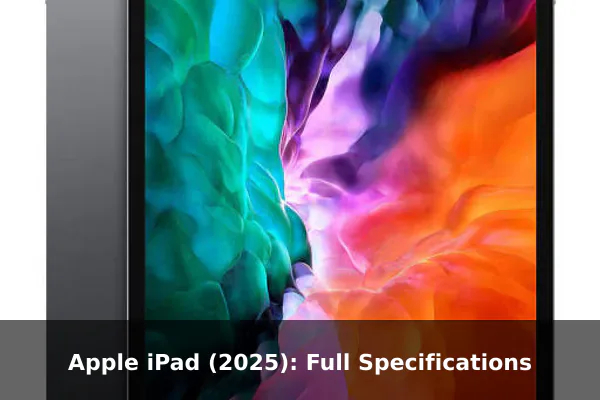
The screen is an 11.0-inch Liquid Retina IPS LCD at 1640 x 2360 pixels, working out to about 264 ppi. Apple rates it at 500 nits typical brightness, and independent measurement in the source data landed at 466 nits, which is enough for comfortable indoor use but modest under direct sunlight. The panel carries scratch-resistant glass with an oleophobic coating and a Mohs level 4 hardness rating. The trade-offs versus higher tiers remain the same: this is a 60Hz, non-laminated display without the anti-reflective coating found on the Air and Pro, so it is best judged as a clean, dependable everyday screen rather than a creative reference panel.
Performance
The headline change is the Apple A16 Bionic, built on a 4 nm process with a 5-core CPU and 4-core GPU, paired with 6GB of RAM across all storage tiers. In testing the source reports an AnTuTu v10 score of 1,414,489, a GeekBench 6 result of 6,157, and 2,604 in 3DMark Wild Life Extreme. In practice that means snappy app launches, smooth multitasking within iPadOS limits, and comfortable headroom for gaming and 4K video playback. The A16 is a meaningful generational step over the previous A14-class chip and should keep the tablet feeling responsive for years.
Cameras
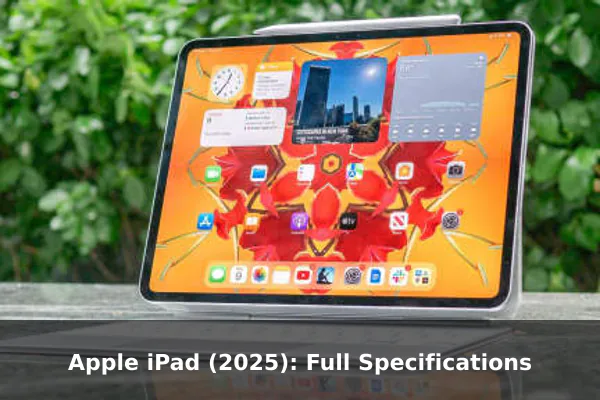
Camera hardware is sensible rather than ambitious. The rear uses a single 12 MP f/1.8 wide sensor with PDAF, HDR, and panorama, and records video up to 4K at 60fps with gyro-EIS stabilization. The front camera is a 12 MP f/2.4 ultrawide with a 122-degree field of view, landscape-oriented for video calls so you stay centered when the iPad is docked to a keyboard. It is well suited to document scanning, video conferencing, and quick snapshots, even if it will not replace a phone for serious photography.
Battery and Charging
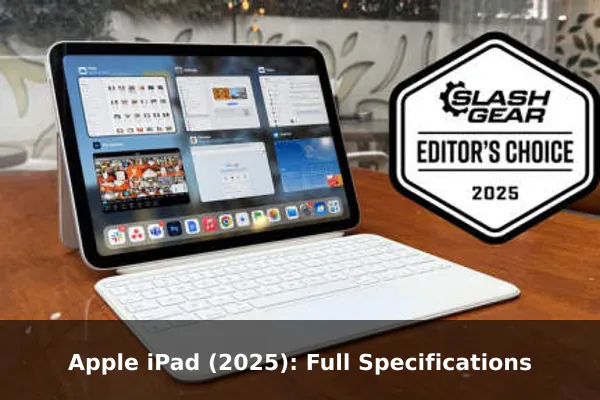
A 28.93 Wh Li-Po battery powers the tablet, and the source measured an active-use score of 9 hours 26 minutes, in line with Apple’s all-day usage claims for browsing and video. Charging is handled over USB-C with up to 45W wired PD support, a useful step up that shortens top-ups compared with older entry iPads. The EU energy label lists a 67-hour endurance rating and a 1000-cycle battery longevity class, pointing to dependable long-term stamina.
Software and Longevity
The iPad ships with iPadOS 18.3.2 and is upgradable to iPadOS 18.6, inheriting Apple’s strong record of multi-year updates. That software support is one of the strongest reasons to choose this tablet over budget Android rivals: features, security patches, and app compatibility tend to last well beyond the average Android tablet’s window. Stage Manager and the most demanding Apple Intelligence features remain reserved for higher tiers, but the everyday iPadOS experience is complete here.
Connectivity
Connectivity covers Wi-Fi 6 (dual-band) and Bluetooth 5.3, with an optional cellular model adding 4G LTE and 5G (sub-6 SA/NSA) plus eSIM and GPS/GLONASS positioning. The USB Type-C port is USB 2.0 speed but supports DisplayPort output for connecting to external screens. There is no NFC and no FM radio. Biometrics are handled by a top-mounted fingerprint sensor built into the power button, accompanied by accelerometer, gyro, compass, and barometer sensors. Stereo speakers round out a balanced media setup.
Conclusion
The Apple iPad (2025) is a confident refresh of the entry-level formula: the A16 chip, doubled 128GB base storage, faster 45W charging, and long-term iPadOS support make it a smart value at around 400 EUR. Its 60Hz non-laminated display and USB 2.0 port are the expected compromises at this tier, not deal-breakers. If you want an affordable, future-proof tablet for study, streaming, and light creativity, this is the iPad to buy; step up to the iPad Air only if you need ProMotion, a laminated screen, or heavier pro workloads.
Official references
- Apple iPad 11-inch (A16) Technical Specifications – Primary source for dimensions, display, chip, cameras, wireless bands, battery, ports, sensors, storage, colors, and included accessories.
- Apple iPad 11-inch (A16) Product Page – Official product overview for current positioning, available configurations, pricing context, colors, and accessory ecosystem.
- Apple Support – Identify your iPad model – Official Apple model identification reference for iPad (A16), including 2025 model year, capacities, and model numbers A3354, A3355, and A3356.
- Apple iPad (A16) Product Environmental Report – Official Apple PDF confirming introduction date and environmental, materials, packaging, energy, and carbon-footprint details for iPad (A16).
- FCC Equipment Authorization System (fcc.gov) – Primary U.S. regulatory database to verify wireless equipment authorizations, RF exposure, and certification filings when exact Apple FCC IDs are available.
