
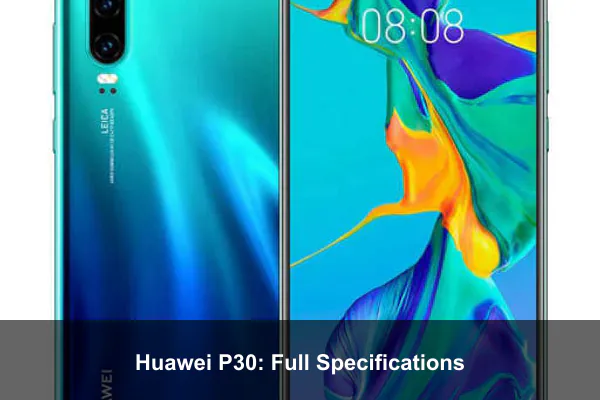
The Huawei P30 arrived in March 2019 as the standard-bearer of Huawei’s flagship lineup, sitting just below the P30 Pro while still packing the headline-grabbing Kirin 980 chipset and a Leica-tuned triple camera. Years on, it remains an interesting reference point for buyers comparing modern mid-rangers against a former flagship that can now be found for around 280 EUR on the secondhand market.
With a 6.1-inch OLED display, a compact 165 g body, and a 40 MP main sensor backed by a 3x optical telephoto and a 16 MP ultrawide, the P30 was engineered to be a pocketable imaging powerhouse. This article breaks down where it still holds up and where its age starts to show.
Full Specifications
Network
| Technology: | GSM / HSPA / LTE |
| 2G bands: | GSM 850 / 900 / 1800 / 1900 |
| 3G bands: | HSDPA 800 / 850 / 900 / 1700(AWS) / 1900 / 2100 |
| 4G bands: | 1, 2, 3, 4, 5, 6, 7, 8, 9, 12, 17, 18, 19, 20, 26, 28, 32, 34, 38, 39, 40 |
| Speed: | HSPA 42.2/5.76 Mbps, LTE Cat21 1400/200 Mbps |
Launch
| Announced: | 2019, March 26. Released 2019, March 26 |
| Status: | Discontinued |
Body
| Dimensions: | 149.1 x 71.4 x 7.6 mm (5.87 x 2.81 x 0.30 in) |
| Weight: | 165 g (5.82 oz) |
| Build: | Glass front (Aluminosilicate glass), glass back (Aluminosilicate glass), aluminum frame |
| SIM: | Nano-SIMNano-SIM + Nano-SIM |
| IP53 dust protected and water resistant (vertical water sprays) |
Display
| Type: | OLED, HDR10 |
| Size: | 6.1 inches, 91.3 cm2 (~85.8% screen-to-body ratio) |
| Resolution: | 1080 x 2340 pixels, 19.5:9 ratio (~422 ppi density) |
Platform
| OS: | Android 9.0 (Pie), upgradable to Android 10, EMUI 10 |
| Chipset: | Kirin 980 (7 nm) |
| CPU: | Octa-core (2×2.6 GHz Cortex-A76 & 2×1.92 GHz Cortex-A76 & 4×1.8 GHz Cortex-A55) |
| GPU: | Mali-G76 MP10 |
Memory
| Card slot: | Nano Memory (uses shared SIM slot) |
| Internal: | 64GB 8GB RAM, 128GB 6GB RAM, 128GB 8GB RAM, 256GB 8GB RAM |
| UFS 2.1 |
Main Camera
| Triple: | 40 MP, f/1.8, 27mm (wide), 1/1.7″, PDAF 8 MP, f/2.4, 80mm (telephoto), 1/4.0″, PDAF, OIS, 3x optical zoom 16 MP, f/2.2, 17mm (ultrawide), PDAF |
| Features: | Laser AF, color spectrum sensor, Leica optics, dual-LED dual-tone flash, panorama, HDR |
| Video: | 4K@30fps, 1080p@60fps, 1080p@30fps (gyro-EIS), 720p@960fps |
Selfie camera
| Single: | 32 MP, f/2.0, 26mm (wide), 1/2.8″, 0.8µm |
| Features: | HDR |
| Video: | 1080p@30fps |
Sound
| Loudspeaker: | Yes |
| 3.5mm jack: | Yes |
| 32-bit/384kHz audio |
Comms
| WLAN: | Wi-Fi 802.11 a/b/g/n/ac, dual-band, Wi-Fi Direct |
| Bluetooth: | 5.0, A2DP, aptX HD, LE |
| Positioning: | GPS (L1+L5), GLONASS (L1), BDS (B1), GALILEO (E1+E5a), QZSS (L1+L5) |
| NFC: | Yes |
| Radio: | No |
| USB: | USB Type-C 3.1 |
Features
| Sensors: | Fingerprint (under display, optical), accelerometer, gyro, proximity, compass |
Battery
| Type: | Li-Po 3650 mAh, non-removable |
| Charging: | 22.5W wired |
Misc
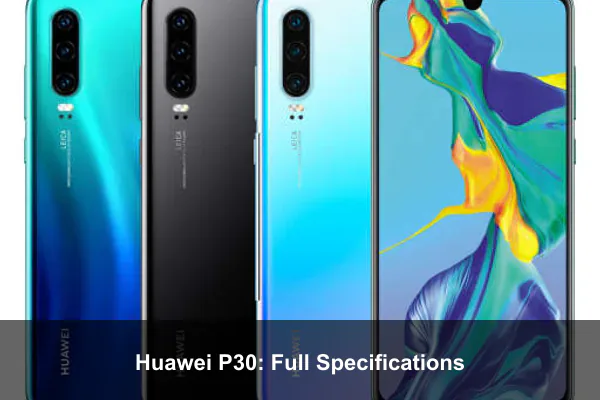
| Colors: | Aurora, Amber Sunrise, Breathing Crystal, Black, Pearl White |
| Models: | ELE-L29, ELE-L09, ELE-AL00, ELE-TL00, ELE-L04 |
| Price: | About 280 EUR |
Our Tests
| Performance: | AnTuTu: 314595 (v7) GeekBench: 10114 (v4.4) GFXBench: 28fps (ES 3.1 onscreen) |
| Display: | 635 nits max brightness (measured) |
| Camera: | Photo / Video |
| Loudspeaker: | Voice 83dB / Noise 75dB / Ring 83dB |
| Audio quality: | Noise -96.2dB / Crosstalk -97.5dB |
| Battery (old): | Endurance rating 83h |
Price and Availability
The Huawei P30 offers a compelling combination of features and performance. While the base price is around €280, the actual cost may vary depending on your location and retailer. Below, you’ll find the approximate price of the Huawei P30 converted into various currencies. Please note that these are estimates based on recent exchange rates as of May 26, 2026 and may not reflect the exact price you’ll find at a retailer.
- United States: $326
- Japan: ¥51,802
- United Kingdom: £241
- Australia: A$455
- Canada: C$450
- Taiwan: NT$10,244
- Denmark: kr2.089
- Saudi Arabia: ﷼1,222
- South Korea: ₩493,131
- Germany: €280
- Brazil: R$1.634
- Vietnam: ₫8.514.525
- Kenya: KSh 42,251
- India: ₹31,043
- Indonesia: Rp 5.776.993
- Nigeria: ₦443,383
- Pakistan: ₨90,816
- Philippines: ₱19,987
- Bangladesh: ৳৩৯,৯৯৫
Value at Around 280 EUR
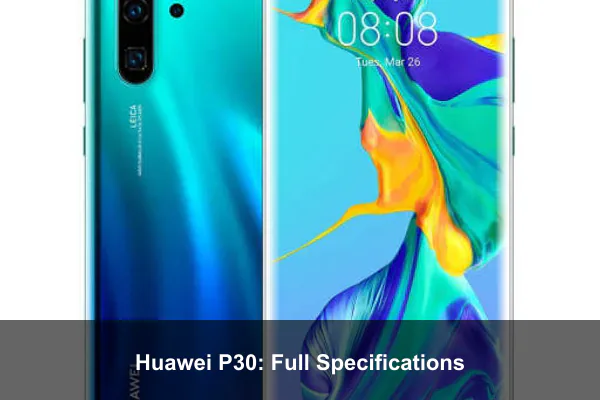
At roughly 280 EUR, the Huawei P30 occupies a curious spot: it offers former-flagship hardware at mid-range money. You get a Kirin 980, an OLED panel, an under-display fingerprint reader, and a Leica-branded triple camera setup. The catch is the lack of Google Mobile Services on newer firmware variants and a battery that has likely aged on used units, so any purchase should factor in a possible battery replacement.
Design and Build Quality
The P30 measures 149.1 x 71.4 x 7.6 mm and weighs just 165 g, making it noticeably more compact than today’s 6.7-inch slabs. Aluminosilicate glass on both sides and an aluminum frame deliver a premium feel, while IP53 dust and splash resistance offers light protection. Color options like Aurora and Breathing Crystal still look striking thanks to their gradient finishes.
Display Experience
The 6.1-inch OLED panel runs at 1080 x 2340 with a 19.5:9 aspect ratio and roughly 422 ppi. HDR10 support and a measured 635 nits of peak brightness mean it handles indoor and most outdoor viewing comfortably. There is no high refresh rate, so anyone coming from a 90 Hz or 120 Hz phone will notice the standard 60 Hz scrolling.
Performance and Gaming
The 7 nm Kirin 980 with its 2+2+4 Cortex-A76/A55 layout and Mali-G76 MP10 GPU still posts respectable numbers: AnTuTu around 314,595 and GeekBench 4 around 10,114. UFS 2.1 storage keeps app loads snappy, and configurations up to 8 GB RAM with 256 GB storage give it room to breathe with modern apps, though sustained gaming will trail current mid-rangers built on newer nodes.
Camera System
Imaging is where the P30 made its name. The 40 MP f/1.8 wide sensor uses a 1/1.7-inch RYYB layout for strong low-light capture, paired with an 8 MP f/2.4 telephoto delivering 3x optical zoom with OIS, and a 16 MP ultrawide for landscapes. Leica color science, laser AF, and 4K/30fps recording round out a kit that still beats many budget phones today. Front-facing duties go to a 32 MP f/2.0 selfie camera.
Battery and Charging
A 3650 mAh battery powers the package, with 22.5W wired SuperCharge that fills the cell quickly. The original endurance rating of 83 hours was solid for 2019, though real-world stamina on aged units depends heavily on cycle count. There is no wireless charging on this model, a feature reserved for the P30 Pro.
Software and Long-Term Support
The P30 shipped with Android 9 Pie and was upgraded to Android 10 with EMUI 10. Newer Huawei firmware moves toward HarmonyOS, and Google services availability depends on the specific model and firmware state. Buyers should verify GMS support on the unit they consider before committing.
Connectivity and Extras
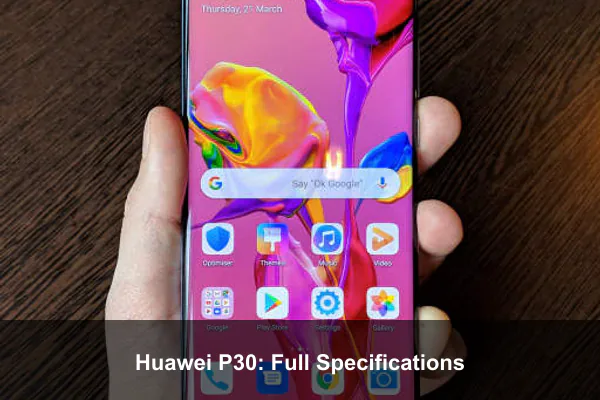
You get Wi-Fi 5 dual-band, Bluetooth 5.0 with aptX HD, NFC, and five-system GNSS positioning including GPS L1+L5 and Galileo. USB Type-C 3.1, a 3.5 mm headphone jack with 32-bit/384 kHz audio, and an under-display optical fingerprint sensor cover the essentials. There is no FM radio.
Who Should Buy the Huawei P30
The P30 makes sense for photography enthusiasts who want a compact phone with a versatile triple camera and do not mind sourcing a unit with verified Google services. It is also a fit for secondary-device buyers who value OLED quality and headphone-jack audio at a sub-300 EUR price.
Conclusion
The Huawei P30 remains a compelling compact ex-flagship at around 280 EUR, particularly for its Leica-tuned triple camera and OLED display. Recommended for buyers who prioritize imaging and pocketability over the latest software ecosystem; everyone else should weigh the GMS situation and battery age carefully before pulling the trigger.
