
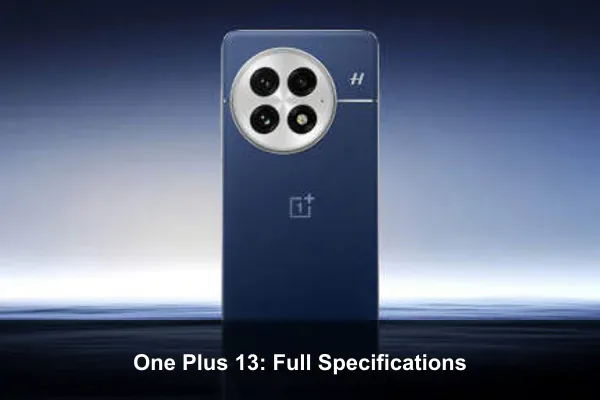
The One Plus 13 is positioned as a full-spec flagship with very few compromises in core hardware. It combines top-tier silicon, a high-resolution LTPO panel, and a large silicon-carbon battery in a premium chassis.
Instead of repeating the full spec sheet, this overview focuses on practical buying value: where it stands against other premium phones, which features matter most, and who will benefit from this configuration.
Full Specifications
Network
| Technology: | GSM / HSPA / LTE / 5G |
| 2G bands: | GSM 850 / 900 / 1800 / 1900 |
| 3G bands: | HSDPA 800 / 850 / 900 / 1700(AWS) / 1900 / 2100 – International |
| HSDPA 850 / 900 / 1900 / 2100 – India | |
| 4G bands: | 1, 2, 3, 4, 5, 7, 8, 12, 13, 17, 18, 19, 20, 25, 26, 28, 30, 32, 38, 39, 40, 41, 48, 66, 71 – International |
| 1, 3, 4, 5, 7, 8, 18, 19, 20, 26, 28, 34, 38, 39, 40, 41, 42, 48, 66 – China, India | |
| 5G bands: | 1, 2, 3, 5, 7, 8, 12, 20, 25, 28, 30, 38, 40, 41, 48, 66, 71, 75, 77, 78 SA/NSA/Sub6 – International |
| 1, 3, 5, 7, 8, 20, 28, 38, 40, 41, 48, 66, 77, 78 SA/NSA – China, India | |
| Speed: | HSPA, LTE (CA), 5G |
Launch
| Announced: | 2024, October 31 |
| Status: | Available. Released 2024, November 01 |
Body
| Dimensions: | 162.9 x 76.5 x 8.5 mm or 8.9 mm |
| Weight: | 210 g or 213 g (7.41 oz) |
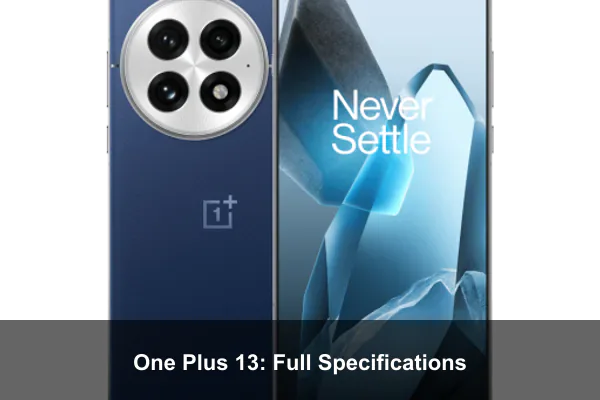
| Build: | Glass front (Ceramic Guard), glass back or silicone polymer back (eco leather), aluminum frame |
| SIM: | Nano-SIM + Nano-SIM + eSIM (max 2 at a time)Nano-SIM + Nano-SIM |
| IP68/IP69 dust tight and water resistant (high pressure water jets; immersible up to 1.5m for 30 min) |
Display
| Type: | LTPO 4.1 AMOLED, 1B colors, 120Hz, 2160Hz PWM, Dolby Vision, HDR10+, HDR Vivid, 800 nits (typ), 1600 nits (HBM), 4500 nits (peak) |
| Size: | 6.82 inches, 113.0 cm2 (~90.7% screen-to-body ratio) |
| Resolution: | 1440 x 3168 pixels (~510 ppi density) |
| Protection: | Ceramic Guard glass, Mohs level 4 |
| Ultra HDR image support |
Platform
| OS: | Android 15, up to 4 major Android upgrades, OxygenOS 15 (International), ColorOS 15 (China) |
| Chipset: | Qualcomm SM8750-AB Snapdragon 8 Elite (3 nm) |
| CPU: | Octa-core (2×4.32 GHz Oryon V2 Phoenix L + 6×3.53 GHz Oryon V2 Phoenix M) |
| GPU: | Adreno 830 |
Memory
| Card slot: | No |
| Internal: | 256GB 12GB RAM, 512GB 12GB RAM, 512GB 16GB RAM, 1TB 24GB RAM |
| UFS 4.0 |
Main Camera
| Triple: | 50 MP, f/1.6, 23mm (wide), 1/1.43″, 1.12µm, multi-directional PDAF, OIS 50 MP, f/2.6, 73mm (periscope telephoto), 1/1.95″, 0.8µm, 3x optical zoom, PDAF, OIS 50 MP, f/2.0, 15mm, 120˚ (ultrawide), 1/2.75″, 0.64µm, PDAF |
| Features: | Laser focus, Hasselblad Color Calibration, color spectrum sensor, Dual-LED flash, HDR, panorama |
| Video: | 8K@30fps, 4K@30/60fps, 1080p@30/60/240/480fps, Auto HDR, gyro-EIS, Dolby Vision |
Selfie camera
| Single: | 32 MP, f/2.4, 21mm (wide), 1/2.74″, 0.8µm |
| Features: | HDR, panorama |
| Video: | 4K@30/60fps, 1080p@30/60fps, gyro-EIS |
Sound
| Loudspeaker: | Yes, with stereo speakers |
| 3.5mm jack: | No |
| 24-bit/192kHz Hi-Res audio |
Comms
| WLAN: | Wi-Fi 802.11 a/b/g/n/ac/6/7, dual or tri-band, Wi-Fi Direct |
| Bluetooth: | 5.4, A2DP, LE, aptX HD, LHDC 5 |
| Positioning: | GPS (L1+L5), GLONASS (G1), BDS (B1I+B1c+B2a), GALILEO (E1+E5a), QZSS (L1+L5), NavIC |
| NFC: | Yes |
| Infrared port: | Yes |
| Radio: | No |
| USB: | USB Type-C 3.2, OTG |
Features
| Sensors: | Fingerprint (under display, ultrasonic), accelerometer, gyro, proximity, compass, barometer |
| Circle to Search |
Battery
| Type: | Si/C Li-Ion 6000 mAh |
| Charging: | 100W wired, PD, QC, 50% in 13 min, 100% in 36 min 50W wireless 10W reverse wireless 5W reverse wired |
Misc
| Colors: | Black Eclipse, Arctic Dawn, Midnight Ocean |
| Models: | CPH2655, CPH2653, PJZ110, CPH2649 |
| SAR: | 1.13 W/kg (head) 1.15 W/kg (body) |
| Price: | € 822.00 / $ 787.98 / £ 749.99 / ₹ 62,999 |
Our Tests
| Performance: | AnTuTu: 2690491 (v10) GeekBench: 9278 (v6) 3DMark: 6615 (Wild Life Extreme) |
| Display: | 1204 nits max brightness (measured) |
| Loudspeaker: | -23.5 LUFS (Very good) |
| Battery: | Active use score 15:28h |
EU LABEL
| Energy: | Class A |
| Battery: | 61:36h endurance, 1000 cycles |
| Free fall: | Class D (45 falls) |
| Repairability: | Class B |
Price and Availability
The One Plus 13 offers a compelling combination of features and performance. While the base price is around €822, the actual cost may vary depending on your location and retailer. Below, you’ll find the approximate price of the One Plus 13 converted into various currencies. Please note that these are estimates based on recent exchange rates as of April 23, 2026 and may not reflect the exact price you’ll find at a retailer.
- United States: $964
- Japan: ¥153,554
- United Kingdom: £713
- Australia: A$1,346
- Canada: C$1,316
- Taiwan: NT$30,376
- Denmark: kr6.135
- Saudi Arabia: ﷼3,614
- South Korea: ₩1,425,537
- Germany: €822
- Brazil: R$4.790
- Vietnam: ₫25.133.151
- Kenya: KSh 124,685
- India: ₹90,347
- Indonesia: Rp 16.516.075
- Nigeria: ₦1,305,536
- Pakistan: ₨268,537
- Philippines: ₱57,966
- Bangladesh: ৳১,১৮,২৩২
Value Position in the Premium Segment
At around $787.98, the One Plus 13 targets buyers who want near-ultra-flagship performance without crossing into the highest pricing tier. The combination of Snapdragon 8 Elite, UFS 4.0 storage, and fast wired plus wireless charging gives it strong value density for performance-focused users.
Design and Build Quality
The phone balances premium materials with practical durability: Ceramic Guard on the front, aluminum frame, and either glass or eco-leather back depending on variant. IP68/IP69 protection is a notable advantage for users who prioritize long-term durability beyond basic splash resistance.
Display Quality for Daily Use
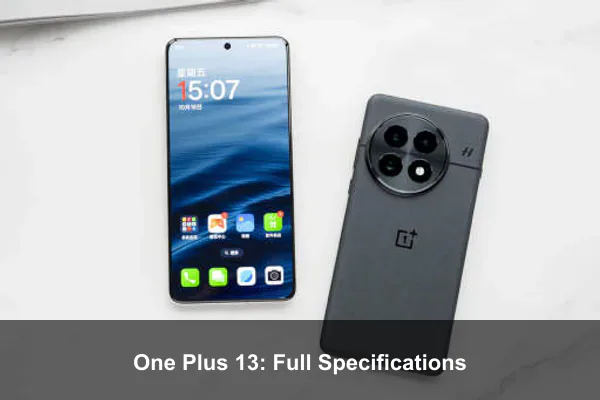
The 6.82-inch LTPO AMOLED panel is tuned for both smoothness and visual impact, with 120Hz refresh rate, high peak brightness, and broad HDR support including Dolby Vision. In real-world testing, measured brightness is strong enough for outdoor readability, making it competitive with other flagship displays.
Performance and Thermal-Class Capability
With Snapdragon 8 Elite and an Oryon-based CPU layout, this device is built for sustained flagship workloads such as gaming, 4K/8K video tasks, and heavy multitasking. Benchmark results place it firmly in top-tier territory, so performance headroom should remain comfortable for several years.
Camera System: Balanced, Not Gimmicky
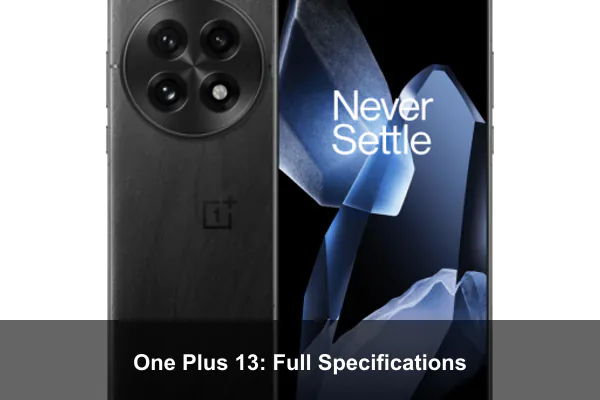
The triple 50MP setup prioritizes usable focal lengths: wide for low light and general shots, 3x periscope for portrait and medium zoom, and ultrawide for landscape and architecture. Video options are especially strong for creators, with 8K capture and Dolby Vision support, while the front camera also supports 4K recording.
Battery Endurance and Charging Strategy
A 6000mAh silicon-carbon battery gives this phone one of the more practical endurance profiles in its class, reinforced by strong active-use results. The charging stack is flexible: very fast wired top-ups, meaningful 50W wireless charging, and both wired and wireless reverse charging for accessories.
Software and Long-Term Ownership
Android 15 with up to four major Android upgrades gives a solid software runway for buyers keeping phones longer than two years. OxygenOS 15 on international units and ColorOS 15 in China also means buyers should pick by region preference, especially if they care about UI style and service ecosystem behavior.
Connectivity and Regional Fit
The One Plus 13 is equipped for broad global usage with extensive LTE/5G support, Wi-Fi 7, modern Bluetooth codecs, and multi-system navigation including NavIC. Features like infrared and USB-C 3.2 add practical flexibility that many flagships now omit.
Who Should Buy One Plus 13?
This phone fits users who want a performance-first flagship with excellent battery life, premium display quality, and versatile cameras without paying absolute top-end pricing. It is particularly suitable for power users, mobile gamers, and creator-leaning buyers who also care about charging speed and long daily runtime.
Conclusion
The One Plus 13 is a well-rounded flagship that gets the fundamentals right: speed, battery, display, and camera flexibility. If your priority is maximum everyday capability per dollar in the premium tier, it is an easy recommendation.
