Motorola Edge 60s is a 2025 upper-midrange phone that combines premium display quality, practical performance, and strong durability in a slim 180g chassis. Key highlights include a 120Hz P-OLED screen, Dimensity 7400, and a 5500mAh battery with 68W wired charging.
Rather than restating the full specs table, this article focuses on what those specs mean for real use, how the phone compares with common alternatives in its class, and who should consider it first.
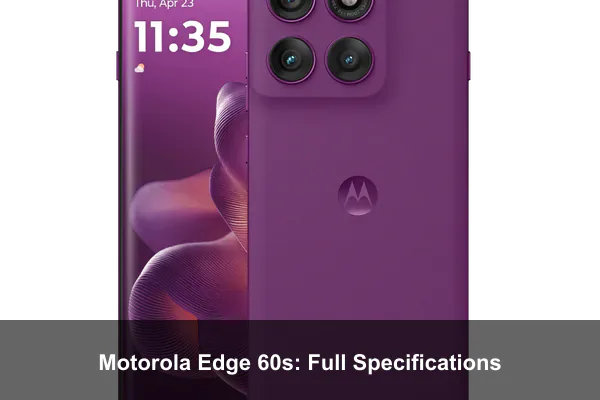
Glass front (Gorilla Glass 7i), silicone polymer back (eco leather)
SIM
Nano-SIM + Nano-SIM
IP68/IP69 dust tight and water resistant (high pressure water jets; immersible up to 1.5m for 30 min) Drop resistant up to 1.2m GJB 150A-2009 certified* * does not guarantee ruggedness or use in extreme conditions
Pantone: Slipstream, Amazonite, Zephyr, Mykonos Blue
Value Position in 2025
Value Position in 2025 Motorola Edge 60s: Full Specifications. Image Source: pixabay.com
The Edge 60s looks like a value-focused premium midranger: 12GB RAM on both storage variants, expandable storage support, modern 5G coverage, and a very bright HDR10+ panel. Without a confirmed official price in the source data, its final value depends on local pricing, but the hardware mix is clearly competitive for buyers prioritizing display quality and durability.
Design and Durability
This phone stands out with a more tactile eco-leather back instead of a typical glossy rear panel, helping grip and reducing fingerprint smudges. Combined with Gorilla Glass 7i, IP68/IP69 protection, and quoted drop resistance up to 1.2m, it targets users who want stronger real-world protection without moving to a bulky rugged phone.
Display Quality and Outdoor Use
The 6.67-inch P-OLED panel is one of the strongest reasons to shortlist this device. A 1220p resolution, 120Hz refresh rate, HDR10+, and very high peak brightness make it well-suited for streaming, social media, and sunlight visibility. Compared with many standard FHD+ midrange displays, this screen should feel sharper and more premium.
Performance and Memory Headroom
The Dimensity 7400 (4nm) plus 12GB RAM gives the Edge 60s a balanced profile for multitasking, daily apps, and sustained general performance. UFS storage and options up to 512GB improve app loading and long-term usability, while microSD support adds flexibility that many similarly positioned phones no longer offer.
Camera Setup in Practical Terms
The camera system keeps things simple: a stabilized 50MP main camera and a 13MP ultrawide with autofocus. That setup favors consistency over camera-count marketing. You also get 4K video on both rear and selfie cameras, plus high-frame-rate 1080p modes and gyro-EIS, which is useful for smoother handheld clips.
Battery Life and Charging Pace
A 5500mAh battery should comfortably support full-day heavy use for most users, with room to spare for lighter users. 68W wired charging is fast enough to minimize downtime and keeps the phone competitive against other upper-midrange models that emphasize quick top-ups.
Software and Ecosystem Features
Android 15 out of the box keeps the software baseline current. Motorola also includes Smart Connect (Ready For) support, which adds productivity value for users who want easier multi-screen workflows with compatible displays or PCs.
Connectivity and Future Readiness
Connectivity is broad and practical: dual-SIM, Wi-Fi 6, Bluetooth 5.4, NFC, and wide-band 5G with SA/NSA Sub-6 support. Dual-frequency positioning support across major satellite systems improves navigation reliability, especially in dense urban environments.
Who Should Buy the Motorola Edge 60s
This phone makes the most sense for buyers who want a strong display, dependable battery life, modern connectivity, and better-than-usual durability without jumping to flagship pricing. It is especially appealing to users who prefer a cleaner dual-camera approach and still want microSD expandability.
Conclusion
Motorola Edge 60s is a well-balanced, durability-forward upper-midrange smartphone with clear strengths in display quality, battery capacity, and daily usability. If local pricing is competitive, it is an easy recommendation for practical users who want premium essentials without flagship cost.