
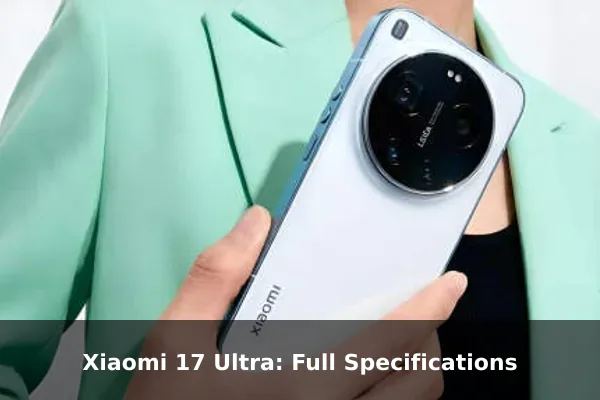
The Xiaomi 17 Ultra arrives as the brand’s most ambitious imaging flagship to date, pairing a Leica-tuned quad-purpose camera system with the latest Qualcomm silicon and a global-ready connectivity package. Announced on December 25, 2025 and released two days later, it targets photography enthusiasts and power users who want a phone that doubles as a serious creative tool. With a starting price of about 850 EUR, it sits firmly in premium territory while undercutting some rivals at the very top of the market.
This article focuses on the global edition of the Xiaomi 17 Ultra, with its broad 5G band support, dual eSIM capability, and HyperOS 3 software on top of Android 16. Rather than rehashing the China-market variant, the analysis below examines how the worldwide model balances design, display quality, raw performance, and battery endurance for buyers shopping internationally.
Full Specifications
Network
| Technology: | GSM / HSPA / LTE / 5G |
| 2G bands: | GSM 850 / 900 / 1800 / 1900 |
| 3G bands: | HSDPA 800 / 850 / 900 / 1700(AWS) / 1800 / 1900 / 2100 |
| 4G bands: | 1, 2, 3, 4, 5, 7, 8, 12, 13, 17, 18, 19, 20, 25, 26, 28, 34, 38, 39, 40, 41, 42, 48, 66 |
| 5G bands: | 1, 2, 3, 5, 7, 8, 12, 13, 18, 20, 25, 26, 28, 38, 40, 41, 48, 66, 70, 77, 78, 79, 80, 81, 83, 84, 89 SA/NSA |
| Speed: | HSPA, LTE, 5G |
Launch
| Announced: | 2025, December 25 |
| Status: | Available. Released 2025, December 27 |
Body
| Dimensions: | 162.9 x 77.6 x 8.5 mm (6.41 x 3.06 x 0.33 in) |
| Weight: | 230 g (8.11 oz) |
| Build: | Glass front, fiber-reinforced plastic back / silicone polymer back (eco leather), aluminum frame |
| SIM: | · Nano-SIM + Nano-SIM· Nano-SIM + Nano-SIM + eSIM + eSIM (max 2 at a time) |
| IP68/IP69 dust tight and water resistant (high pressure water jets; immersible up to 6m for 30 min) Aerospace-grade glass fiber |
Display
| Type: | LTPO AMOLED, 68B colors, 120Hz, 2160Hz PWM, Dolby Vision, HDR Vivid, HDR10+, 3500 nits (peak) |
| Size: | 6.9 inches, 116.6 cm2 (~92.3% screen-to-body ratio) |
| Resolution: | 1200 x 2608 pixels, 19.5:9 ratio (~416 ppi density) |
Platform
| OS: | Android 16, HyperOS 3 |
| Chipset: | Qualcomm SM8850-AC Snapdragon 8 Elite Gen 5 (3 nm) |
| CPU: | Octa-core (2×4.6 GHz Oryon V3 Phoenix L + 6×3.62 GHz Oryon V3 Phoenix M) |
| GPU: | Adreno 840 |
Memory
| Card slot: | No |
| Internal: | 512GB 12GB RAM, 512GB 16GB RAM, 1TB 16GB RAM |
| UFS 4.1 |
Main Camera
| Triple: | 50 MP, f/1.7, 23mm (wide), 1.0″-type, 1.6µm, dual pixel PDAF, OIS 200 MP, f/2.4-3.0, 75-100mm (periscope telephoto), 1/1.4″, 0.56µm, multi-directional PDAF (30cm – ∞), OIS, 3.2-4.3x continuous optical zoom, zoom ring 50 MP, f/2.2, 14mm, 115˚ (ultrawide), 1/2.76″, 0.64µm, dual pixel PDAF TOF 3D, (depth) |
| Features: | Laser AF, color spectrum sensor, Leica lenses, Dual-LED flash, HDR, panorama, 67mm filter ring holder (optional) |
| Video: | 8K@30fps, 4K@30/60/120fps, 1080p@30/60/120/240/480/960/1920fps, gyro-EIS, Dolby Vision HDR 10-bit rec. (4K@60fps, 1080p) |
Selfie camera
| Single: | 50 MP, (wide), 1/2.88″, 0.61µm |
| Features: | HDR, panorama |
| Video: | 4K@30/60fps, 1080p@30/60fps, gyro-EIS |
Sound
| Loudspeaker: | Yes, with stereo speakers |
| 3.5mm jack: | No |
| 24-bit/192kHz Hi-Res & Hi-Res Wireless audio |
Comms
| WLAN: | Wi-Fi 802.11 a/b/g/n/ac/6e/7, dual-band or tri-band, Wi-Fi Direct |
| Bluetooth: | 5.4, A2DP, LE, aptX HD, aptX Adaptive, LHDC 5, MIHC |
| Positioning: | GPS (L1+L5), BDS (B1I+B1c+B2a), GALILEO (E1+E5a), QZSS (L1+L5), NavIC (L5), GLONASS |
| NFC: | Yes |
| Infrared port: | Yes |
| Radio: | No |
| USB: | USB Type-C 3.2 Gen 2, DisplayPort, OTG |
Features
| Sensors: | Fingerprint (under display, ultrasonic), accelerometer, proximity, gyro, compass, barometer |
| Two-way satellite communication |
Battery
| Type: | Si/C Li-Ion 6800 mAh |
| Charging: | 90W wired, 90W PPS, PD3.0, QC3+ 50W wireless 22.5W reverse wired 10W reverse wireless |
Misc
| Colors: | Black, White, Starry Green, Purple |
| Models: | 25128PNA1C |
| Price: | About 850 EUR |
Price and Availability
The Xiaomi 17 Ultra offers a compelling combination of features and performance. While the base price is around €850, the actual cost may vary depending on your location and retailer. Below, you’ll find the approximate price of the Xiaomi 17 Ultra converted into various currencies. Please note that these are estimates based on recent exchange rates as of June 21, 2026 and may not reflect the exact price you’ll find at a retailer.
- United States: $975
- Japan: ¥157,192
- United Kingdom: £737
- Australia: A$1,390
- Canada: C$1,379
- Taiwan: NT$30,834
- Denmark: kr6.342
- Saudi Arabia: ﷼3,655
- South Korea: ₩1,492,856
- Germany: €850
- Brazil: R$5.025
- Vietnam: ₫25.629.518
- Kenya: KSh 126,348
- India: ₹91,958
- Indonesia: Rp 17.324.682
- Nigeria: ₦1,314,011
- Pakistan: ₨271,481
- Philippines: ₱59,181
- Bangladesh: ৳১,১৯,৭৫৭
Who Should Buy the Xiaomi 17 Ultra
The Xiaomi 17 Ultra is built for mobile photographers, content creators, and enthusiasts who refuse to compromise. If your priority is a phone that can shoot 8K video, reach deep into a scene with a continuous optical zoom, and still serve as a fast daily driver, this is squarely aimed at you. Casual users who mainly browse and message will find it overpowered for their needs, and the roughly 850 EUR asking price reflects that flagship intent.
Design and Build Quality
At 162.9 x 77.6 x 8.5 mm and 230 g, the 17 Ultra is a substantial device, and its weight signals the hardware packed inside. Xiaomi uses a glass front, an aluminum frame, and a choice of fiber-reinforced plastic or a silicone-polymer eco-leather back depending on finish. The standout durability feature is the IP68/IP69 rating, which means the phone resists not only dust and immersion up to 6 m for 30 minutes but also high-pressure water jets, an unusually rugged combination for a glass-and-metal flagship. Aerospace-grade glass fiber reinforces the structure.
Display Experience
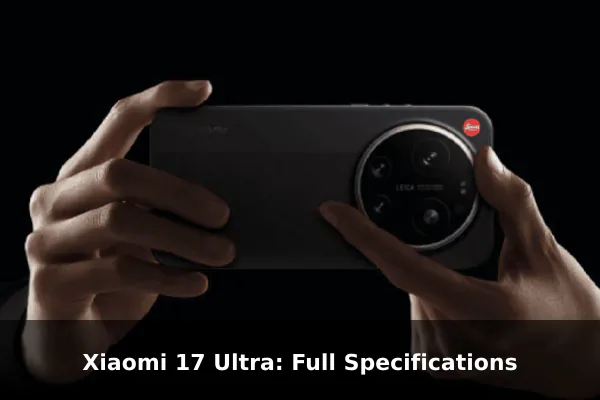
The 6.9-inch LTPO AMOLED panel is a genuine highlight. It pushes a 1200 x 2608 resolution (about 416 ppi), refreshes at up to 120 Hz, and reaches a claimed 3500 nits peak brightness, which should make outdoor visibility excellent. High-frequency 2160 Hz PWM dimming helps reduce eye strain in dark environments, while Dolby Vision, HDR10+, and HDR Vivid support cover the major high-dynamic-range standards. With a roughly 92.3% screen-to-body ratio, the front is dominated by display.
Performance and Software
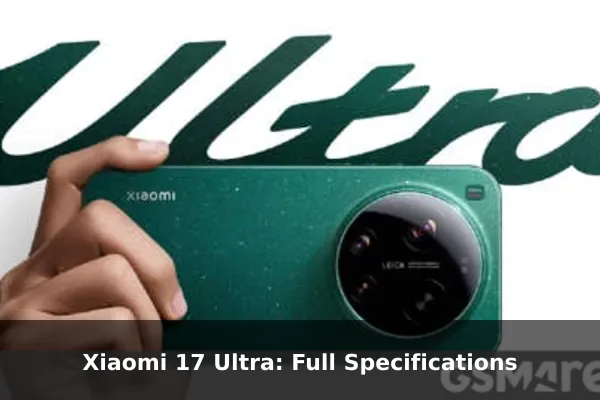
Powering the phone is Qualcomm’s Snapdragon 8 Elite Gen 5 (3 nm), with an octa-core Oryon V3 CPU and Adreno 840 GPU. Paired with up to 16 GB of RAM and fast UFS 4.1 storage in 512 GB or 1 TB capacities, it should handle demanding games and multitasking without strain. Software is Android 16 with HyperOS 3, Xiaomi’s feature-rich interface. There is no microSD slot, so buyers should choose storage carefully up front.
Camera System
The Leica-co-engineered triple rear camera is the centerpiece. A 50 MP, f/1.7 wide camera with a large 1.0-inch-type sensor and OIS anchors the setup, joined by a 200 MP periscope telephoto offering 3.2-4.3x continuous optical zoom and an optional zoom ring accessory. A 50 MP ultrawide with a 115-degree field of view and a dedicated TOF 3D depth sensor round it out. Extras include laser autofocus, a color spectrum sensor, and an optional 67 mm filter ring holder for creative shooting. Video tops out at 8K@30fps with Dolby Vision HDR 10-bit recording, and the 50 MP selfie camera captures 4K. This is one of the most complete mobile imaging kits available.
Battery and Charging
A sizeable 6800 mAh Si/C Li-Ion battery should comfortably last a full day even with heavy camera use. Charging is brisk at 90 W wired and 50 W wireless, with 22.5 W reverse wired and 10 W reverse wireless to top up accessories. The silicon-carbon chemistry helps deliver high capacity without an oversized footprint, a practical advantage for such a feature-dense flagship.
Connectivity and Extras
The global model supports an extensive list of 5G SA/NSA bands plus dual eSIM alongside dual Nano-SIM, making it travel-friendly. Wi-Fi 7, Bluetooth 5.4 with aptX Adaptive and LHDC 5, multi-band GPS, NFC, an infrared port, and USB-C 3.2 Gen 2 with DisplayPort cover nearly every base. Two-way satellite communication adds an emergency safety net, and an ultrasonic under-display fingerprint sensor handles biometrics. Note that there is no 3.5mm headphone jack and no FM radio.
Value Verdict
At about 850 EUR, the Xiaomi 17 Ultra is priced aggressively for what it offers against costlier Ultra-class rivals. The imaging hardware, top-tier chipset, large battery, and rugged IP69 rating make a strong case for enthusiasts. Buyers should treat pricing and availability as indicative, since both can vary by region and over time; confirm current details with official Xiaomi listings before purchase.
Conclusion
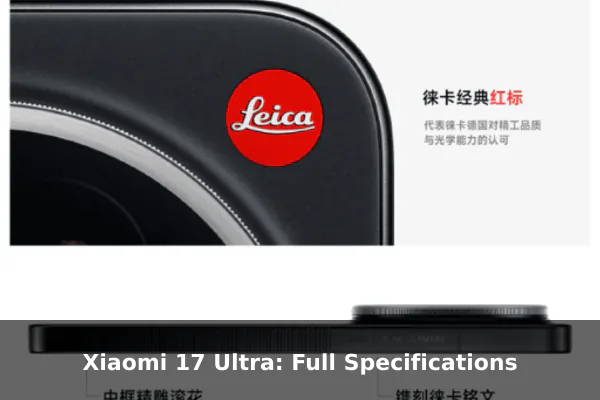
The Xiaomi 17 Ultra is a camera-first flagship that backs its Leica imaging ambitions with a bright 6.9-inch LTPO AMOLED display, the Snapdragon 8 Elite Gen 5 platform, a 6800 mAh battery, and standout IP69 durability. If photography, video, and long-term performance matter more to you than carrying the lightest phone, it is one of the most compelling premium options around 850 EUR. We recommend it to enthusiasts and creators who will use its zoom range and pro features; everyday users who just want a capable phone can save money with a lighter, less specialized model. As always, verify final pricing and availability with official sources before buying.
References
- Xiaomi Global – Xiaomi 17 Ultra Specs – Official manufacturer specifications for dimensions, display, cameras, battery, charging, connectivity, colors, and in-box details.
- Xiaomi Global – Xiaomi 17 Ultra Overview – Official product overview for headline features such as Leica cameras, LOFIC HDR, Snapdragon platform, display, durability, and battery claims.
- Qualcomm – Snapdragon 8 Elite Gen 5 Mobile Platform – Official chipset reference for the Snapdragon 8 Elite Gen 5 platform, CPU/GPU, modem, Wi-Fi, and AI capability details.
- GSMArena (gsmarena.com) – Well-known smartphone specification database useful for cross-checking model variants, launch status, network bands, and spec-table consistency.
- TechRadar – Xiaomi 17 Ultra review – Reputable consumer-tech review source for independent confirmation of real-world specs, pricing, availability, software, battery, and camera performance.
