
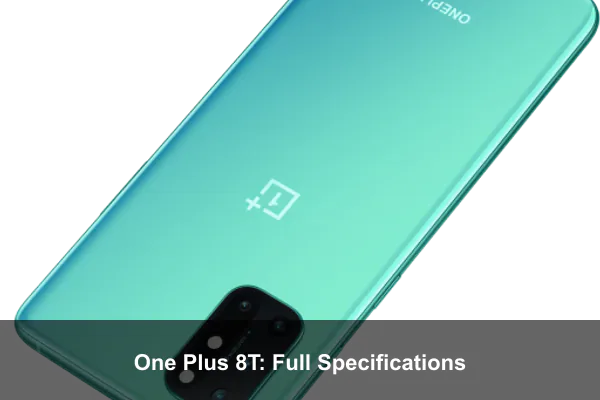
The One Plus 8T arrived in October 2020 as the brand’s mid-cycle refresh, sharpening the formula introduced earlier in the year rather than reinventing it. With a flat 120Hz Fluid AMOLED panel, Snapdragon 865 silicon and headline 65W wired charging, it was built to feel fast in every interaction, from scrolling a timeline to topping up a drained battery before you leave the house.
Years on, it remains an interesting reference point for anyone studying how flagship-killer phones matured. This breakdown looks past the spec sheet to explain what the 8T actually delivers in daily use, where its compromises sit, and which kind of buyer still has a reason to track one down today.
Full Specifications
Network
| Technology: | GSM / CDMA / HSPA / LTE / 5G |
| 2G bands: | GSM 850 / 900 / 1800 / 1900 |
| CDMA 800 / 1900 & TD-SCDMA | |
| 3G bands: | HSDPA 800 / 850 / 900 / 1700(AWS) / 1800 / 1900 / 2100 |
| 4G bands: | 1, 2, 3, 4, 5, 7, 8, 12, 13, 17, 18, 19, 20, 25, 26, 28, 32, 34, 38, 39, 40, 41, 42, 66 – EU |
| 1, 2, 3, 4, 5, 7, 8, 12, 13, 17, 18, 19, 20, 25, 26, 28, 29, 30, 34, 38, 39, 40, 41, 46, 48, 66, 71 – NA | |
| 1, 2, 3, 4, 5, 7, 8, 12, 17, 18, 19, 20, 26, 34, 38, 39, 40, 41, 46 – IN | |
| 1, 2, 3, 4, 5, 7, 8, 12, 17, 18, 19, 20, 26, 34, 38, 39, 40, 41 – CN | |
| 5G bands: | 1, 3, 7, 28, 41, 78 SA/NSA – EU |
| 1, 2, 3, 5, 25, 41, 66, 71 SA/NSA – NA | |
| 1, 3, 78 SA/NSA – IN | |
| 41, 78, 79 SA/NSA – CN | |
| Speed: | HSPA 42.2/5.76 Mbps, LTE (5CA) Cat18 1200/200 Mbps, 5G 7.5 Gbps DL |
Launch
| Announced: | 2020, October 14 |
| Status: | Available. Released 2020, October 16 |
Body
| Dimensions: | 160.7 x 74.1 x 8.4 mm (6.33 x 2.92 x 0.33 in) |
| Weight: | 188 g (6.63 oz) |
| Build: | Glass front (Gorilla Glass 5), glass back (Gorilla Glass 5), aluminum frame |
| SIM: | Nano-SIM + Nano-SIM |
Display
| Type: | Fluid AMOLED, 120Hz, HDR10+ |
| Size: | 6.55 inches, 103.6 cm2 (~87.0% screen-to-body ratio) |
| Resolution: | 1080 x 2400 pixels, 20:9 ratio (~402 ppi density) |
| Protection: | Corning Gorilla Glass 5 |
Platform
| OS: | Android 11, upgradable to Android 14, OxygenOS 14 |
| Chipset: | Qualcomm SM8250 Snapdragon 865 5G (7 nm+) |
| CPU: | Octa-core (1×2.84 GHz Cortex-A77 & 3×2.42 GHz Cortex-A77 & 4×1.80 GHz Cortex-A55) |
| GPU: | Adreno 650 |
Memory
| Card slot: | No |
| Internal: | 128GB 8GB RAM, 256GB 12GB RAM |
| UFS 3.1 |
Main Camera
| Quad: | 48 MP, f/1.7, 26mm (wide), 1/2.0″, 0.8µm, PDAF, OIS 16 MP, f/2.2, 14mm, 123˚ (ultrawide), 1/3.6″, 1.0µm 5 MP, f/2.4, (macro) 2 MP, f/2.4, (monochrome) |
| Features: | Dual-LED flash, HDR, panorama |
| Video: | 4K@30/60fps, 1080p@30/60/240fps, Auto HDR, gyro-EIS |
Selfie camera
| Single: | 16 MP, f/2.4, (wide), 1/3.06″, 1.0µm |
| Features: | HDR |
| Video: | 1080p@30fps, gyro-EIS |
Sound
| Loudspeaker: | Yes, with stereo speakers |
| 3.5mm jack: | No |
Comms
| WLAN: | Wi-Fi 802.11 a/b/g/n/ac/6, dual-band, Wi-Fi Direct, DLNA |
| Bluetooth: | 5.1, A2DP, LE, aptX HD |
| Positioning: | GPS (L1+L5), GLONASS (G1), BDS (B1), GALILEO (E1+E5a) |
| NFC: | Yes |
| Radio: | No |
| USB: | USB Type-C 3.1, OTG |
Features
| Sensors: | Fingerprint (under display, optical), accelerometer, gyro, proximity, compass, barometer (market dependant) |
Battery
| Type: | Li-Po 4500 mAh |
| Charging: | 65W wired, 100% in 39 min |
Misc
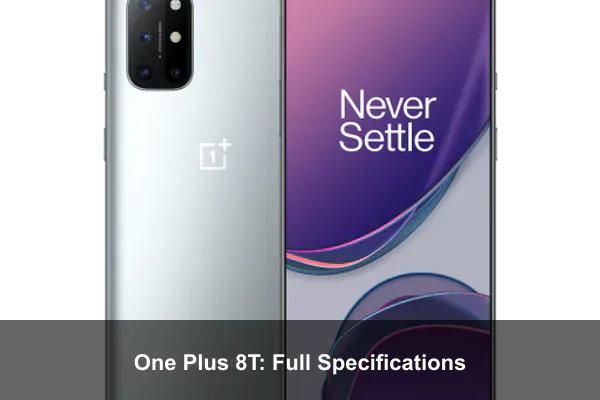
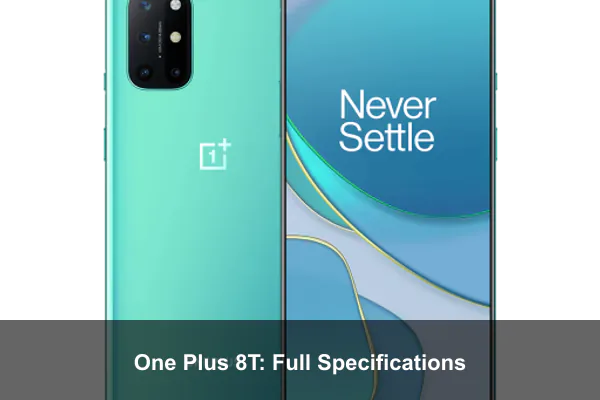
| Colors: | Aquamarine Green, Lunar Silver, Cyberpunk 2077 Edition |
| Models: | KB2001, KB2000, KB2003, KB2005 |
| Price: | € 132.58 / $ 1,095.00 / £ 116.99 |
Our Tests
| Performance: | AnTuTu: 586000 (v8) GeekBench: 3126 (v5.1) GFXBench: 46fps (ES 3.1 onscreen) |
| Display: | 802 nits max brightness (measured) |
| Camera: | Photo / Video |
| Loudspeaker: | -24.0 LUFS (Very good) |
| Battery (old): | Endurance rating 104h |
Price and Availability
The One Plus 8T offers a compelling combination of features and performance. While the base price is around €133, the actual cost may vary depending on your location and retailer. Below, you’ll find the approximate price of the One Plus 8T converted into various currencies. Please note that these are estimates based on recent exchange rates as of June 20, 2026 and may not reflect the exact price you’ll find at a retailer.
- United States: $152
- Japan: ¥24,522
- United Kingdom: £115
- Australia: A$217
- Canada: C$215
- Taiwan: NT$4,809
- Denmark: kr990
- Saudi Arabia: ﷼570
- South Korea: ₩232,734
- Germany: €133
- Brazil: R$784
- Vietnam: ₫4.000.665
- Kenya: KSh 19,705
- India: ₹14,344
- Indonesia: Rp 2.701.263
- Nigeria: ₦205,095
- Pakistan: ₨42,326
- Philippines: ₱9,230
- Bangladesh: ৳১৮,৬৭৫
Where the One Plus 8T Fits in the Lineup
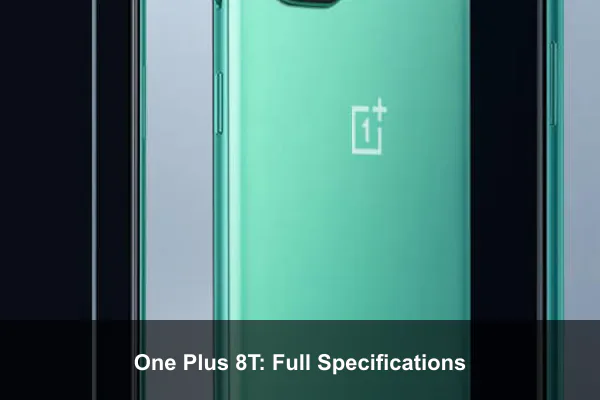
The 8T slots in as a tuned upgrade over the standard 8, sitting just below the curved, more premium 8 Pro. Compared with the 8 Pro listed elsewhere on this site, the 8T trades the QHD+ curved panel and wireless charging for a flatter, faster-feeling design and significantly quicker wired charging. That positioning matters: the 8T was never the most loaded One Plus of its era, but it concentrated its budget on the features people touch most, which is exactly why it earned a strong word-of-mouth reputation.
Design and Build Quality
At 160.7 x 74.1 x 8.4 mm and 188 g, the 8T is a substantial but well-balanced handset. The Gorilla Glass 5 front and back are bonded to an aluminium frame, giving it the cool, dense feel buyers expect from a flagship rather than a budget device. The switch to a flat display makes the phone easier to grip and reduces accidental edge touches that curved rivals struggled with. Aquamarine Green and Lunar Silver cover the mainstream taste, while the limited Cyberpunk 2077 Edition gave collectors a genuinely distinctive option.
The 120Hz Fluid AMOLED Display
The 6.55-inch 1080 x 2400 panel is the heart of the experience. A 120Hz refresh rate keeps animations gliding, and at roughly 402 ppi the image stays crisp for everyday content. HDR10+ support and a measured peak of around 802 nits mean streaming and outdoor visibility hold up well. One Plus deliberately stuck with Full HD+ rather than QHD+ here, a choice that helps both battery life and sustained smoothness, and for most users the trade is barely noticeable in normal viewing.
Performance and Thermals
The Snapdragon 865 paired with up to 12GB of RAM and UFS 3.1 storage still handles modern apps and most games with ease. Benchmark figures of roughly 586,000 on AnTuTu (v8) and a GeekBench multi-core result near 3,126 underline that this was a true flagship chipset, not a cut-down variant. The 8T rarely stutters in real use, and its combination of fast storage and a high refresh display makes it feel quicker than raw numbers suggest. Sustained gaming will warm the frame, but throttling is well managed for a 7nm+ part.
Cameras: Capable Wide, Modest Extras
The quad rear setup leads with a 48 MP f/1.7 main sensor with OIS that produces clean, detailed daylight shots, backed by a 16 MP 123-degree ultrawide. The 5 MP macro and 2 MP monochrome units are clearly secondary, adding versatility on paper more than transforming results. Video tops out at 4K 60fps with gyro-EIS, and the 16 MP selfie camera covers social-media needs comfortably. As a package the 8T is a dependable point-and-shoot phone rather than a low-light specialist, which suits its value-focused intent.
Battery and 65W Charging
This is where the 8T made its strongest case. The 4500 mAh battery is split into a dual-cell design to enable Warp Charge 65, refilling the phone to 100% in around 39 minutes. In practice that means a few minutes on the charger restores hours of use, reshaping how you think about battery anxiety. Endurance is solid for a 120Hz flagship, and the fast top-up effectively compensates for the lack of wireless charging that the 8 Pro offered.
Software and Connectivity
The 8T shipped on Android 11 with OxygenOS and was upgradable to Android 14 with OxygenOS 14, giving it a respectable support window for its generation. Connectivity is broad: 5G across multiple regional band sets, Wi-Fi 6, Bluetooth 5.1 with aptX HD, NFC and USB Type-C 3.1. Stereo speakers measured at a clean -24.0 LUFS add to the rounded multimedia experience, though the absence of a 3.5mm jack and microSD expansion are the expected flagship-era omissions.
Who Should Consider the One Plus 8T
The 8T appeals to buyers who prioritise a fast, fluid interface and rapid charging over peak camera versatility or wireless extras. It is a natural pick for someone moving up from a mid-ranger who wants flagship-grade speed, or for a secondary device that still feels modern. Heavy mobile photographers or those who want the absolute latest software cadence may look elsewhere, but for fluid everyday performance the 8T remains compelling value.
Conclusion
The One Plus 8T is a focused flagship that spent its budget wisely: a smooth 120Hz Fluid AMOLED, dependable Snapdragon 865 performance, and class-leading 65W charging that genuinely changes daily habits. It concedes wireless charging and a QHD+ panel to the 8 Pro, and its supporting cameras are merely adequate, but none of that undermines a confident, fast-feeling phone. If you want a slick, quick-charging device with real flagship bones and can live without the headline extras, the 8T is an easy recommendation.
