
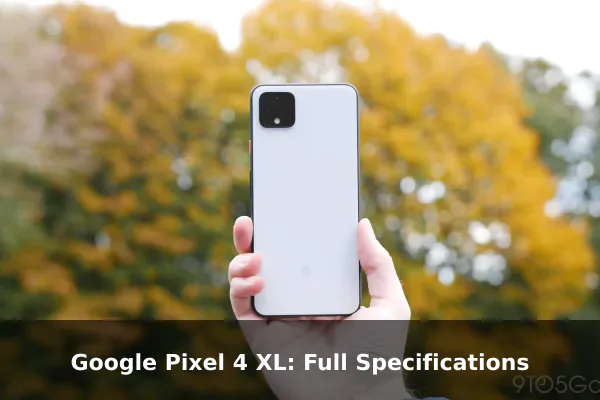
The Google Pixel 4 XL arrived in October 2019 as Google’s flagship statement for the year, pairing a 6.3-inch 90Hz P-OLED display with the Snapdragon 855 chipset and Google’s much-praised computational photography. Today it sits firmly in the affordable used-flagship bracket, with street pricing hovering around 180 EUR, which reframes it less as a cutting-edge purchase and more as a budget gateway into the clean Pixel software experience.
This article looks at the Pixel 4 XL from the angle of a 2026 value buyer rather than a launch-day reviewer. We weigh what still holds up, what has aged, and where it lands compared with other older flagships, so you can decide whether its strengths in display smoothness, camera quality, and software polish outweigh its weaker battery and modest storage. Specifications referenced here align with Google’s official Pixel hardware documentation.
Full Specifications
Network
| Technology: | GSM / CDMA / HSPA / EVDO / LTE |
| 2G bands: | GSM 850 / 900 / 1800 / 1900 |
| CDMA 800 / 1900 | |
| 3G bands: | HSDPA 850 / 900 / 1700(AWS) / 1900 / 2100 |
| CDMA2000 1xEV-DO | |
| 4G bands: | 1, 2, 3, 4, 5, 7, 8, 12, 13, 17, 20, 25, 26, 28, 32, 38, 39, 40, 41, 66, 71 – Global |
| 1, 2, 3, 4, 5, 7, 8, 12, 13, 14, 17, 18, 19, 20, 25, 26, 28, 29, 30, 38, 39, 40, 41, 46, 48, 66, 71 – USA | |
| Speed: | HSPA 42.2/5.76 Mbps, LTE (5CA) Cat18 1200/150 Mbps |
Launch
| Announced: | 2019, October 15 |
| Status: | Available. Released 2019, October 22 |
Body
| Dimensions: | 160.4 x 75.1 x 8.2 mm (6.31 x 2.96 x 0.32 in) |
| Weight: | 193 g (6.81 oz) |
| Build: | Glass front (Gorilla Glass 5), glass back (Gorilla Glass 5), aluminum frame |
| SIM: | Nano-SIM + eSIM |
| IP68 dust tight and water resistant (immersible up to 1.5m for 30 min) |
Display
| Type: | P-OLED, 90Hz, HDR |
| Size: | 6.3 inches, 98.0 cm2 (~81.3% screen-to-body ratio) |
| Resolution: | 1440 x 3040 pixels, 19:9 ratio (~537 ppi density) |
| Protection: | Corning Gorilla Glass 5 |
Platform
| OS: | Android 10, upgradable to Android 13 |
| Chipset: | Qualcomm SM8150 Snapdragon 855 (7 nm) |
| CPU: | Octa-core (1×2.84 GHz Kryo 485 & 3×2.42 GHz Kryo 485 & 4×1.78 GHz Kryo 485) |
| GPU: | Adreno 640 |
Memory
| Card slot: | No |
| Internal: | 64GB 6GB RAM, 128GB 6GB RAM |
| UFS 2.1 |
Main Camera
| Dual: | 12.2 MP, f/1.7, 27mm (wide), 1/2.55″, 1.4µm, dual pixel PDAF, OIS 16 MP, f/2.4, 50mm (telephoto), 1/3.6″, 1.0µm, PDAF, OIS, 2x optical zoom |
| Features: | Dual-LED flash, Pixel Shift, Auto-HDR, panorama |
| Video: | 4K@30fps, 1080p@30/60/120fps, 1080p@30fps (gyro-EIS) |
Selfie camera
| Single: | 8 MP, f/2.0, 22mm (wide), 1.22µm, no AF TOF 3D, (depth/biometrics sensor) |
| Features: | HDR |
| Video: | 1080p@30fps |
Sound
| Loudspeaker: | Yes, with stereo speakers |
| 3.5mm jack: | No |
Comms
| WLAN: | Wi-Fi 802.11 a/b/g/n/ac, dual-band, Wi-Fi Direct, DLNA |
| Bluetooth: | 5.0, A2DP, LE, aptX HD |
| Positioning: | GPS, GLONASS, BDS, GALILEO |
| NFC: | Yes |
| Radio: | No |
| USB: | USB Type-C 3.1 |
Features
| Sensors: | Face ID, accelerometer, gyro, proximity, compass, barometer |
Battery
| Type: | Li-Po 3700 mAh, non-removable |
| Charging: | 18W wired, PD2.0 Wireless |
Misc
| Colors: | Clearly White, Just Black, Oh So Orange |
| Models: | G020P, G020, GA01181-US, GA01182-US, GA01180-US |
| Price: | About 180 EUR |
Our Tests
| Performance: | AnTuTu: 323305 (v7), 403267 (v8) GeekBench: 10171 (v4.4), 2267 (v5.1) GFXBench: 21fps (ES 3.1 onscreen) |
| Camera: | Photo / Video |
| Loudspeaker: | Voice 80dB / Noise 78dB / Ring 88dB |
| Audio quality: | Noise -93.9 / Crosstalk -94.1 |
| Battery (old): | Endurance rating 73h |
Price and Availability
The Google Pixel 4 XL offers a compelling combination of features and performance. While the base price is around €180, the actual cost may vary depending on your location and retailer. Below, you’ll find the approximate price of the Google Pixel 4 XL converted into various currencies. Please note that these are estimates based on recent exchange rates as of June 8, 2026 and may not reflect the exact price you’ll find at a retailer.
- United States: $208
- Japan: ¥33,267
- United Kingdom: £156
- Australia: A$294
- Canada: C$289
- Taiwan: NT$6,562
- Denmark: kr1.343
- Saudi Arabia: ﷼778
- South Korea: ₩323,052
- Germany: €180
- Brazil: R$1.064
- Vietnam: ₫5.415.975
- Kenya: KSh 26,990
- India: ₹19,754
- Indonesia: Rp 3.750.059
- Nigeria: ₦283,427
- Pakistan: ₨57,844
- Philippines: ₱12,780
- Bangladesh: ৳২৫,৫২৭
Is the Pixel 4 XL Still Worth Buying in 2026?
At roughly 180 EUR on the secondhand market, the Pixel 4 XL competes with new budget phones rather than flagships. Its appeal is specific: you get a former flagship’s screen, camera tuning, and the stock Android feel for the price of a midrange device. That trade-off makes sense for buyers who prioritize photo quality and software cleanliness over raw longevity or the latest 5G connectivity, which this LTE-only phone lacks.
Design and Build Quality
The Pixel 4 XL measures 160.4 x 75.1 x 8.2 mm and weighs 193 g, with a glass front and back over an aluminum frame. Both glass surfaces use Corning Gorilla Glass 5, and the phone carries IP68 dust and water resistance, rated for immersion up to 1.5 m for 30 minutes. The matte-finish back on the Just Black and Oh So Orange units resists fingerprints better than the glossy Clearly White option. It is a compact, well-built flagship by modern standards, and the build still feels premium in the hand.
Display Experience
The 6.3-inch P-OLED panel runs at a sharp 1440 x 3040 resolution, giving roughly 537 ppi, and supports HDR plus a 90Hz refresh rate that keeps scrolling and animations fluid. For a phone in this price range, a high-resolution 90Hz OLED is a genuine standout, comfortably outclassing the typical 60Hz LCDs found on new budget devices. The 19:9 ratio and ~81.3% screen-to-body ratio reflect 2019 design conventions, with a noticeable top forehead housing the face-unlock and Soli sensors.
Performance and Everyday Speed
Powered by the Qualcomm Snapdragon 855 (7 nm) with an octa-core Kryo 485 CPU and Adreno 640 GPU, the Pixel 4 XL handles daily tasks, browsing, and most games smoothly even years later. Benchmark figures place it around 403,267 in AnTuTu (v8), which remains respectable against current entry-level chips. The 6GB of RAM is the main constraint compared with newer phones that ship with 8GB or more, so heavy multitaskers may notice tighter memory management.
Camera Capabilities
Google’s photography reputation is the headline reason to consider this phone. The dual rear setup combines a 12.2 MP wide (f/1.7, OIS, dual pixel PDAF) with a 16 MP telephoto (f/2.4, OIS, 2x optical zoom). Backed by Google’s Pixel Shift and Auto-HDR processing, it still produces excellent stills with reliable dynamic range and detail. Video tops out at 4K@30fps, plus 1080p up to 120fps. The 8 MP front camera (f/2.0) is paired with a TOF 3D sensor used for secure face unlock. The lack of an ultrawide is the notable gap versus rivals of its era.
Battery and Charging
The 3700 mAh battery is the Pixel 4 XL’s weakest link, delivering an endurance rating of around 73 hours that was only average even at launch. Charging support includes 18W wired (PD2.0) and Qi wireless charging. For a used unit, battery health is the single most important thing to check before buying, since real-world stamina on an aged cell can fall well short of new condition. Day-long use is achievable with moderate habits but heavy users should expect a midday top-up.
Software and Update Support
The phone shipped with Android 10 and is upgradable to Android 13, covering core Google features through several major releases. Per Google’s official update policy, guaranteed software and security updates for this generation have ended, so buyers should treat it as a device that no longer receives new patches. That makes it best suited to users comfortable with an out-of-support flagship, ideally paired with cautious browsing and app habits.
Connectivity and Extras
Connectivity covers Wi-Fi 802.11ac dual-band, Bluetooth 5.0 with aptX HD, NFC, and USB Type-C 3.1. Positioning spans GPS, GLONASS, BDS, and Galileo. The phone uses a Nano-SIM plus eSIM and offers stereo speakers, though there is no 3.5mm headphone jack, no microSD expansion, and no FM radio. Storage is fixed at 64GB or 128GB on UFS 2.1, so the 128GB model is the smarter long-term pick given there is no card slot.
Who Should Buy It
The Pixel 4 XL is ideal for photography enthusiasts on a tight budget, fans of clean stock Android, and anyone wanting a compact flagship feel for around 180 EUR. It is less suited to power users who need 5G, long battery life, expandable storage, or ongoing security updates.
Conclusion
The Google Pixel 4 XL remains a compelling budget pick for one clear reason: it delivers flagship-grade camera output and a sharp 90Hz OLED display at a midrange price. Its compromises are real, namely a modest 3700 mAh battery, no 5G or microSD, and the end of official update support. If you can find a unit with healthy battery life and you value photo quality and a clean software experience over future-proofing, it is a smart, affordable buy. Otherwise, a newer budget phone with active updates and a larger battery will serve you better.
Official references
- Google Pixel Phone Hardware Tech Specs (Earlier Models) – Official Google specification reference for Pixel 4 XL hardware details including display, dimensions, battery, cameras, memory, storage, network bands, and model variants.
- Google Pixel 4 and Pixel 4 XL Safety and Regulatory Manual – Official Google regulatory and safety reference for Pixel 4 XL model numbers, SAR, hearing aid compatibility, and compliance details.
- Google Pixel Software Update Support – Official Google source for Pixel software and security update support timelines, useful for the operating system/support section.
- Qualcomm Snapdragon 855 Mobile Platform – Primary chipset manufacturer reference for Snapdragon 855 platform capabilities used in the Pixel 4 XL.
- Federal Communications Commission Equipment Authorization System (fcc.gov) – Primary US regulator source for verifying Pixel 4 XL radio certification records by FCC IDs such as A4RG020J and A4RG020PQ.
