
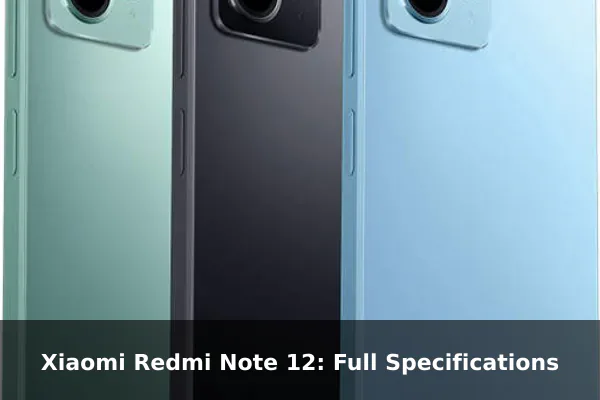
The Xiaomi Redmi Note 12 anchors the entry of the long-running Redmi Note family, pairing a genuine AMOLED panel and a recognisable brand name with a budget-friendly price. Announced on 27 October 2022 and released internationally on 11 January 2023, it set out to deliver the essentials most buyers actually use every day rather than a long list of headline features.
What makes this model worth a closer look is balance. Instead of chasing one standout spec, it spreads its budget across a smooth 120Hz screen, a dependable 5000 mAh battery, a clean 48 MP main camera and modern connectivity that includes 5G. This article digs into where that balance pays off and where the compromises sit, so you can decide if it still fits your needs. Always confirm current pricing, the exact variant and regional features through official Xiaomi channels, since these details can change between markets.
Full Specifications
Network
| Technology: | GSM / HSPA / LTE / 5G |
| 2G bands: | GSM 850 / 900 / 1800 / 1900 |
| 3G bands: | HSDPA 850 / 900 / 2100 |
| 4G bands: | 1, 3, 5, 8, 40, 41 |
| 5G bands: | 1, 3, 5, 8, 28, 40, 78 SA/NSA |
| Speed: | HSPA, LTE (CA), 5G |
Launch
| Announced: | 2022, October 27 |
| Status: | Available. Released 2023, January 11 |
Body
| Dimensions: | 165.9 x 76.2 x 8 mm (6.53 x 3.00 x 0.31 in) |
| Weight: | 188 g (6.63 oz) |
| SIM: | Nano-SIM + Nano-SIM |
| IP53 dust protected and water resistant (vertical water sprays) |
Display
| Type: | AMOLED, 120Hz, 1200 nits (peak) |
| Size: | 6.67 inches, 107.4 cm2 (~85.0% screen-to-body ratio) |
| Resolution: | 1080 x 2400 pixels, 20:9 ratio (~395 ppi density) |
| Protection: | Corning Gorilla Glass 3 |
Platform
| OS: | Android 12, MIUI 14 (International), MIUI 13 (India) |
| Chipset: | Qualcomm SM4375 Snapdragon 4 Gen 1 (6 nm) |
| CPU: | Octa-core (2×2.0 GHz Cortex-A78 & 6×1.8 GHz Cortex-A55) |
| GPU: | Adreno 619 |
Memory
| Card slot: | microSDXC (uses shared SIM slot) |
| Internal: | 128GB 4GB RAM, 128GB 6GB RAM, 256GB 8GB RAM |
| UFS 2.2 |
Main Camera
| Triple: | 48 MP, f/1.8, (wide), PDAF 8 MP, f/2.2, 120˚ (ultrawide), 1/4.0″, 1.12µm 2 MP, f/2.4, (macro) |
| Features: | Dual-LED dual-tone flash, HDR, panorama |
| Video: | 1080p@30fps |
Selfie camera
| Single: | 13 MP, f/2.5, (wide), 1/3.0″ |
| Features: | HDR |
| Video: | 1080p@30fps |
Sound
| Loudspeaker: | Yes |
| 3.5mm jack: | Yes |
| 24-bit/192kHz Hi-Res audio |
Comms
| WLAN: | Wi-Fi 802.11 a/b/g/n/ac, dual-band |
| Bluetooth: | 5.1, A2DP, LE |
| Positioning: | GPS, GLONASS |
| NFC: | Yes (market/region dependent) |
| Infrared port: | Yes |
| Radio: | Unspecified |
| USB: | USB Type-C 2.0, OTG |
Features
| Sensors: | Fingerprint (side-mounted), accelerometer, gyro, proximity, compass |
Battery
| Type: | Li-Po 5000 mAh |
| Charging: | 33W wired, 50% in 22 min |
Misc
| Colors: | Frosted Green, Matte Black, Mystique Blue |
| Models: | 22111317I, 22111317G |
| SAR: | 1.09 W/kg (head) 1.05 W/kg (body) |
| SAR EU: | 0.68 W/kg (head) 0.91 W/kg (body) |
| Price: | € 151.99 / $ 209.99 / ₹ 14,490 |
Our Tests
| Performance: | AnTuTu: 360745 (v9) GeekBench: 1998 (v5.1), 2017 (v6) |
| Display: | 706 nits max brightness (measured) |
| Camera: | Photo / Video |
| Loudspeaker: | -28.0 LUFS (Good) |
| Battery: | Active use score 10:58h |
| Battery (old): | Endurance rating 101h |
Price and Availability
The Xiaomi Redmi Note 12 offers a compelling combination of features and performance. While the base price is around €152, the actual cost may vary depending on your location and retailer. Below, you’ll find the approximate price of the Xiaomi Redmi Note 12 converted into various currencies. Please note that these are estimates based on recent exchange rates as of June 11, 2026 and may not reflect the exact price you’ll find at a retailer.
- United States: $175
- Japan: ¥28,155
- United Kingdom: £131
- Australia: A$250
- Canada: C$245
- Taiwan: NT$5,554
- Denmark: kr1.134
- Saudi Arabia: ﷼658
- South Korea: ₩267,276
- Germany: €152
- Brazil: R$909
- Vietnam: ₫4.601.004
- Kenya: KSh 22,751
- India: ₹16,718
- Indonesia: Rp 3.143.109
- Nigeria: ₦237,453
- Pakistan: ₨48,832
- Philippines: ₱10,767
- Bangladesh: ৳২১,৫৪৮
Where the Redmi Note 12 Sits on Value
At a launch price around €151.99 / $209.99 / ₹14,490, the Redmi Note 12 was positioned as an affordable all-rounder rather than a flagship killer. The value story is simple: you get an AMOLED display, 5G support and a large battery at a price point where LCD screens were still common. For shoppers who want a recognisable brand and a balanced feature set without overspending, it remains one of the easiest budget recommendations, with variants spanning 4GB, 6GB and 8GB of RAM and up to 256GB of storage. Always verify the current price and exact variant against an official Xiaomi listing, as promotions and availability shift over time.
Design and Build Quality
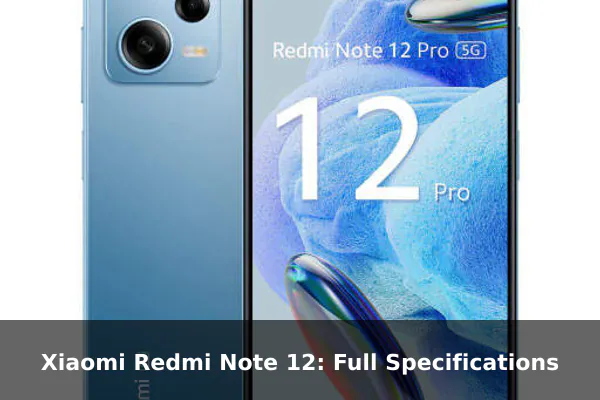
The Redmi Note 12 keeps things practical. It measures 165.9 x 76.2 x 8 mm and weighs 188 g, so it feels substantial but not heavy for a phone with a 5000 mAh cell. Xiaomi includes an IP53 rating, meaning it is dust protected and can shrug off vertical water sprays, useful peace of mind though not a substitute for full waterproofing. Colour options include Frosted Green, Matte Black and Mystique Blue, and the side-mounted fingerprint reader is fast and naturally placed for one-handed use on a phone of this size.
The AMOLED Display Advantage
The display is arguably the phone’s biggest draw. The 6.67-inch AMOLED panel runs at a 120Hz refresh rate with a 1080 x 2400 resolution (around 395 ppi) and a peak brightness rated at 1200 nits, protected by Corning Gorilla Glass 3. AMOLED brings deep blacks and punchy colours that are uncommon in this class, while 120Hz keeps scrolling and animations fluid. In independent testing the screen measured roughly 706 nits of usable brightness, which is comfortable indoors and workable outdoors, even if it does not reach the rated peak in everyday use.
Everyday Performance
Powering the phone is the Qualcomm Snapdragon 4 Gen 1 (6 nm), an octa-core chip with two Cortex-A78 cores at 2.0 GHz and six Cortex-A55 cores at 1.8 GHz, paired with the Adreno 619 GPU and UFS 2.2 storage. This is a mid-tier budget platform tuned for efficiency rather than raw speed. Benchmark results of roughly 360,745 on AnTuTu (v9) and around 1998/2017 on Geekbench (v5.1/v6) line up with smooth day-to-day use: social apps, browsing and video stream well, while demanding games run best at moderate settings. The 8GB RAM variant gives the most comfortable multitasking headroom.
Camera System in Practice
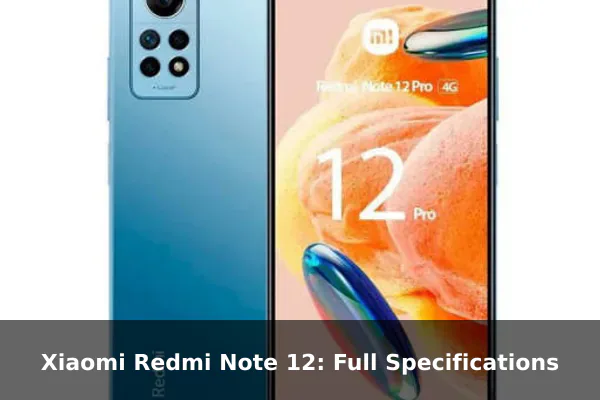
The rear setup is a triple camera led by a 48 MP f/1.8 wide sensor with PDAF, backed by an 8 MP f/2.2 ultrawide with a 120-degree field of view and a 2 MP macro. The main sensor is the one to rely on, capturing detailed, well-balanced shots in good light, while the ultrawide is handy for landscapes and the macro is a casual extra. A 13 MP f/2.5 front camera handles selfies and video calls. Video tops out at 1080p at 30fps front and back, so this is a stills-first camera rather than a video powerhouse, which is reasonable given the price.
Battery Life and Charging
Battery is a clear strength. The 5000 mAh Li-Po cell delivered an active-use score of nearly 11 hours in testing, comfortably lasting a full day for most users and often stretching into a second with lighter use. Charging is handled at 33W wired, with Xiaomi quoting roughly 50% in 22 minutes, which is respectable for the segment. There is no wireless charging, but that is expected at this price.
Connectivity and Extras
Connectivity is well rounded for a budget model. You get dual-SIM 5G (SA/NSA), Wi-Fi 5 (802.11ac) dual-band, Bluetooth 5.1 and USB Type-C 2.0 with OTG. Xiaomi also retains several features power users appreciate: a 3.5mm headphone jack, 24-bit/192kHz Hi-Res audio support, an IR blaster for controlling appliances, and NFC on selected markets and regions, which is worth verifying before purchase since availability varies. Positioning covers GPS and GLONASS.
Software Experience
The phone ships with Android 12 layered with MIUI 14 internationally (MIUI 13 in India). MIUI is feature-rich, with extensive customisation and built-in tools, though it carries more pre-installed apps than stock Android. Buyers should check the official Xiaomi support pages for the latest update status in their region, as software longevity is an important factor for a phone meant to last several years.
Who Should Buy It
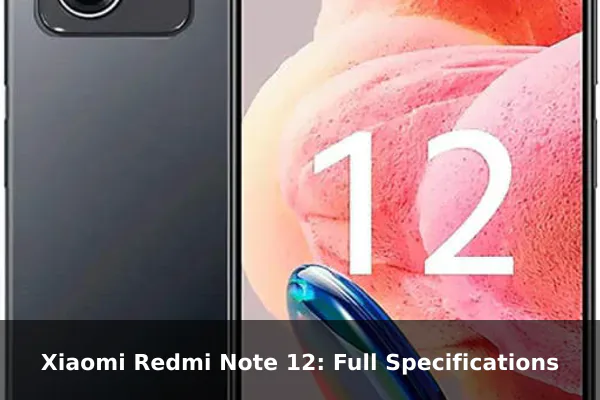
The Redmi Note 12 makes the most sense for budget-conscious buyers who prioritise a great screen, strong battery life and 5G connectivity over top-tier processing power or advanced video. It is a sensible pick for students, second-phone users, or anyone upgrading from an older LCD device who wants a modern AMOLED experience without paying mid-range prices.
Conclusion
The Xiaomi Redmi Note 12 succeeds by getting the fundamentals right: a vibrant 120Hz AMOLED display, all-day 5000 mAh battery, dependable 48 MP main camera and full 5G connectivity, all at an accessible price. Its trade-offs, namely a modest chipset, 1080p-only video and Gorilla Glass 3, are easy to accept for the money. If you want a well-balanced everyday smartphone that covers the essentials without overspending, the Redmi Note 12 is an easy recommendation; just choose the 6GB or 8GB variant for the best longevity and confirm regional NFC and pricing on Xiaomi’s official pages before buying.
Official references
- Xiaomi Global Redmi Note 12 specifications – Primary manufacturer specification page for the Redmi Note 12 4G, covering display, dimensions, cameras, chipset, memory, battery, charging, connectivity, sensors, and software.
- Xiaomi Global Redmi Note 12 5G specifications – Official manufacturer page for the 5G variant, useful to avoid mixing Redmi Note 12 4G and Redmi Note 12 5G specifications.
- Xiaomi Indonesia Redmi Note 12 specifications – Official regional Xiaomi page with market-specific Redmi Note 12 details, useful for checking variants, NFC availability, camera sensor details, and included accessories.
- Xiaomi Global Support – User Guide – Official Xiaomi support entry point for user guides, warranty, and compliance documents that can help verify package contents, safety notes, and regional documentation.
