
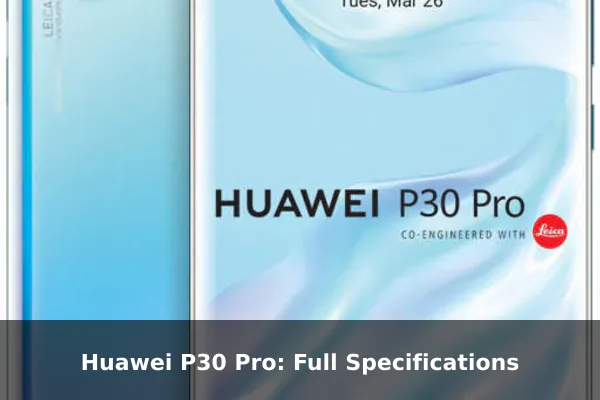
The Huawei P30 Pro arrived in March 2019 as the company’s photography flagship, built around a Leica-tuned quad-camera array and the periscope telephoto system that turned long-range zoom into a mainstream talking point. Even now, it remains a reference point for anyone studying how Huawei pushed mobile imaging forward, pairing a 40 MP main sensor with a 5x optical periscope lens, a 20 MP ultrawide, and a Time-of-Flight depth unit.
Beyond the cameras, it packaged a curved 6.47-inch OLED panel, the 7 nm Kirin 980 chipset, a 4200 mAh battery with 40W charging, and IP68 protection into a glass-and-aluminum body. Officially launched around 670 EUR and now listed as discontinued, the P30 Pro is best understood today as a capable used-market option and a study in late-2010s flagship engineering.
Full Specifications
Network
| Technology: | GSM / HSPA / LTE |
| 2G bands: | GSM 850 / 900 / 1800 / 1900 |
| 3G bands: | HSDPA 800 / 850 / 900 / 1700(AWS) / 1900 / 2100 |
| HSDPA 850 / 900 / 1700(AWS) / 1900 / 2100 | |
| 4G bands: | 1, 2, 3, 4, 5, 6, 7, 8, 9, 12, 17, 18, 19, 20, 26, 28, 32, 34, 38, 39, 40 |
| 1, 2, 3, 4, 5, 6, 7, 8, 9, 12, 17, 18, 19, 20, 26, 28, 34, 38, 39, 40, 66 | |
| Speed: | HSPA 42.2/5.76 Mbps, LTE Cat21 1400/200 Mbps |
Launch
| Announced: | 2019, March 26. Released 2019, March 26 |
| Status: | Discontinued |
Body
| Dimensions: | 158 x 73.4 x 8.4 mm (6.22 x 2.89 x 0.33 in) |
| Weight: | 192 g (6.77 oz) |
| Build: | Glass front (Aluminosilicate glass), glass back (Aluminosilicate glass), aluminum frame |
| SIM: | Nano-SIMNano-SIM + Nano-SIM |
| IP68 dust tight and water resistant (immersible up to 2m for 30 min) |
Display
| Type: | OLED, HDR10 |
| Size: | 6.47 inches, 102.8 cm2 (~88.6% screen-to-body ratio) |
| Resolution: | 1080 x 2340 pixels, 19.5:9 ratio (~398 ppi density) |
Platform
| OS: | Android 9.0 (Pie), upgradable to Android 10, EMUI 10 |
| Chipset: | Kirin 980 (7 nm) |
| CPU: | Octa-core (2×2.6 GHz Cortex-A76 & 2×1.92 GHz Cortex-A76 & 4×1.8 GHz Cortex-A55) |
| GPU: | Mali-G76 MP10 |
Memory
| Card slot: | Nano Memory (uses shared SIM slot) |
| Internal: | 128GB 6GB RAM, 128GB 8GB RAM, 256GB 8GB RAM, 512GB 8GB RAM |
| UFS 2.1 |
Main Camera
| Triple: | 40 MP, f/1.6, 27mm (wide), 1/1.7″, PDAF, OIS 8 MP, f/3.4, 125mm (periscope telephoto), 1/4.0″, PDAF, OIS, 5x optical zoom 20 MP, f/2.2, 16mm (ultrawide), 1/2.7″, PDAF TOF 3D, (depth) |
| Features: | Leica optics, color spectrum sensor, dual-LED dual-tone flash, panorama, HDR |
| Video: | 4K@30fps, 1080p@60fps, 1080p@30fps (gyro-EIS), 720p@960fps |
Selfie camera
| Single: | 32 MP, f/2.0, 26mm (wide), 1/2.8″, 0.8µm |
| Features: | HDR |
| Video: | 1080p@30fps |
Sound
| Loudspeaker: | Yes |
| 3.5mm jack: | No |
| 32-bit/384kHz audio |
Comms
| WLAN: | Wi-Fi 802.11 a/b/g/n/ac, dual-band, Wi-Fi Direct |
| Bluetooth: | 5.0, A2DP, aptX HD, LE |
| Positioning: | GPS (L1+L5), GLONASS (L1), BDS (B1), GALILEO (E1+E5a), QZSS (L1+L5) |
| NFC: | Yes |
| Infrared port: | Yes |
| Radio: | No |
| USB: | USB Type-C 3.1 |
Features
| Sensors: | Fingerprint (under display, optical), accelerometer, gyro, proximity, compass |
Battery
| Type: | Li-Po 4200 mAh, non-removable |
| Charging: | 40W wired, 70% in 30 min 15W wireless 2.5W reverse wireless |
Misc
| Colors: | Aurora, Amber Sunrise, Breathing Crystal, Black, Pearl White, Misty Lavender, Mystic Blue |
| Models: | VOG-L29, VOG-L09, VOG-AL00, VOG-TL00, VOG-L04, VOG-AL10, HW-02L |
| Price: | About 670 EUR |
Our Tests
| Performance: | AnTuTu: 316156 (v7), 401208 (v8) GeekBench: 10014 (v4.4), 2521 (v5.1) GFXBench: 29fps (ES 3.1 onscreen) |
| Display: | Contrast ratio: Infinite (nominal), 5.119 (sunlight) |
| Camera: | Photo / Video |
| Loudspeaker: | -28.1 LUFS (Average) |
| Audio quality: | Noise -90.5dB / Crosstalk -93.0dB |
| Battery (old): | Endurance rating 100h |
Price and Availability
The Huawei P30 Pro offers a compelling combination of features and performance. While the base price is around €670, the actual cost may vary depending on your location and retailer. Below, you’ll find the approximate price of the Huawei P30 Pro converted into various currencies. Please note that these are estimates based on recent exchange rates as of June 8, 2026 and may not reflect the exact price you’ll find at a retailer.
- United States: $773
- Japan: ¥123,828
- United Kingdom: £579
- Australia: A$1,096
- Canada: C$1,077
- Taiwan: NT$24,424
- Denmark: kr4.999
- Saudi Arabia: ﷼2,898
- South Korea: ₩1,202,471
- Germany: €670
- Brazil: R$3.960
- Vietnam: ₫20.159.463
- Kenya: KSh 100,463
- India: ₹73,527
- Indonesia: Rp 13.958.552
- Nigeria: ₦1,054,979
- Pakistan: ₨215,307
- Philippines: ₱47,569
- Bangladesh: ৳৯৫,০১৭
Where the P30 Pro Fits Today
Launched at roughly 670 EUR and now discontinued, the P30 Pro occupies an unusual position: it was a top-tier flagship that has aged into an affordable second-hand pick. Its biggest caveat is software longevity, as it shipped on Android 9.0 (Pie) with EMUI and is upgradable to Android 10, with no path to modern Android versions or guaranteed long-term security patches. Buyers should weigh that against its still-strong hardware. Verify the exact storage tier and condition before purchase, since variants ranged from 128GB/6GB RAM up to 512GB/8GB RAM.
Design and Build Quality
Measuring 158 x 73.4 x 8.4 mm and weighing 192 g, the P30 Pro uses Aluminosilicate glass on both the front and back with an aluminum frame. The curved OLED edges and minimal bezels give it a premium in-hand feel that holds up well against later devices. IP68 dust and water resistance, rated for immersion up to 2 m for 30 minutes, adds reassurance for everyday use. The color range was unusually broad, including Aurora, Amber Sunrise, Breathing Crystal, Black, Pearl White, Misty Lavender, and Mystic Blue.
Display Experience
The 6.47-inch OLED screen runs at 1080 x 2340 pixels (19.5:9, about 398 ppi) and supports HDR10. With roughly 88.6% screen-to-body ratio, content fills the front edge to edge. Huawei’s lab testing reported an effectively infinite nominal contrast ratio typical of OLED, alongside reasonable sunlight legibility. It is a 60 Hz panel rather than a high-refresh display, which is the main area where it shows its age next to current mid-rangers, but for video and photography review it remains pleasant.
Performance and Memory
The Kirin 980 (7 nm) octa-core processor, paired with the Mali-G76 MP10 GPU, was among the fastest Android platforms of its generation. Benchmark figures from testing included AnTuTu scores of 316,156 (v7) and 401,208 (v8), plus GeekBench results of 2,521 (v5.1). Storage uses UFS 2.1, and expansion relies on Huawei’s proprietary Nano Memory card, which shares the second SIM slot, so you choose between dual SIM or extra storage. For browsing, messaging, media, and most apps, the chip still feels responsive.
Camera System
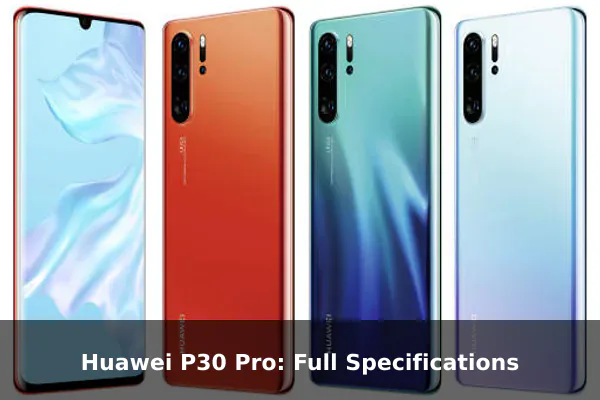
The camera is the headline feature. The Leica-branded triple rear setup combines a 40 MP f/1.6 wide sensor with OIS, an 8 MP f/3.4 periscope telephoto offering 5x optical zoom with OIS, and a 20 MP f/2.2 ultrawide, supported by a Time-of-Flight 3D depth sensor and a color spectrum sensor. Video tops out at 4K@30fps, with 1080p@60fps and 720p@960fps slow motion. The 32 MP f/2.0 front camera handles selfies with HDR. The long-reach zoom and strong low-light performance are what continue to set this phone apart.
Battery and Charging
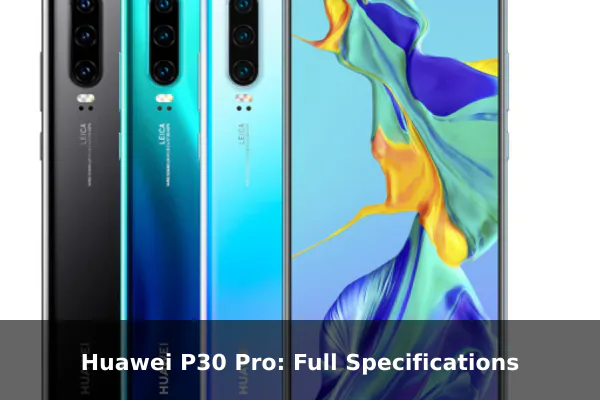
A 4200 mAh non-removable Li-Po battery powers the device, and Huawei’s endurance testing produced a 100-hour rating under its older protocol. Charging is a clear strength: 40W wired charging reaches around 70% in 30 minutes, while 15W wireless charging and 2.5W reverse wireless charging round out the package. For a 2019 flagship, this combination of capacity and fast top-ups remains competitive with many newer mid-range phones.
Connectivity and Audio
Connectivity covers Wi-Fi 802.11ac dual-band, Bluetooth 5.0 with aptX HD, NFC, an infrared port, and USB Type-C 3.1. The positioning suite is comprehensive, with dual-band GPS (L1+L5) plus GLONASS, BDS, GALILEO, and QZSS support. An under-display optical fingerprint sensor handles biometrics. Note there is no 3.5mm headphone jack and no FM radio, so wireless or USB-C audio is required. As a 4G LTE device with no 5G, it suits buyers who do not need the latest networking.
Software Considerations
The P30 Pro launched with Google services intact, which distinguishes it from later Huawei models. However, it is limited to Android 10 as its final major update. Prospective buyers concerned with the newest features or extended security coverage should treat this as a key limitation and confirm the installed software version on any used unit.
Who Should Buy It
This phone makes most sense for photography enthusiasts seeking long optical zoom on a budget, and for users who value premium build, IP68 durability, and fast charging over the latest software. It is less suited to those who need 5G, high-refresh displays, or guaranteed long-term updates.
Conclusion
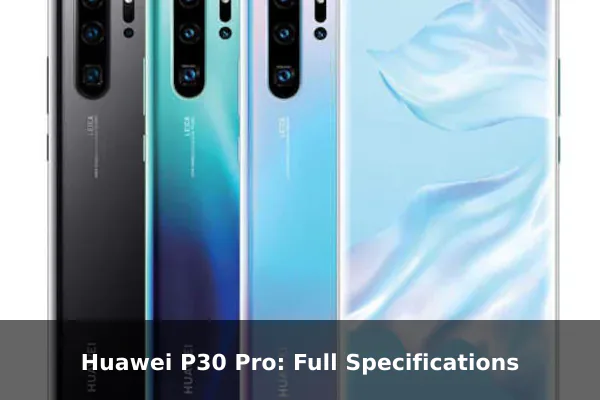
The Huawei P30 Pro endures as a landmark camera phone whose periscope zoom, Leica-tuned imaging, and polished hardware still impress years after launch. Its dated software support and lack of 5G are real trade-offs, so it is best recommended as a value-driven used purchase for photography-focused buyers who do not depend on the latest Android updates. Verify the storage variant, battery health, and software version, and it remains a rewarding pick.
Official references
- HUAWEI Consumer Official P30 Pro Specifications – Official Huawei specification sheet for core product facts such as dimensions, display, battery, charging, network bands, connectivity, sensors, and in-box contents.
- HUAWEI P30 Pro Support Global – Official Huawei support page for manuals, software/support information, warranty/service references, and product-specific documentation.
- HUAWEI P30 Series Official Launch Release – Official Huawei launch announcement confirming P30 Pro positioning, camera system details, Kirin 980, EMUI 9.1, battery, charging, variants, pricing, and availability at launch.
- Federal Communications Commission Equipment Authorization (fcc.gov) – Primary regulatory source for radio authorization, FCC ID records, SAR/RF exposure data, operating frequencies, and compliance exhibits for relevant Huawei P30 Pro model variants.
- Bluetooth SIG Qualification Database – Primary Bluetooth qualification source for checking Bluetooth compliance and product qualification records when verifying connectivity claims.
